Army holds first Cybersecurity Summit at Fort Bragg with local partners


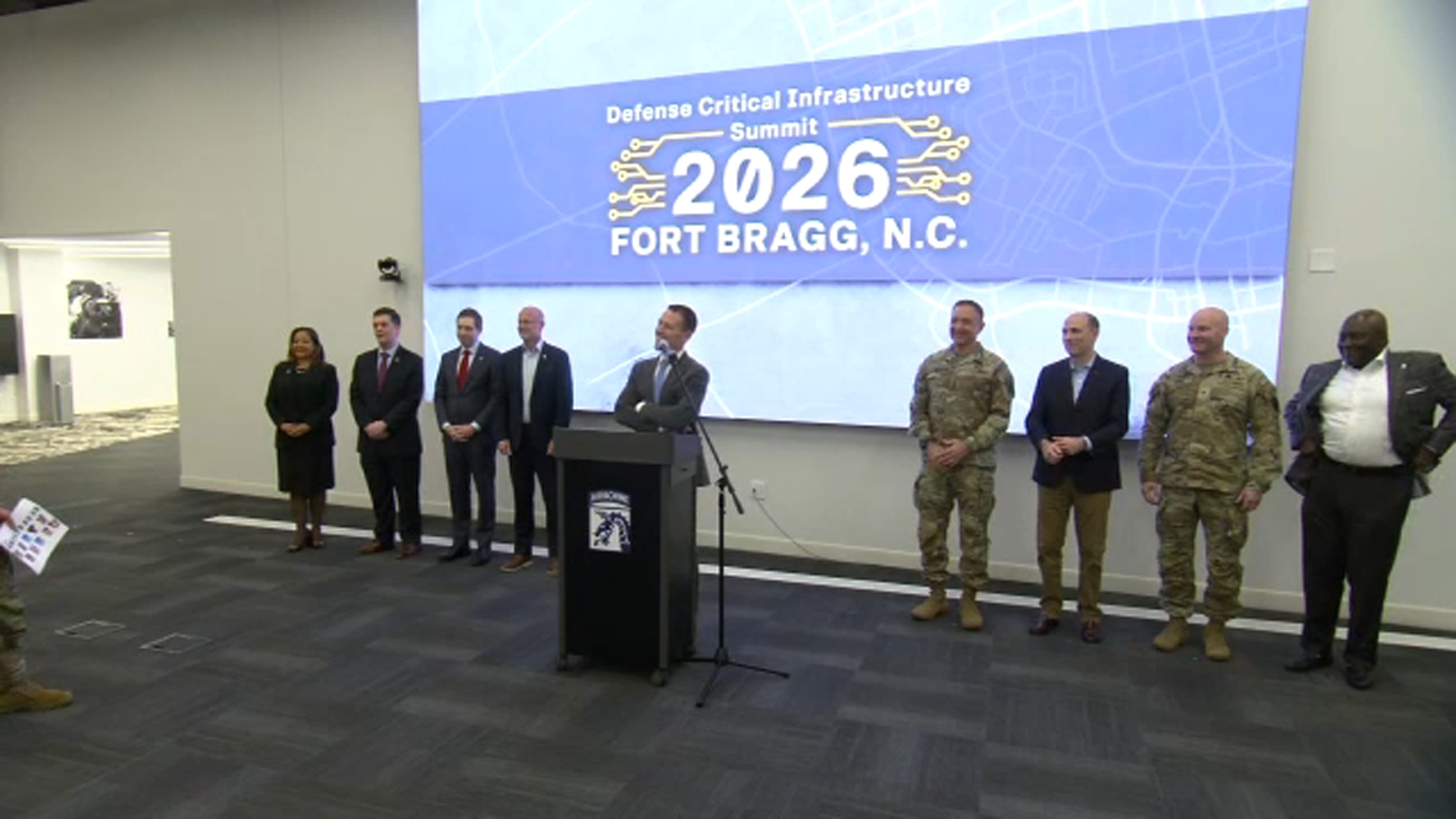
FORT BRAGG, N.C. (WTVD) -- Local and federal leaders gathered Thursday at Fort Bragg for the U.S. Army's first Defense Critical Infrastructure Summit, focusing on strengthening cybersecurity through local partnerships and technological innovation.
The summit brought together 14 agencies, including representatives from Duke Energy, Fayetteville Technical Community College (FTCC), and various military and civilian organizations. The goal: to develop integrated strategies to protect the nation's critical infrastructure and ensure the Army can continue operating amid cyberattacks and emerging threats.
"We cannot survive in a vacuum. True resilience requires integrated partnerships," said Brandon Pugh, principal cyberadvisor to the Secretary of the Army. "Interagency industry, state and local partners, soldiers and civilians all have a role to play."
Army officials emphasized that local partnerships are vital to national security, particularly as threats to power grids, water supplies, and other essential utilities become more sophisticated. Leaders said collaboration with organizations such as Duke Energy and FTCC will help bolster Fort Bragg's cyber defenses and identify vulnerabilities.
Iran live updates: US wants China to do more to end Iran war, Rubio says
"Because preparing for and responding to high-stakes events like this and the issues we discussed today takes trust, coordination, and a shared commitment to getting it right," said Kodwo Ghartey-Tagoe, executive vice president and chief financial officer for Duke Energy Carolinas.
Throughout the summit, participants identified four major operational challenges related to drones and cybersecurity: physical threats, cyber impacts, dependencies on force projection, and information delays. With its 288 camps and installations, the Army relies heavily on outside agencies for utilities such as power, water, and natural gas. Officials hope this collaborative approach will enable partners to quickly identify and alert the Army to threats in real time.
Top Stories


The Army's focus has also expanded beyond power infrastructure to address the use of drones in modern warfare. Secretary of the Army Daniel Driscoll underscored the importance of strong partnerships by recalling rapid mobilization efforts during a recent conflict in the Middle East.
"Why this matters is when the conflict in the Middle East kicked off, we were able on day five to start the process to get 23,000 interceptors flowing into theater," Driscoll said. "We had contracted for them by day ten, which is five days, and by day 20, thousands of these systems were starting to flow into theater to protect our soldiers."
Leaders at the summit said they hope to scale this approach across all military bases and camps nationwide. At its core, the event focused on ensuring the military can maintain operations in the face of a cyberattack by an adversary, a reality that Army leaders say requires unprecedented cooperation among government, industry, and local agencies.