Extreme drought still affecting most of central NC, Wake County: 'Uncharted territory'


RALEIGH, N.C. (WTVD) -- Much of North Carolina remains under extreme drought conditions, according to the latest drought report released Tuesday, with nearly 60% of the state affected, including roughly 95% of Wake County.
Farmers across central North Carolina said the lack of rain is already taking a toll on crops and could create even greater challenges in the months ahead. John Burt, a ninth-generation farmer in Fuquay-Varina, said the dry spring has been unlike anything he has experienced in decades of farming hay and raising beef cattle.
"In this case, I think we're kind of in uncharted territory, at least in my time farming, which has been about 25 or 30 years; I don't remember a spring that's been this dry," Burt said.
Burt said the drought has already severely damaged his fields and could affect customers who depend on his hay supply.
"The dry weather killed half of my fields," Burt said. "The other half were only producing half of what they would have produced. So it is going to be a problem not just for me, but for the people who are relying on me to buy hay the normally buy from me."
ALSO SEE | Burn ban lifted for all North Carolina counties
He said the drought is adding pressure to farmers already dealing with rising costs.
"It's a really, really a challenge for farmers who are already getting pinched again on fertilizer and fuel," Burt said. "And of course, the weather's wreaking havoc with us right now."
Farmers say large-scale irrigation systems could help offset some of the effects of the dry conditions, but many are too expensive to install.
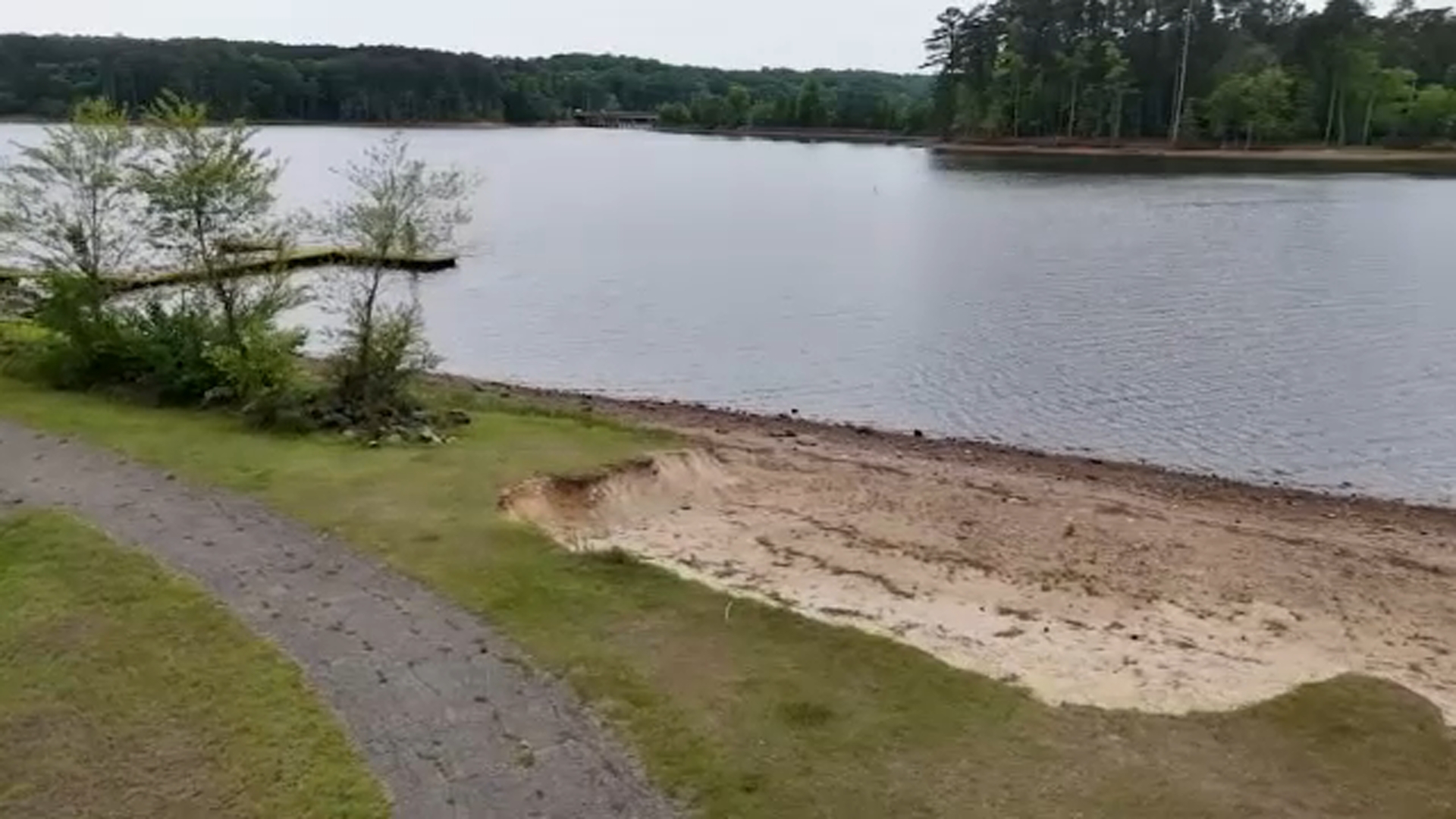
The drought conditions continue to affect the water supply in the Triangle. Officials with Raleigh Water said the level one restrictions limiting outdoor watering to Tuesdays and Wednesdays will likely remain in place for at least the next several weeks as water levels at Falls Lake stay well below normal.
"I would anticipate that we will stay on those restrictions for at least May, probably June," said Ed Buchan, assistant director of Raleigh Water. "The trigger to exit them in May would be 95% water remaining. Falls Lake, as of this past Monday, was at 77%."
Buchan said customers have largely complied with the restrictions, helping reduce overall water demand.
"We've seen overall a really good level of compliance with our customers, and we've seen a reduction in our demand," Buchan said. "So you can obviously see higher demands on those two irrigation days, Tuesdays and Wednesdays, but then it falls off the rest of the days."
Officials said Falls Lake is currently nearly four feet below its normal water level. While recent rainfall in the Triangle has provided some relief, officials said sustained heavy rain in the Falls Lake area will be needed to significantly improve conditions.