Gov. Stein helps open new Fujifilm biotech facility in Holly Springs


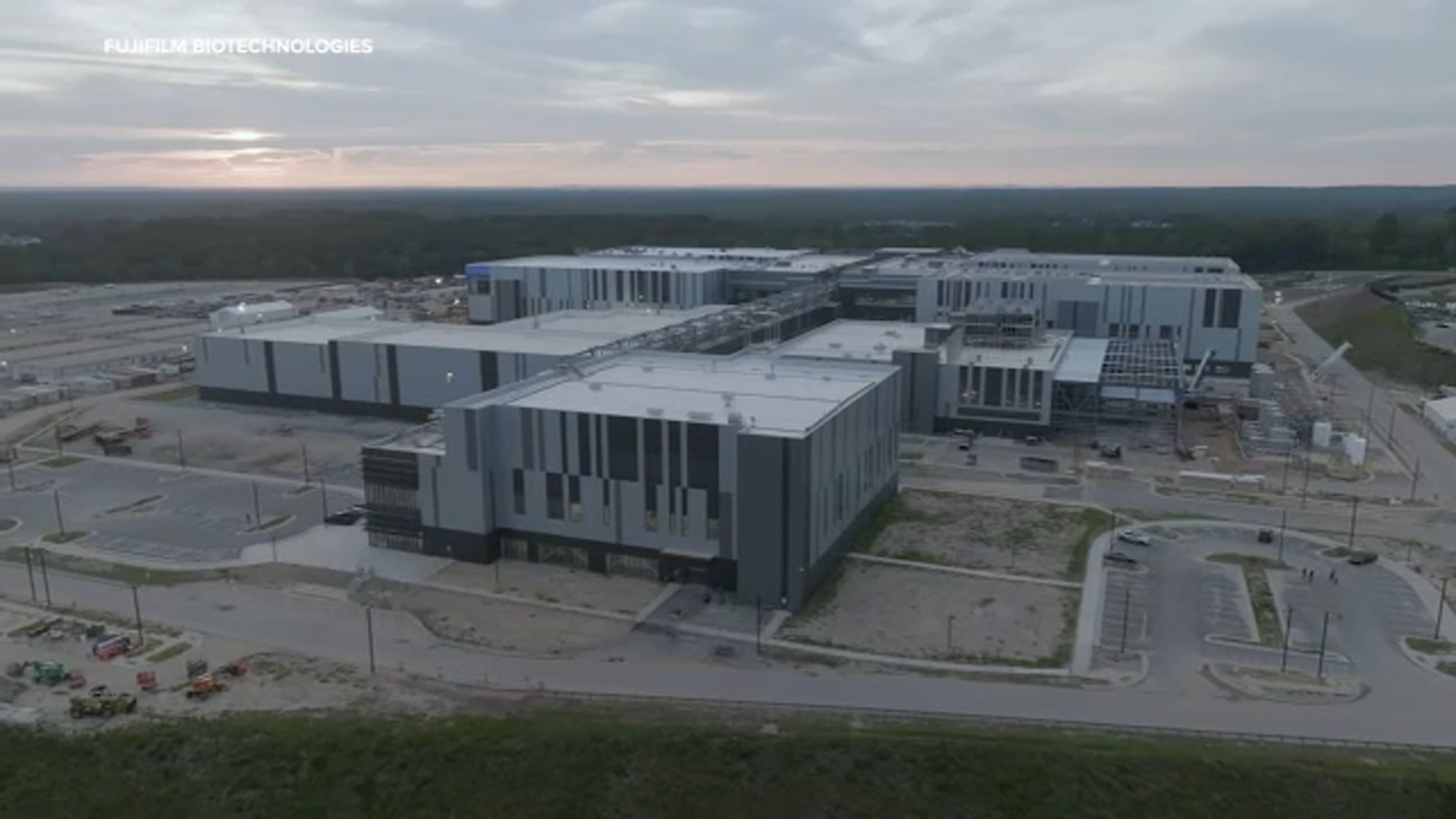
HOLLY SPRINGS, N.C. (WTVD) -- Fujifilm Diosynth Biotechnologies held a grand opening for its Holly Springs facility Wednesday, part of a years-long project that signaled the company's largest investment in the United States.
"They have worked tirelessly to bring this facility to life. It just is a demonstration of when you bring people together that are really talented, that are committed to making life-changing medicines and really care about people's lives, that we can do anything together," said Laurie Braxton, the Senior Vice President and Head of North Carolina Operations for Fujifilm Diosynth Biotechnologies.
The $3.2 billion biopharmaceutical manufacturing facility employs 700 people, a figure the company expects to double by 2031.
"The local universities and community colleges and people moving into this area are really critical, so the talent that we have here is like none other," Braxton shared.
"Our community college system has programs dedicated to Biomanufacturing and Bioprocessing, so the whole focal point of their investment here is to be able to hire local. And it's what's differentiating North Carolina from other locations internationally, but as well as from other domestic locations is the presence of an embedded and the capacity to train to a local workforce," added Bill Bullock, Senior Vice President of Economic and Statewide Development at the North Carolina Biotechnology Center.
At its peak, 4,000 people were coming on and off the site during its construction.
Eighty percent of workers are local, a metric that has drawn increased attention after President Donald Trump signed a proclamation adding a $100,000 fee for H-1B visa applications.
Stay on top of breaking news stories with the ABC11 News App
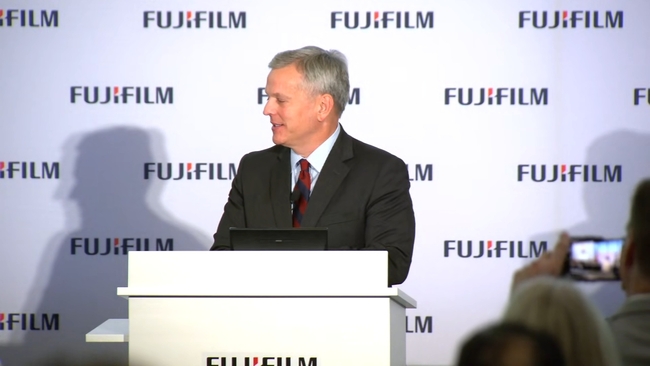
Gov. Josh Stein, who delivered remarks at Wednesday's ceremony, said he expects the company's investments will grow the state's economy by $10 billion in the next decade, playing a key role in an increasingly important field.
"More than 840 companies do business here in North Carolina that are life sciences, with an additional 2,500 providing some kind of support to the sector. In all, we're talking about 225,000 jobs. The sector generates $88.3 billion in economic activity every year, $12 billion in pharmaceutical exports, and $2.4 billion in state and local taxes," Stein said.
WATCH: Gov. Stein's full remarks
"Holly Springs is a great example of that. Novartis now, Seqirus came. Fujifilm came. They do their due diligence. Those companies want to be around one another for workforce and inherent workforce development. But since FUJIFILM's initial footprint here, we've seen Amgen come into this community, and most recently we've seen Genentech come into this community," Bullock said.
Leaders in Holly Springs explain the biotech boom that's happening in this community and its effects.
"One of the things that you've seen a big change is it used to be that Friday night, Saturday nights were the time to come downtown. You come down any day of the week down here, and you're seeing mom and pops. You're seeing the strollers. You see them going in and out of the restaurants and the shops that we've got. It's kind of brought a lot of life to our downtown area," said Holly Springs Mayor Sean Mayefskie.
The company committed to invest $1.2 billion and promised to create 680 new jobs in Wake County.
"North Carolina is home to the future of biotech, and we welcome Fujifilm, an industry leader," said Stein. "This overall project will create 1,400 new, good-paying jobs in North Carolina by 2031 and will grow our state's economy by more than $10 billion over the next decade. Fujifilm isn't just strengthening the workforce of today - it's investing in the workforce of tomorrow."
Fujifilm Diosynth Biotechnologies operates as a contract development and manufacturing organization, securing deals with major pharmaceutical companies like Johnson & Johnson and Regeneron.
"We make monoclonal antibodies so we can make cancer drugs, autoimmune disease, chronic disease, rare disease, anything that can really have an impact on making a change to people's lives," said Braxton.
"The space that they have at this contract facility means that lots of different pharmaceutical companies can use this space. And that only helps to bolster our reputation as the leading life sciences and pharmaceutical manufacturer in the United States," explained Commerce Secretary Lee Lilley.
So far, 90 acres of the 150-acre campus have been developed, as company officials acknowledged the possibility of further construction.
"We always are continuously looking at what do we do in the future and what's the demand telling us," said Braxton.
There are currently 16 production bioreactors on site, with the possibility to ultimately double that amount. Fujifilm plans to start its initial drug substance process by the end of the fall.
"By 2031, we'll be able to make a total of about 50 million doses of medicine each year," Braxton said.
Wednesday's grand opening also served as a further example of the strong ties between North Carolina and Japan.
"Japan is the top source of foreign direct investment in North Carolina by an overwhelming number. More than 40% of all direct investment comes from Japanese companies," said Stein.
Last year, then-Japanese Prime Minister Fumio Kishida visited North Carolina, where he met with state leaders. Next month, the state plans to send a delegation to the annual Southeast US Japan Association conference in Tokyo. Last year, the conference was held in Charlotte.
"When we're looking to attract new investment, obviously, you want big numbers like this one, $3.2 billion investment, 1,400 jobs. But name brands really help. Fujifilm's got a long history in a variety of different verticals. What they're doing here on the biotechnology side is really their most explosive vertical, and that helps build our reputation for this sector, biotechnology, but also generally with Japanese companies," Lilley said.
Fujifilm has also partnered with Wake Tech to establish a biomechatronics apprenticeship program.