Gas price surge strains farmers, drivers across NC


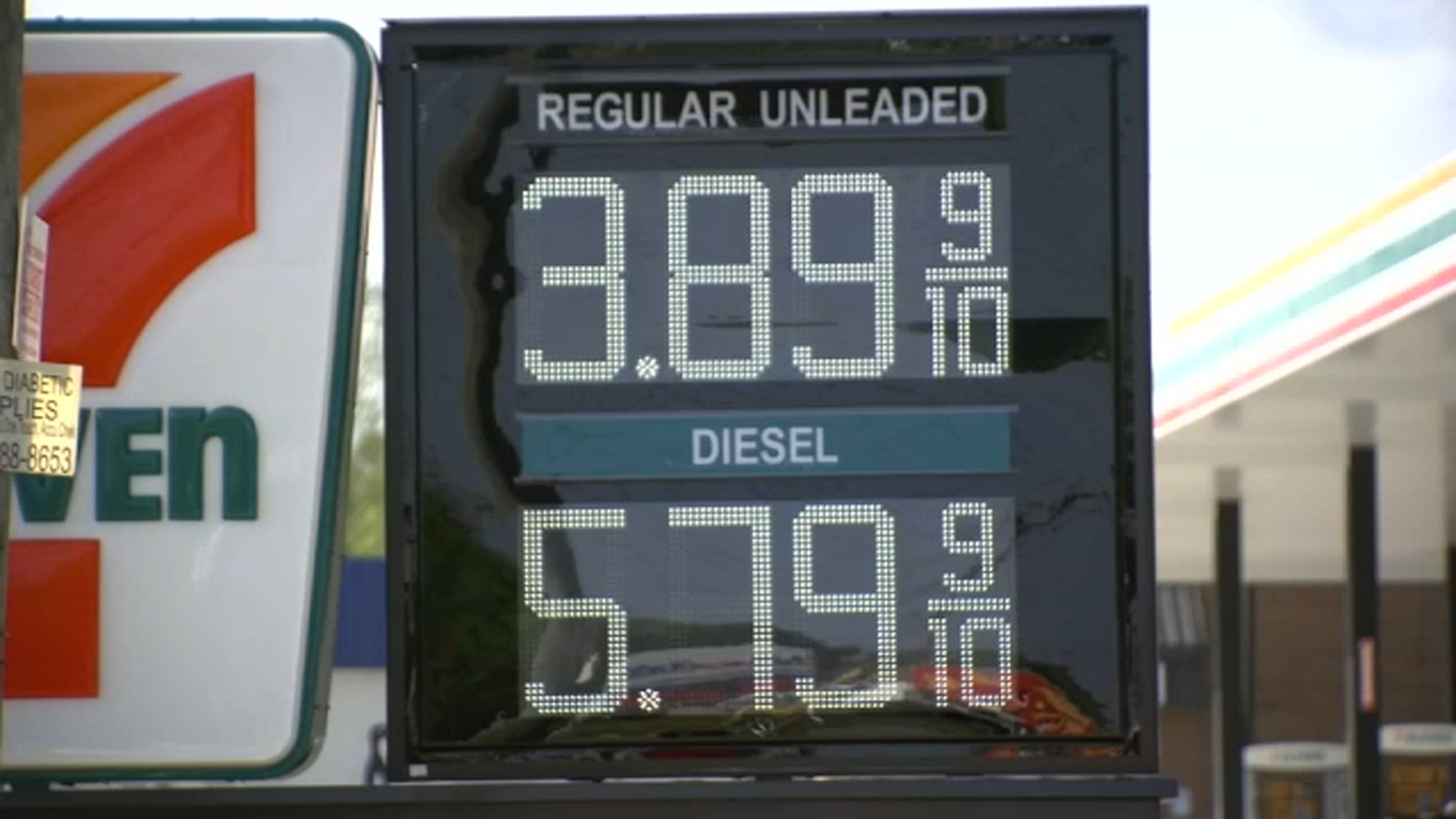
RALEIGH, N.C. (WTVD) -- Drivers across North Carolina are feeling the effects of rapidly rising gasoline and energy costs, as national prices climb past $4 a gallon for the first time in four years as the war in Iran continues.
"I've watched the gas prices tick up uncomfortably high," said Sean Dotzauer of Raleigh, who was filling up his car Tuesday morning.
According to AAA, the statewide average for a gallon of regular gas is $3.84, about 18 cents lower than the national average. Prices across central North Carolina have risen by roughly $1 in the past month.
"For every penny that gasoline prices go up, it costs about one and a quarter billion dollars more to consumers," said Gerald Cohen, Chief Economist with the Kenan Institute of Private Enterprise.
Experts attribute the surge to global pressures, despite the United States being a major producer of crude oil. Cuts from oil-producing nations in the Middle East and the closure of the Strait of Hormuz amid the war in Iran have tightened supplies.
"It's 20% of the world's oil supply that goes through the Strait of Hormuz every single day, and it's been in a chokehold now for over five weeks. This is why we're seeing prices on the increase. You take 20% away from any product - I don't care if it's bananas or beef - the remaining 80% is going to be more expensive," explained Matt McClain, a petroleum analyst with GasBuddy.
The rising gas prices have been felt across the supply chain.
"Logistics providers are charging what they call a fuel premium," said Dr. Rob Handfield, Bank of America Professor of Supply Chain Management at NC State University. "They bump up the price of transporting goods and, of course, that's passed on to the retailer, and the retailer is going to pass that onto the customer."
The effects ripple past transportation.
"Plastics are a derivative of crude oil. The containers that our food happens to be in are going to be more expensive to produce," McClain said. "Shipping it to the store is going to become more expensive to produce. Farm machinery that is used to harvest the food is going to be more expensive to use."
Infrastructure damaged by an Iranian attack on Qatar has also hit the global helium supply.


"Helium is also used in semiconductor chips. It's an important component of that. We could see shortages or longer lead times on chips and probably price increases as well on electronics," explained Handfield.
The agriculture industry is particularly susceptible to rising costs stemming from the ongoing war.
"Trying to budget for the year, and then all of a sudden something crazy happens and unexpected and prices go up. You're already trying to think of working on a profit margin that may have just now gotten smaller," said Michelle Pace Davis, whose family has operated Pace Family Farms in Johnston County for more than 100 years.
The 150-acre farm includes 20 acres of produce and has felt the impact of price jumps on fertilizer, diesel, and energy costs.
"A lot of our plants are started in the greenhouse, and as those cold snaps are coming in, we're also having to deal with the increase in cost with the propane," Davis said.
She said the global nature of the industry makes it difficult for farmers to adjust pricing.
"It's also important to understand for people to be able to support those farmers, whether that's buying local at a roadside stand, buying local to pick your strawberries, whatever that case may be," said Davis.