Gas prices rise as military operation in Iran continues


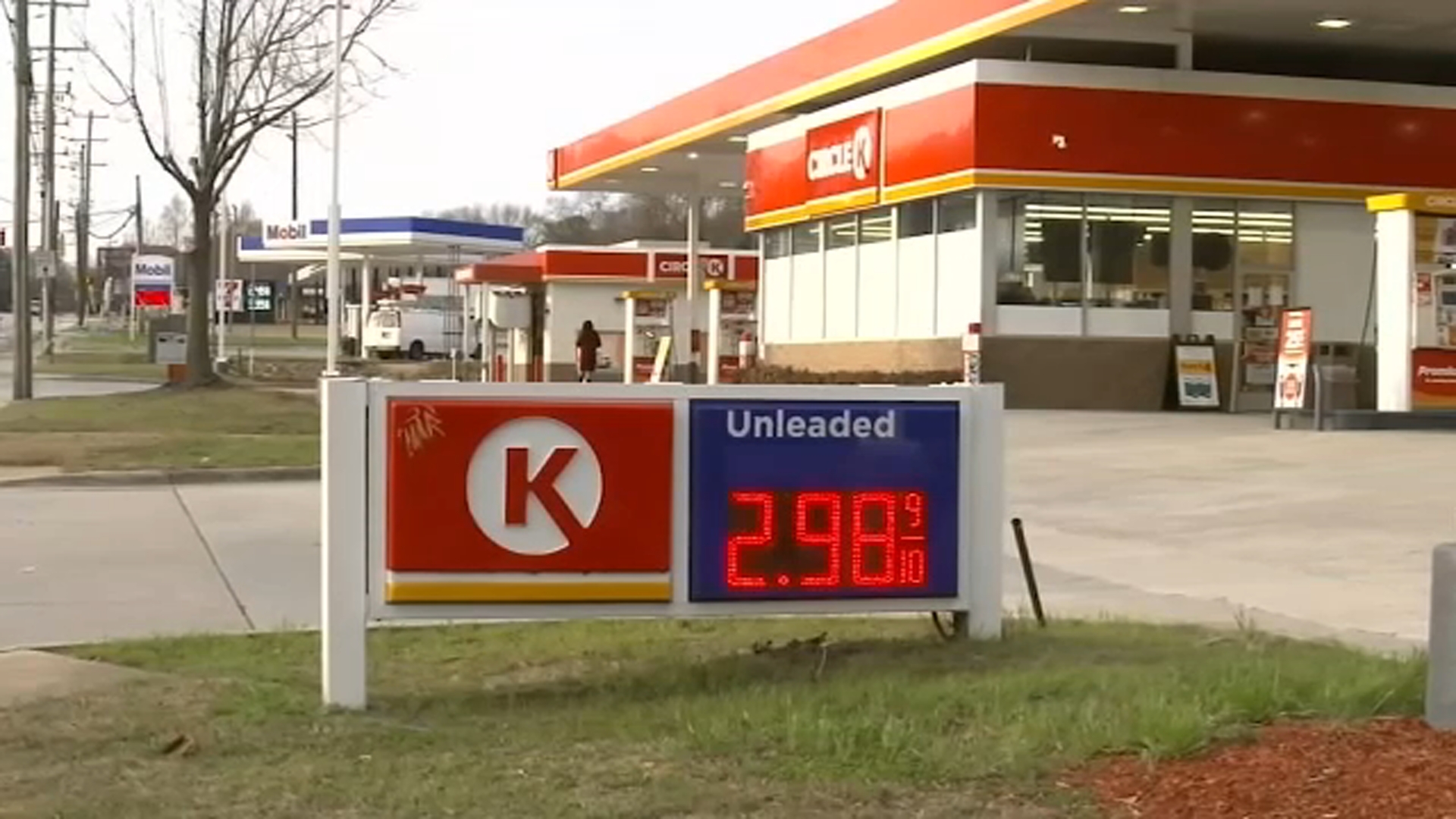
RALEIGH, N.C. (WTVD) -- The energy sector has seen a broad impact as military operations in Iran continue.
"Oil prices this morning up almost 8%. The wholesale price of gasoline is also taking a pretty big jump up along with diesel, jet fuel, just about everything that comes out of oil seeing a big jump in price as a result of the attacks and as a result of the instability," said Patrick De Haan, Head of Petroleum Analysis at GasBuddy.
The United States and Israel launched a series of airstrikes on Iran on Saturday morning, which have since continued. US lawmakers have shared a variety of reactions to the operations, which have targeted military targets and leadership of the Islamic Revolutionary Guard Corps.
"This conflict has really shattered hopes of a large-scale return of container shipping to the Red Sea, and this is weighing on ocean freight rates," said Rob Handfield, an Economics Professor at NC State.
While Iran produces only a small fraction of the world's oil, about 20% of global supply moves through the Strait of Hormuz, which Iran has now blocked.
"The supply chain costs will also go up. Trucking companies may add fuel surcharges, and also agricultural impacts will go up because of increased costs for the spring planting season, which could also lead to increased food prices," said Handfield.
Iran has responded with a series of attacks, many of which have targeted neighboring Gulf States.
"A lot of grain from Ukraine goes through that Red Sea area as well, so there may be other disruptions and other impacts," said Handfield.
According to AAA, national prices for a gallon of regular gas are up about two cents from yesterday and six cents from last week, though it's still less than the same date last year.
ALSO SEE | Missile strike near Israeli town leaves Triangle native sheltering with kids
Averages in North Carolina remain markedly lower than those national rates, coming in as the second cheapest on the East Coast.


"Gas prices typically don't affect people wanting to take a road trip. They'll just find other ways to save. But having said that, if we have a huge spike that could make people take pause and how far they will go," said Tiffany Wright, Director of Public Affairs with AAA of the Carolinas.
Wright also urged drivers to avoid panic buying.
ALSO SEE | Fort Bragg families divided on Iran war, united in duty as military installations tighten security
"Supply is not an issue for us. We become our own worst enemy. We're the ones that go out, and we fill up every car in our fleet. We're the ones that go and overconsume. We're the ones that lead to the shortages. There's no fear of that right now," Wright explained.
Lawmakers on both sides of the aisle have shared a variety of reactions to the attacks, which have killed several members of Iran's leadership, including Supreme Leader Ayatollah Ali Khamenei.
Thus far, six American troops have been killed, and 18 others have been seriously wounded.
"I'm as confused as every other American. Why are we doing this? There's not been a clearly articulated rationale. What is the purpose? It changes on an hourly basis. The stated reason. How long are we going to be there? How much are we spending to do this?" said Gov. Josh Stein.
Stein highlighted the state's large military presence, from Fort Bragg to Camp LeJeune to Seymour Johnson Air Force Base.
"There is no conflict in this world where residents of North Carolina are not at the tip of the spear," Stein said.