Federal employees in NC try to navigate the impact of the government shutdown


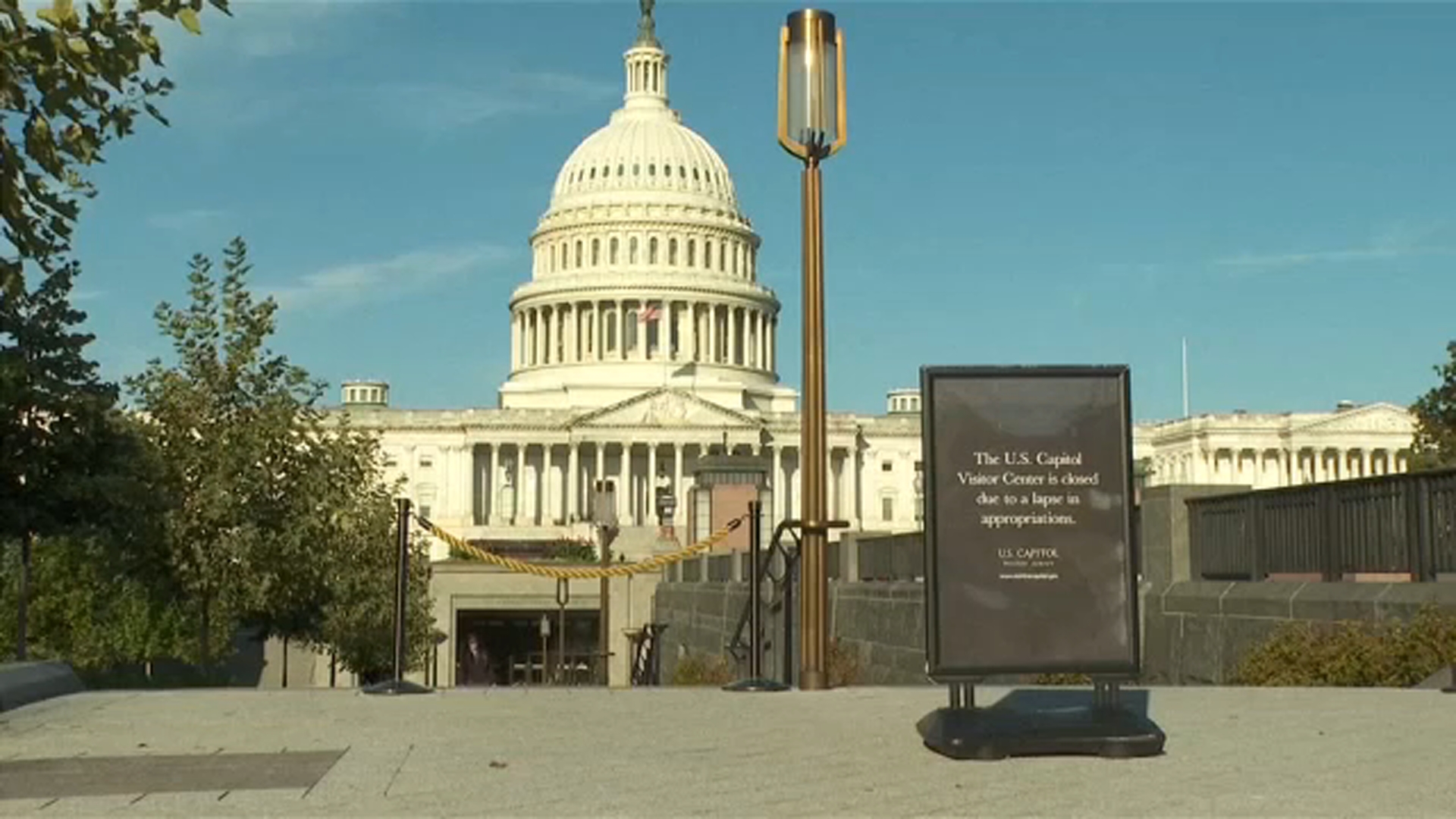
RALEIGH, N.C. (WTVD) -- For Heather Hughes, this is not the first time she's experienced a government shutdown.
"A lot of people live pretty much check the check. You talk with your creditors, try to make them understand what's going on. You can get a letter from the agency that says we're shut down, yada, yada, yada. But, you know, creditors are not obligated to work with you," said Hughes, who serves as President of AFGE Local 3509, which represents employees at Social Security Administration Offices in North Carolina, South Carolina, and parts of Tennessee and Georgia.
She's worked for the Social Security Administration for 26 years. Deemed an "essential employee," she's continuing to work despite not being paid.
"It's very challenging and it's very disheartening," said Hughes.
According to the Congressional Budget Office, about 750,000 federal employees are now furloughed.
"Realize that when you come into the Social Security office, when you go to other federal agencies where they're still working, they're working without pay and they don't know how long they're going to go without pay. Have some empathy and let Congress know that this isn't right," Hughes shared.
The Environmental Protection Agency, Education Department, NASA, and Commerce Department all have at least 80% of their employees furloughed, while more than half the staff at the Labor Department, National Park Service and State Department are impacted.
"They've already indicated that the jobs report will not be coming out because of this impact, so we don't have a clear sense as to how the economy is reacting. Certainly, if this extends into weeks, potentially a month or longer, it will have some serious ramifications on the economy nationwide and potentially here in North Carolina," said Dr. Michael Bitzer, a Political Science Professor at Catawba College.
The Judiciary will continued paid operations through October 17th, though there could be further impacts if the shutdown extends past that date.
"A U.S. attorney's office, for example, has an entire division of civil attorneys, and many of those employees will not continue to work during a shutdown situation because they are distinct from criminal prosecutors. Many of the functions of those civil divisions can be really important to the fair and appropriate administration of justice in America," said Michael Easley, Jr., a partner at McGuireWoods who formerly served as US Attorney for the Eastern District of North Carolina.
Easley explained civil attorneys can handle cases ranging from environmental enforcement matters to cyber investigations to recovery of assets.
"I think it does impact the stability of that workforce when we see a government shutdown. But the bottom line here, people are in these jobs not for the money, but for the mission," Easley said.
At the center of discussions surrounding the shutdown are Medicaid cuts and extensions to health care tax credits, issues Democrats want discussed as part of continuing resolution negotiations.
"My fellow Democrats and I are working to reopen the government and get a bipartisan continuing resolution passed to ensure that healthcare costs stay affordable," said Congresswoman Alma Adams, a Democrat who represents NC-12.
"Republicans have refused to allow negotiations on measures that would prevent the largest Medicaid cuts in American history, extend Affordable Care Act tax credits and stabilize health coverage for millions," added Congresswoman Valerie Foushee, a Democrat who represents NC-4.
However, Republican Congressman Mark Harris believes the issues should be discussed separately.
"There's time to have those conversations and time to have those votes. But not holding the federal government hostage and say, if you don't give us this wish list that we've got of about $1.5 trillion, then we're not going to give you a vote on the clean (continuing resolution) and that's exactly where we are," said Harris.
The most recent government shutdown, from December 2018 to January 2019, lasted 35 days.
"Just like any other shutdown, the longer it stretches, the more difficult decisions have to be made," Harris said.
The next vote on a continuing resolution is expected on Friday.