NC Governor, state officials travel to Washington to request additional Helene federal support


RALEIGH, N.C. (WTVD) -- Gov. Josh Stein led a delegation on Wednesday to Washington, D.C., to request additional federal support for Hurricane Helene relief.
"What we're doing is advocating for what North Carolinians need from the federal government to recover from Hurricane Helene. The governor has put forward a package of $13.5 billion that is necessary to build on what the federal government has already provided, build on what the state legislature has provided in state funds so that we can continue to build homes, we can continue to rebuild infrastructure and revitalize the economy that was so hard hit by Hurricane Helene," said Matt Calabria, Director for the Governor's Recovery Office for Western North Carolina.
The $13.5 billion request includes:
- $1.77 billion for the USDOT, primarily to keep repairing North Carolina's roads.
- $8.37 billion from HUD, primarily to support more homeowners in repairing and rebuilding their homes.
- $1.99 billion from FEMA, primarily in forgivable loans to help local governments stay afloat as recovery continues to strain their finances.
- $540 million from the EPA, primarily to restore water infrastructure systems.
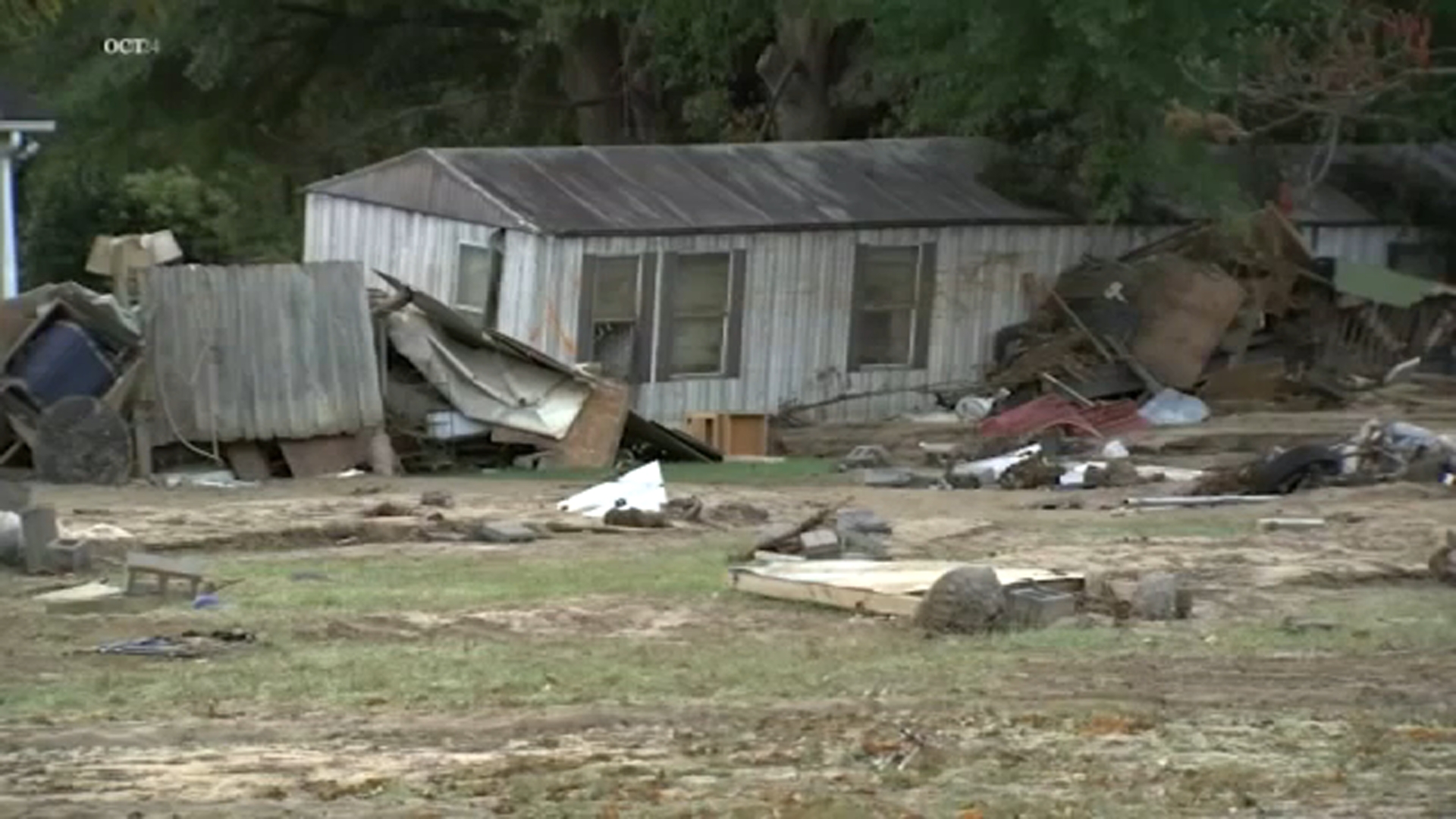
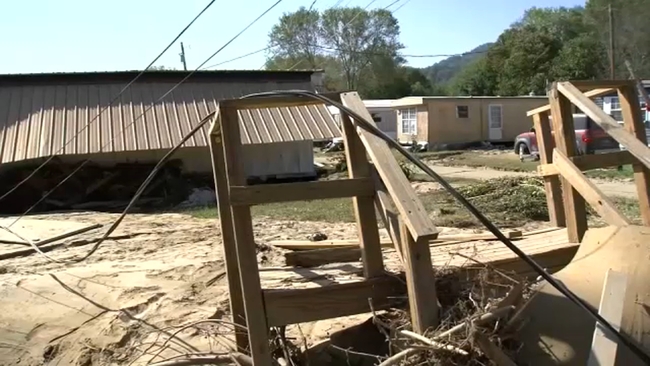
The state estimates Hurricane Helene caused about $60 billion in damages; thus far, the federal government has provided $7 billion in funding.
"What we see is that North Carolina has fallen far below in the portion that's been covered by federal funding, what we have seen in other storms," said Calabria.
"Federal funding is critical. This may be our last chance to get a Helene recovery bill through. And so I ask them to very closely to look at comparatively some other storms and the amount of help that's been offered. If we look at Rita, Katrina, Sandy, the percentage of federal support that came through during or after those storms is much greater than what we have experienced in North Carolina," added Leah Ashburn, President, CEO and owner of Highland Brewing in Asheville.
While Ashburn says the location of Highland Brewing largely spared it from physical impact, it suffered significant business impacts.
"The financial damage was in the seven figures and insurance has done next to nothing," Ashburn said.
"The one thing about small business owners is that they're also our neighbors. They're also just community members here that are dealing with the issues and struggles and challenges of being a homeowner or, you know, accessing clean water or driving on roads that are safe and whole. I think one of the things that we are most hopeful for here from the federal government, number one, is to really continue to fulfill the promises of providing support," explained Christine Laucher, Strategic Partnership Manager with Mountain Bizworks.
Before Wednesday's meetings, the state learned that it had received additional federal assistance in the form of $72 million in Public Assistance grant program reimbursements and $44.6 million from the Hazard Mitigation Grant Program.
The Public Assistance grants will provide $34.7 toward the North Carolina Department of Transportation for road and bridge repairs, $17.6 toward million to Rutherford County for debris removal and operation of debris reduction sites, $10.5 million to the city of Asheville for potable water distribution, repair or replacement of 100 vehicles, repairs to the DeBruhl Water Treatment Plant, and road repairs, as well as $3.7 million to Beech Mountain for repairs to the town's sewer systems and wastewater treatment plant.
Funding for the Hazard Mitigation Grant Program investments includes approximately $14.2 million to acquire flood-prone properties in Buncombe County, approximately $9.2 million to acquire flood-prone properties in Henderson County, and to elevate 14 homes in Beaufort County at a cost of $2.5 million.
"We have now received more than 7,400 applications for home repairs, but we don't have the money for that many repairs that are under current federal funding. And so we need more money to ensure that the folks can get the help that they need," said Calabria.
In a statement, Sen Ted Budd wrote:
Ever since Hurricane Helene devastated the lives of more than half a million North Carolinians, I have been working non-stop to obtain approval for federal relief necessary to rebuild Western North Carolina. In recent months, I've engaged extensively with the Department of Homeland Security and FEMA regarding applications under the Hazard Mitigation Grant Program. I am glad that today, in addition to another tranche of public assistance funding totaling over $72 million, Secretary Noem has approved $44.6 million in grants for projects under the Hazard Mitigation Grant Program. While this is another promising step in the right direction, there are still families awaiting buyouts for their damaged and destroyed properties. As I have with the public assistance program, I pledge that I will continue to work closely with all federal, state, and local leaders to continue to identify projects that qualify for federal reimbursement, and I will be in constant contact with FEMA to get these dollars to Western North Carolina communities."
In a statement, Stein wrote:
"The federal government has committed just over $7 billion toward western North Carolina's recovery since Hurricane Helene. While we are grateful for every dollar, and this aid has been critical to our recovery work, it represents only 12 percent of the storm's total damage. Typically, the federal government contributes about 50% of the damage to the impacted state. It's been more than a year since Congress has delivered relief for western North Carolina, and it's time for the people of western North Carolina to get their fair share. Disaster recovery is a team sport, and western North Carolinians can't afford for the federal government to sit on the sidelines."
"The time is of the essence, and the governor has been very clear about that. People are hurting now. People are seeking to recover now," said Calabria.

Laucher explained the first quarter is typically the slowest period of the year, making the next couple of months crucial in making progress ahead of an expected uptick in tourism.
"Figuring out a capital strategy that can really help, particularly in our business community, can help folks to bridge toward that busier spring and summer season, I think is going to be our next sort of vital challenge that we're tackling," said Laucher, who cited the importance of immediate relief such as the WNC Strong Healing Business Recovery Fund following the storm.
"(Hospitality) does drive the economy, and the Blue Ridge Parkway is critical to that. And not just for Asheville, where I live, but all the surrounding communities," said Ashburn.
'Things have to happen quickly'
On Thursday, Stein discussed the trip to Capitol Hill.
"There is recognition that the damage that western North Carolina suffered was immense and appreciation that more needs to come. We're going to work with them to get them comfortable with the $13.5 billion figure. But there was just unanimity that Washington needs to do more, and we look forward to working with them in the coming weeks to get them comfortable with the package and then find the right opportunity to make sure that the funds come," said Stein.
He stressed the importance of accessing money as soon as possible.
"The longer the delay in federal funding and getting programs up and running, the worse it is for western North Carolina recovery. Things have to happen quickly. The quicker we can get resources deployed into local communities rebuilding homes, rebuilding roads, bridges, water systems, helping small businesses get through what's going to be a tough winter, the stronger the long-term recovery will be," Stein said.
Both Stein and Budd expressed appreciation for the new funding announced Wednesday.
"To have that money approved was a very positive step. They also approved the first hazard mitigation grants that they've done in the entirety of the year. So that was a big logjam, a big icebreaker. There's still so much more that needs to be done," said Stein.
"I'm grateful to DHS, grateful to FEMA for the ($44.6) million that have that is for the Hazard Mitigation Grant Program. That's some of the first money that's been released for public assistance. That's what we've been seeing coming for a while. There's an additional ($72) million that we were able to break free in the last several days," said Budd.
Budd acknowledged that winning enough support for the state's $13.5 billion relief request in Washington could be challenging.
"There's not an appetite for federal spending like that, and we need to make sure that we have very targeted spending in western North Carolina that actually helps people that are in need," said Budd.
Still, he said President Donald Trump remains "tremendously concerned" about the situation.
"There probably hasn't been a week gone by where we've not let the White House have an update," said Budd.
Both stressed that the push for further support has been bipartisan.
"The money is coming, but it doesn't come as fast as people need it in western North Carolina. But the governor's working on it," Budd said. "Look - this is not a partisan issue. This is something that I, as a Republican, am working on (and Governor Stein), as a Democrat, we're working on this together. We just want folks in western North Carolina to be made as whole as possible."
Stein added, "All meetings were very constructive. It's all about trying to move the ball forward and make sure that the federal government is an active and valuable member, contributor, partner to the work of helping western North Carolina recover."
Stay on top of breaking news stories with the ABC11 News App