Deer attacks prompts NC wildlife to issue warning to public not to feed or care for the animals

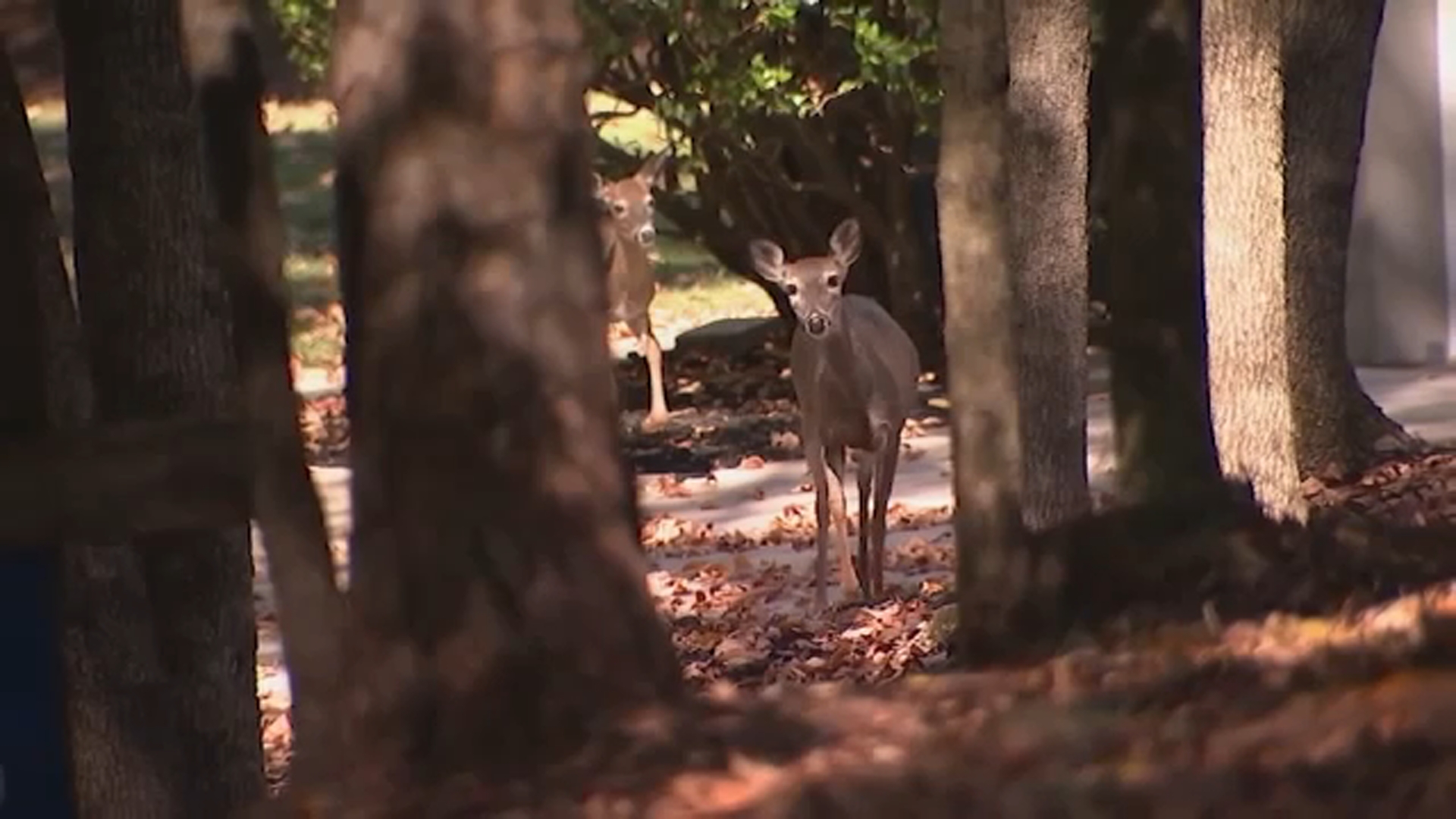
RALEIGH, N.C. (WTVD) -- A recent cluster of deer attacks in several North Carolina counties has prompted wildlife officials to warn residents not to feed, approach or attempt to care for wild deer - especially during the height of mating season, when bucks naturally become more aggressive.
The N.C. Wildlife Resources Commission (NCWRC) said it is illegal to keep deer as pets and unsafe to try to tame or hand-feed them.
Several of this year's attacks involved deer that were likely raised illegally by humans or routinely fed by neighbors, causing the animals to lose their natural fear of people.
Over the past year, deer attacks have been reported in Rockingham, Randolph, Wilkes, Onslow, Iredell and Cherokee counties.
Some of the most serious incidents include a 70-year-old woman who was hospitalized after being gored by a buck near her mailbox on November 6 in Wilkes County.
A woman was treated for puncture wounds to her shoulder and neck after being attacked by a 3-year-old buck that had been illegally raised by an acquaintance in Onslow County in October.
In a recent attack in Iredell County, a deer being fed by residents in a subdivision killed a dog.
"Deer that lose their fear of humans can act in abnormal ways," said Biologist April Boggs Pope.
"That male deer that seemed fine or friendly during the rest of the year can become dangerously aggressive during the rut. A male fawn that is treated like a pet can become a danger as an adult when hormones surge during mating season. Deer antlers and hooves can inflict serious injuries."
Wildlife experts say rutting season, when bucks are searching for mates, makes interactions even more dangerous.
"The male deer or the buck's are basically just hyped up on testosterone," said biologist Falyn Owens with NCWRC.


"They're really muscular and they're very energetic and they're looking for those to mate with. And that testosterone makes them more aggressive. So the combination of the deer rut and a deer that has learned not to fear people is the bad combination that we want to avoid."
Owens said many people assume a fawn left alone has been abandoned, but that's typically normal behavior.
In North Carolina, it is unlawful to keep most native wildlife, including deer, for companionship. Only licensed wildlife rehabilitators may care for fawns, and only individuals with a wildlife captivity license may possess native mammals for scientific, educational or exhibition purposes.
While feeding deer is legal in most areas, the state prohibits baiting and feeding from Jan. 2 through Aug. 31 in Chronic Wasting Disease (CWD) surveillance zones. NCWRC still strongly discourages hand-feeding deer anywhere in the state.
"Attempting to domesticate a wild deer creates safety concerns for people, and it rarely ends well for the deer," said Game Mammals and Surveys Supervisor Colleen Olfenbuttel.
"People trying to tame wild deer may think they are doing the deer a favor, but they are putting the deer at higher risk of malnourishment and poor health. And if the deer attacks a person, as we have seen several times this year, it will be euthanized."
Officials urge residents not to approach or interact with deer, even if they appear injured or abandoned. Instead, they should contact the NC Wildlife Helpline for guidance or to report someone illegally housing deer.