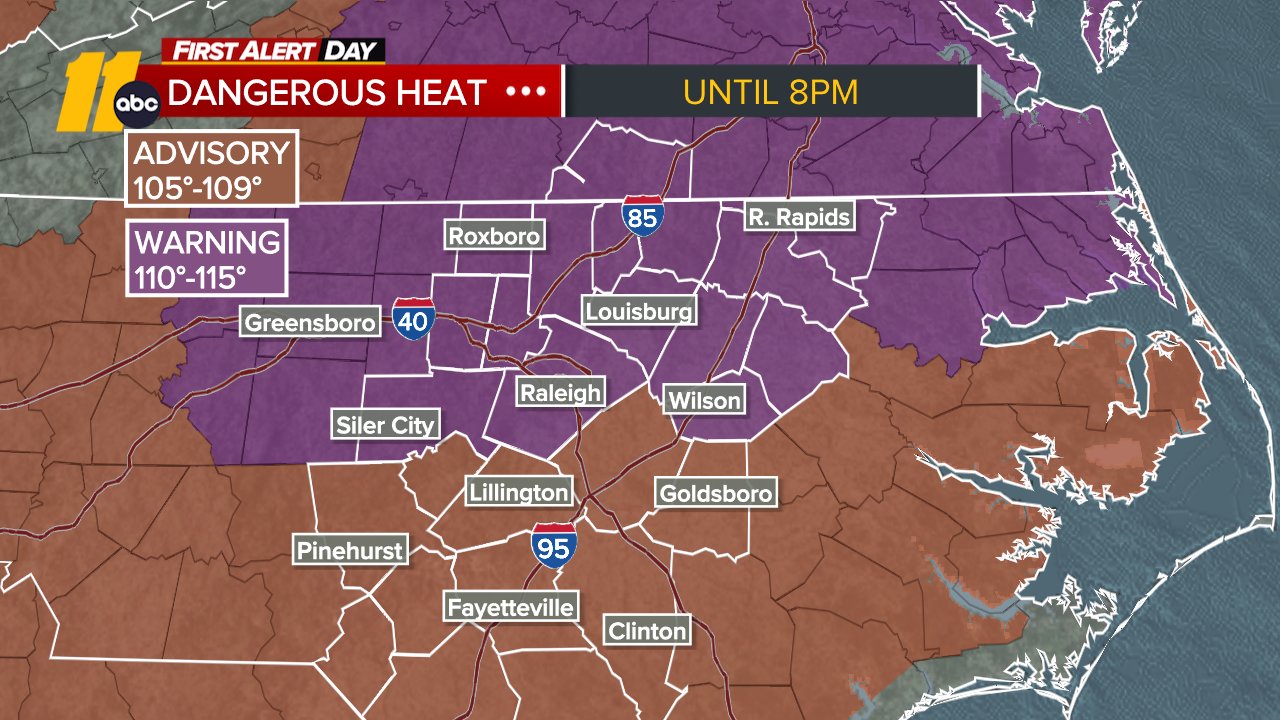
Extreme heat puts older adults at risk as temperatures soar across central NC
As temperatures climb into the triple digits, older adults across the area are taking extra precautions to stay safe during the heat.
For Louise Gooche, staying indoors is one way to reduce the risks associated with extreme temperatures.
"I'm 84 and I'm just so proud to talk about it," Gooche said.
Although she remains active and enjoys participating in activities, including cheering for a senior cheerleading squad, the heat has limited some of her usual routines.
"I do not walk outside like I used to in the heat. I just don't do it. It's not worth taking. The risk risks stay in air conditioned place," she said.
Gooche said her health history makes her especially mindful of heat-related dangers. She is a 23-year colon cancer survivor and said she remains aware of how her body responds to environmental conditions.
"Knowing that my body had about 6 to 9 months of additional chemicals added, I know that my overall resistance level is down and I have to be aware of what is going on internally as well as externally," she said.
According to the National Institutes of Health, older adults can have a harder time regulating body temperature, and some medications may impair their ability to sweat. As a result, extreme heat can pose serious health risks.
"I think it's very important to have them in cool air because how hot it is," said Abria Wilds, activity coordinator for the Durham Senior Life Center Adult Day Health Program.

Wilds said the center adjusted plans for its annual Fourth of July barbecue because of the heat. Organizers moved the event indoors and changed the schedule to limit time spent outside.
"We did it early morning. We started cooking around like 9:00 and we finish around ready right before 12 ish," Wilds said. "So we would spend a lot of time indoor instead of outside."
Participants welcomed the change.
"It's very nice to communicate with people," said 91-year-old Mr. David.
Health officials say older adults face increased risks during periods of extreme heat.
State data shows heat-related emergency department visits are above average for this time of year. Dr. Ryan Lamb, emergency department director at UNC Rex, said hospitals are seeing an increase in heat-related illnesses and complications tied to chronic health conditions.
"It's even busier now than it was in May, for instance, and I'm sure that that's related to heat-related illnesses triggering those exacerbations of chronic conditions," Lamb said.
He said some older adults may not show signs of heat illness until conditions become more serious. Symptoms to watch for include nausea, vomiting and a lack of interest in eating or drinking.
"And then the main big, big, major one is if they get confused, if they start to not act appropriately, and that means whatever their baseline is, if it's a change from their baseline, and you're concerned about heat, or they have a fever, they need to come in right away," Lamb said.
Meanwhile, Gooche is doing what she can to avoid a heat-related trip to the emergency room.
"I'm here in the house keeping the air conditioning going on all of the time and keeping the ceiling fans going and keeping the curtains and everything closed and dark as much as possible," she said.
Health officials and caregivers say precautions such as staying in air-conditioned spaces, limiting outdoor activity during peak heat and monitoring for symptoms can help older adults stay safe during periods of extreme temperatures.