Live

Iran live updates: Iran fully opens Strait of Hormuz, Trump says

All commercial vessels will be allowed to pass through the strait.

ABCNews logo
Last updated: Saturday, April 18, 2026 1:40AM GMT
ABC News Live

President Donald Trump announced "major combat operations" against Iran on Feb. 28, with massive joint U.S.-Israeli strikes targeting military and government sites.

After negotiations, U.S.-Iran talks in Pakistan failed to reach a peace deal. Trump said that Iran's nuclear program was the key sticking point, and said the U.S. would respond with a blockade of the Strait of Hormuz starting at 10 a.m. ET on Monday.

Iran announced it would fully reopen the Strait of Hormuz on Friday, but Trump said the blockade will remain in place until the U.S.'s "transaction" with Iran is complete.

Israel, meanwhile, has reached a ceasefire agreement with Lebanon, ending its ground operations and intense strikes, where it was engaged with the Iran-backed Hezbollah militia. Israeli Prime Minister Benjamin Netanyahu said he supported the ceasefire with Iran.

ByShannon K. Kingston ABCNews logo
Apr 13, 2026, 6:12 PM GMT

Mediators push for another round of US-Iran talks before ceasefire expires

Mediators have launched into a flurry of activity aimed at getting negotiations between the U.S. and Iran back on track as they hope to arrange another round of talks between the parties before the two-week ceasefire expires, according to two U.S. officials and another source with knowledge of the situation.
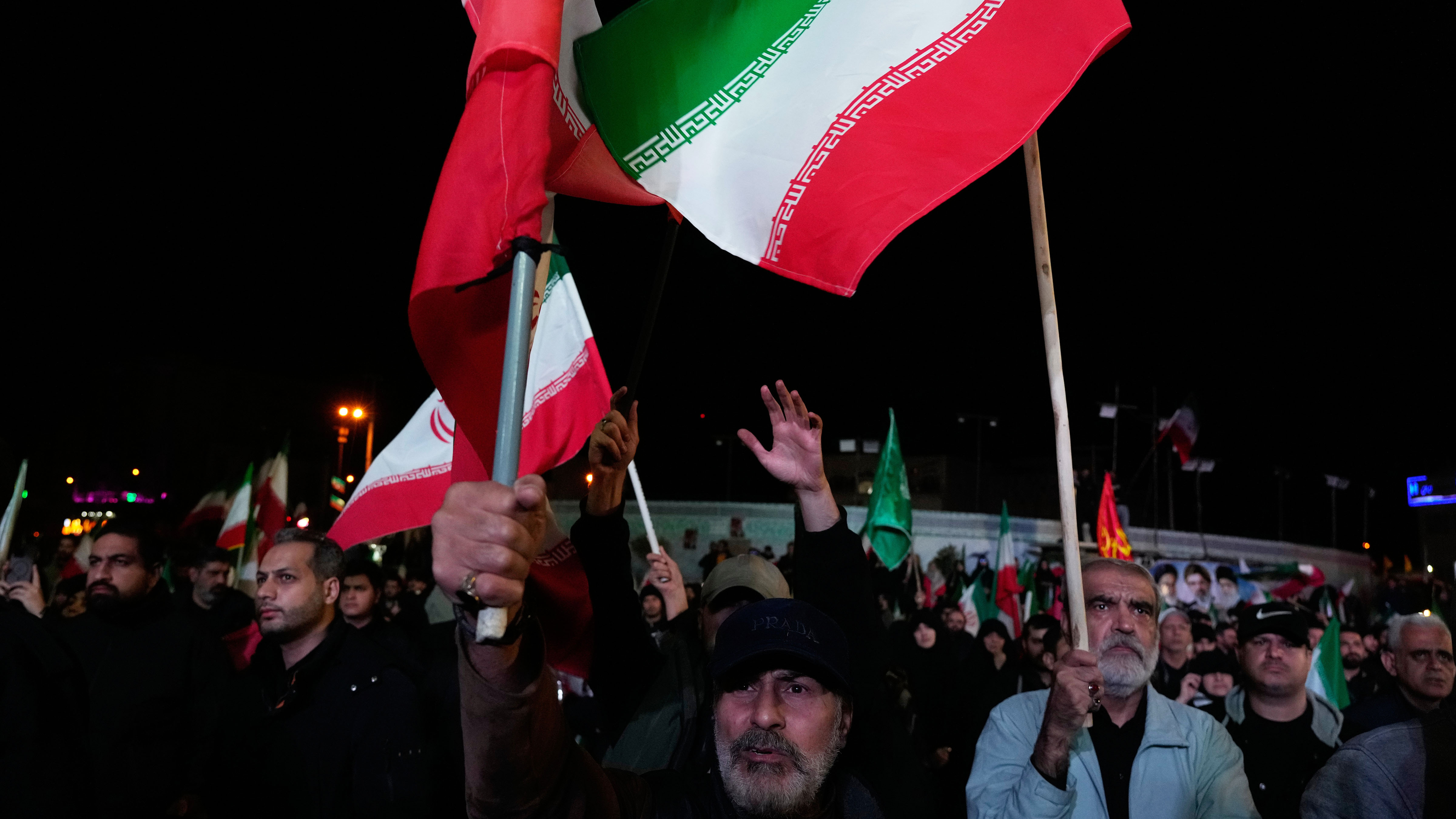
Iranian pro-government demonstrators wave their country's flags in a gathering after announcement of a two-week ceasefire in the war with the United States and Israel.

Even though the U.S. and Iran have been accusing each other of violating the truce since its implementation, mediators see its looming end as a potentially useful tool for ramping up pressure on both sides to come to the table, according to the officials and source.

The officials and other source say mediators are trying to stave off a resumption of attacks on Iran from the U.S. and push Tehran to reconsider a proposal put forward by the Trump administration during the Islamabad talks.

When asked at the White House Monday about the negotiations with Iran, President Donald Trump said "we've been called by the other side," and that "they'd like to make a deal very badly, very badly."

Both the U.S. and Iran have expressed interest in continuing to work toward a diplomatic settlement, the officials and source said.

ByIsabella Murray ABCNews logo
Apr 13, 2026, 4:00 PM GMT

Trump says Iran's Navy is 'completely obliterated'

President Donald Trump touted U.S. military action against Iran's Navy on Monday, moments after the 10 a.m. ET deadline he set for when he said American troops would start enforcing a blockade of all maritime traffic entering and exiting Iranian ports in the Strait of Hormuz.

"Iran's Navy is laying at the bottom of the sea, completely obliterated - 158 ships," Trump wrote on social media, claiming that he hadn't ordered strikes on "fast attack ships" because they aren't a threat.

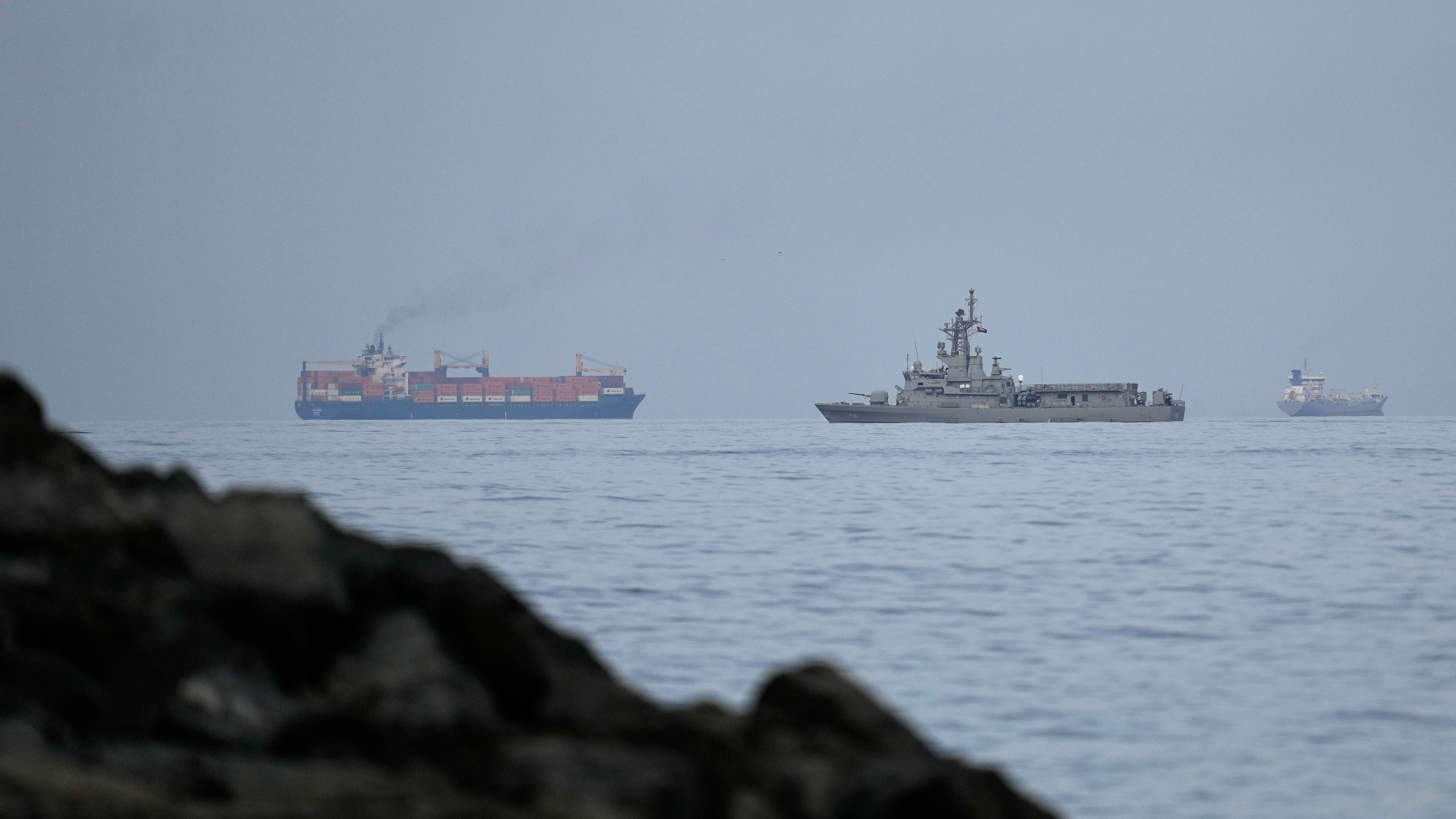
A UAE navy ship sails next to a cargo ship in the Strait of Hormuz as seen from Khor Fakkan, United Arab Emirates, Wednesday, March 11, 2026.

On Saturday, CENTCOM confirmed Trump's announcement that the U.S. military had begun mine-clearing operations to ensure safe passage through the Strait.

Trump threatened in his post on Monday, "If any of these ships come anywhere close to our BLOCKADE, they will be immediately ELIMINATED, using the same system of kill that we use against the drug dealers on boats at Sea. It is quick and brutal."

ByZoe Magee ABCNews logo
Apr 14, 2026, 11:06 AM GMT

UK won't join US Strait of Hormuz blockade, Starmer says

British Prime Minister Keir Starmer said in a statement on Monday that the U.K. will not take part in President Donald Trump's planned blockade of Iranian ports in the Strait of Hormuz, which is due to begin on Monday.

"We're not supporting the blockade," Starmer told BBC radio in an interview Monday morning, while declining to say whether the U.K. was sending minesweeper vessels to the Strait, as Trump indicated in an interview with Fox News.

"We do have mine-sweeping capability, I won't go into operational matters, but we do have that capability -- that's all focused, from our point of view, on getting the Strait fully open," Starmer said.

He reiterated his position that the U.K. will not join the conflict. "The UK is not getting dragged in," Starmer said. "That's not in our national interest, because I'm not going to act unless there's a clear, lawful basis and a clear thought-through plan."

French President Emmanuel Macron said in a Monday post to X that the U.K. and France are coordinating on a "peaceful multinational mission" to keep the Strait of Hormuz open to maritime traffic "as soon as circumstances permit."

The two countries will host a conference "in the coming days" Macron said.

"This strictly defensive mission, separate from the warring parties to the conflict, is intended to be deployed as soon as circumstances permit," Macron wrote. "No effort must be spared to swiftly reach, through diplomatic means, a strong and lasting settlement to the conflict in the Middle East."

BySomayeh Malekian ABCNews logo
Apr 14, 2026, 11:06 AM GMT

Iran says 'no port' will be safe if Iranian ports are threatened

The spokesperson for Iran's joint military command at Khatam al-Anbiya Central Headquarters said Monday that if the security of Iranian ports in the Persian Gulf and the Sea of Oman is threatened, "no port in the Persian Gulf and the Sea of Oman will be safe."

"Enemy-affiliated" vessels will not have the right to pass through the Strait of Hormuz, while other vessels will continue to be allowed transit "in accordance with the regulations of the Islamic Republic of Iran's armed forces," the spokesperson said, as quoted by Iran's state television Telegram channel.

"Given the continued threats," he said, the Islamic Republic will also implement "a permanent mechanism" to control the Strait of Hormuz, even after the war.