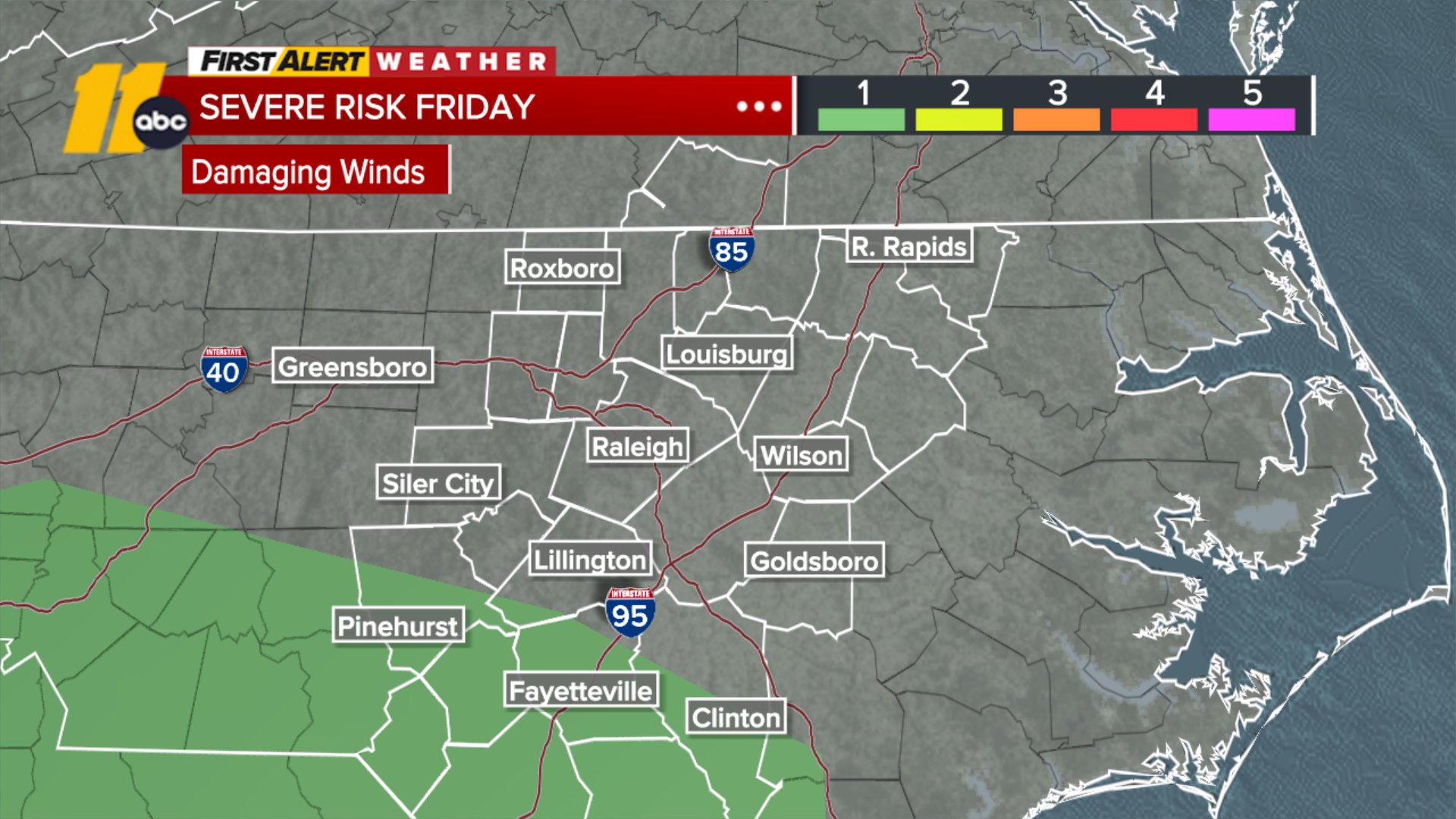
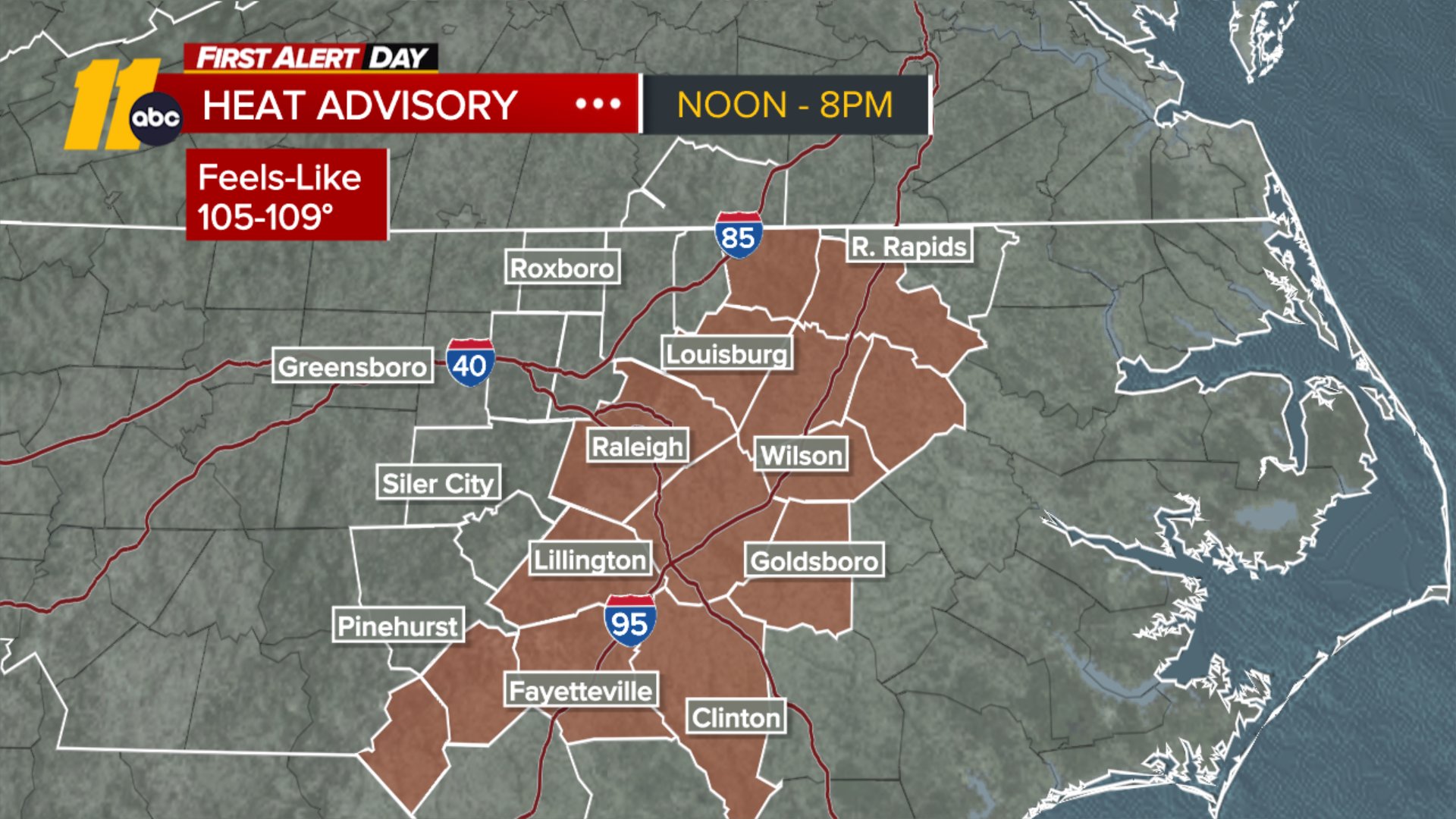
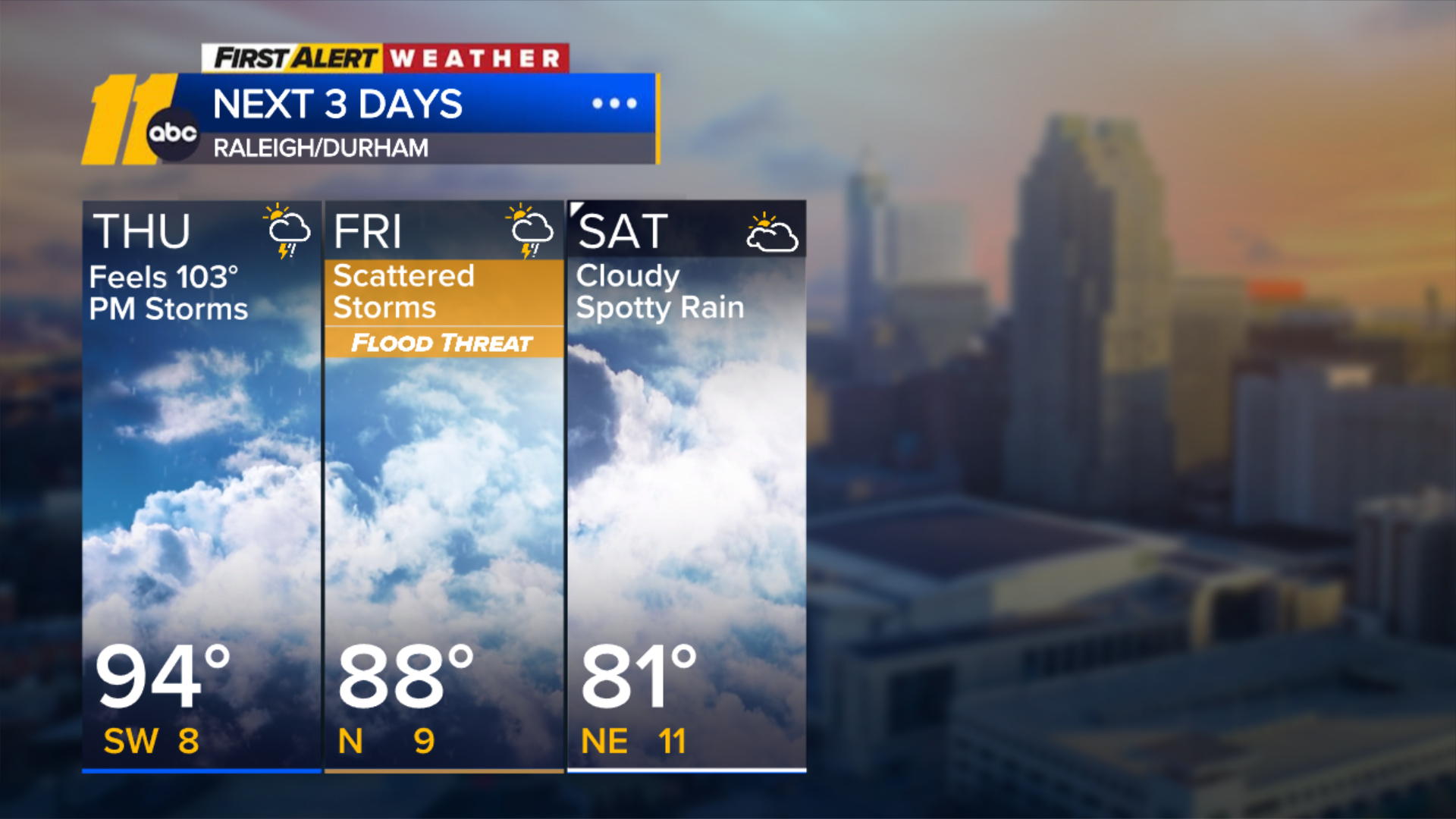
As Central North Carolina bakes under above average summer temperatures, a NC psychiatrist is warning that the dangers go far beyond dehydration and heat exhaustion. The extreme temperatures can also take a toll on mental health.
"I think most of us are familiar with extreme heat causing physical consequences," Dr. Narissa Price said. "So, heat stroke, heat exhaustion, but there are psychological or mental health consequences as well."
According to Dr. Price, those consequences can show up in subtle but serious ways: mood swings, trouble sleeping and difficulty concentrating. People with existing mental health conditions may be especially vulnerable.
"If you have an underlying mental health condition, like a mood disorder, anxiety disorders or schizophrenia... extreme heat can worsen those, and even, unfortunately, suicidal ideation or thoughts about suicide can increase with extreme heat as well," she said.
While people may stay indoors to escape the heat, isolation can bring its own mental health risks.
"It's important to take a check in with ourselves."