North Carolina drought tracker: Latest restrictions, water levels and drought impacts

ByABC11 Digital Team WTVD logo
Last updated: Friday, July 17, 2026 8:00PM GMT
Drought 2026 and impact across Central North Carolina
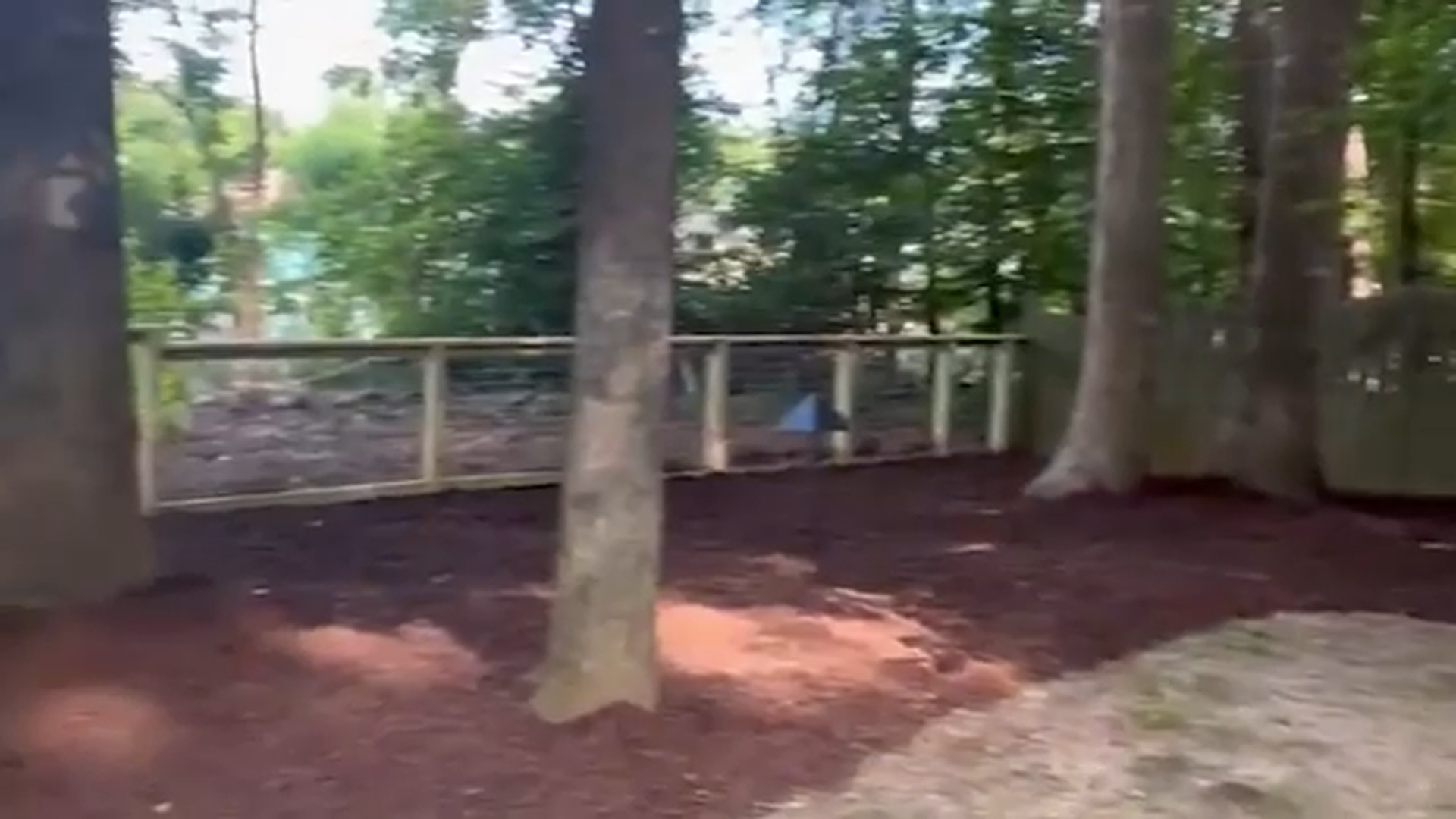
An Orange County landscaping business is staying busy despite intense summer heat and severe drought conditions affecting much of the area.

RALEIGH, N.C. (WTVD) -- See our latest live blog here.

North Carolina continues to grapple with drought conditions as high temperatures, limited rainfall and increased water demand put pressure on reservoirs, rivers and local water supplies.

ABC11 will track the latest developments and provide updates as conditions change in our viewing area.

Key Headlines

Here's how the news is developing.
Jul 16, 2026, 1:54 PM

July 16 drought map

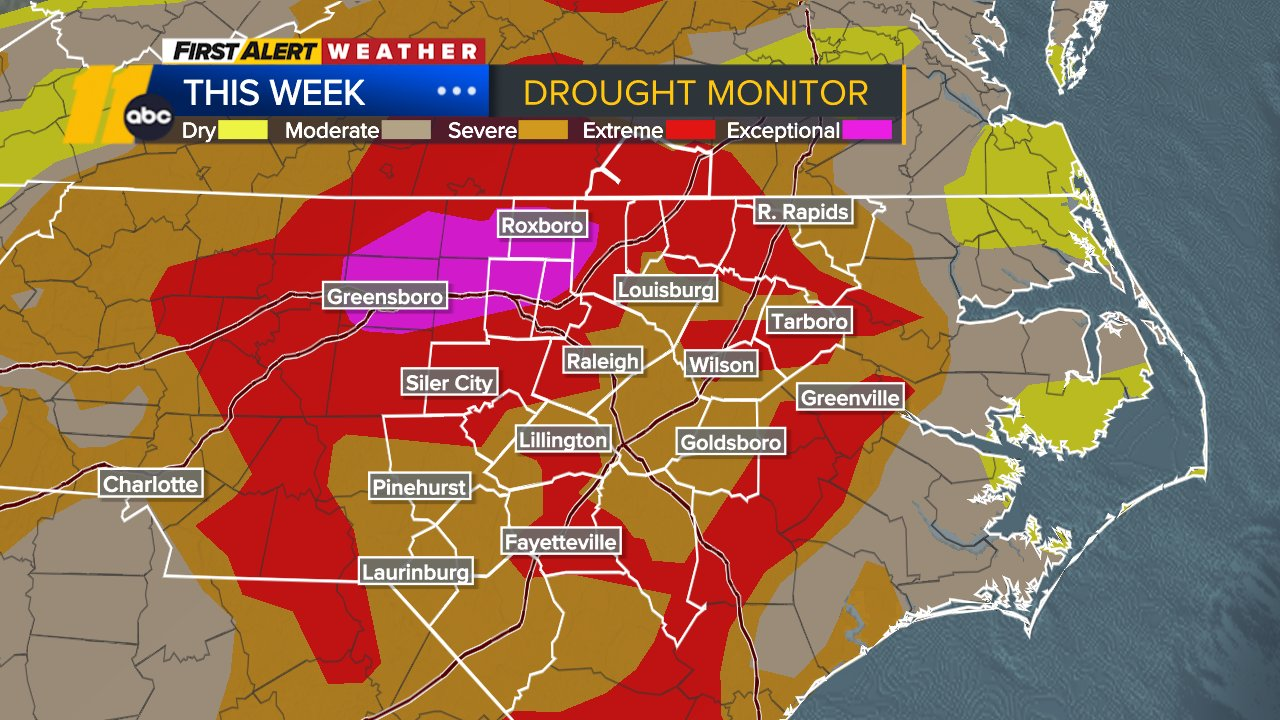
New NC drought map reveals that the widespread moderate-to-heavy rain over the last week resulted in improvements for portions of Wake Co. and a few areas east of the Triangle.

SEE ALSO | North Carolina drought tracker: Latest restrictions, water levels and drought impacts

Download the ABC11 App for breaking news and weather alerts

WTVD logo
Jul 19, 2026, 5:19 PM GMT

Holly Springs move to stage 1 water restrictions

Holly Springs has enacted a stage one water shortage alert as drought worsens in North Carolina. Holly Springs gets it water from Harnett County.

Stage 1 guidance

  • Addresses ending in EVEN numbers may irrigate Monday, Wednesday, and Saturday from 6 to 10 a.m. and 6 to 10 p.m.
  • Addresses ending in ODD numbers may irrigate Tuesday, Thursday, and Sunday from 6 to 10 a.m. and 6 to 10 p.m.
  • No irrigation is permitted on Fridays.

Facilities of significant community impact (schools, golf courses, plant nurseries) may irrigate as needed. However, such users must keep non-essential watering to a minimum.

Hand-watering with containers or hoses, drip hoses, and the use of alternative water sources are not restricted.
Download the ABC11 App for breaking news and weather alerts

WTVD logo
Jul 19, 2026, 5:19 PM GMT

Stage 1 voluntary water restrictions activated in Fayetteville

Monday, the Fayetteville Public Works Commission (PWC) activated Stage 1 of the water restrictions.

Under stage 1, which is voluntary, customers are asked to reduce non-essential water use to help protect the community's water supply for drinking, sanitation, and fire protection.

Water customers are asked to do the following:

  • Limit outdoor watering
  • Avoid washing vehicles, equipment and hard surfaces
  • Delay filling or refilling pools, ponds and fountains
  • Avoid non-essential fire hydrant use
  • Do not use treated water for dust control or compaction

Well water use is allowed during all stages.

"Small conservation steps made by many can make a big difference," said Timothy Bryant, PE, CEO/General Manager of Fayetteville PWC. "These voluntary measures help save the water supply for essential needs like drinking water, sanitation, and fire protection while PWC continues to provide safe, reliable, and affordable service to the community.

Fayetteville PWC says the restrictions apply to treated water provided by the city.

To see a full list of measures by stage click on Fayetteville PWC.

WTVD logo
Jul 19, 2026, 5:19 PM GMT

Spring Lake issues voluntary water conservation alert

The Town of Spring Lake is asking residents to voluntarily conserve water until further notice to help protect the community's water supply.

Town officials are urging customers to reduce outdoor water use, limit vehicle washing and postpone filling pools, ponds and fountains. Residents are also being asked to follow a lawn-watering schedule based on their address number.

Officials said the conservation measures are intended to help ensure water remains available for everyone while demand remains high.

WTVD logo
Jul 19, 2026, 5:19 PM GMT

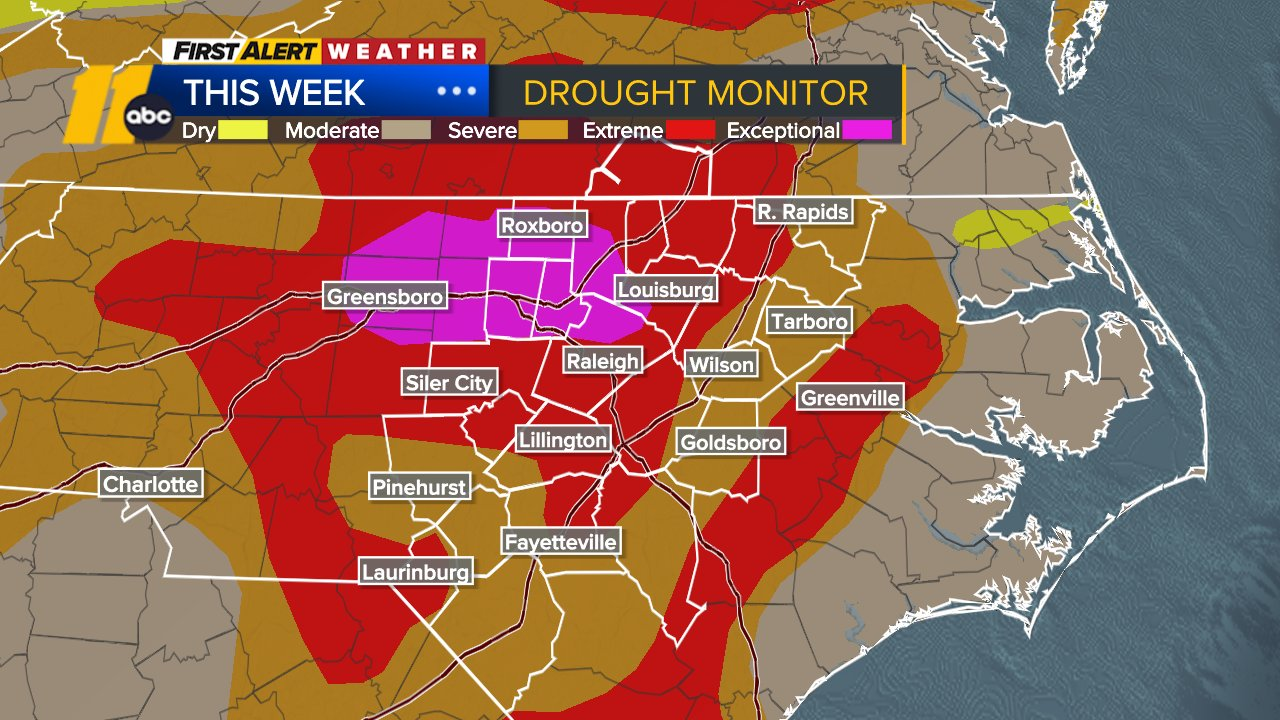
July 2 drought monitor update

This week's U.S. Drought Monitor showed no major changes across central North Carolina, with drought conditions remaining largely the same as last week.

The most significant worsening conditions were confined to southeastern North Carolina, where drought expanded due to continued dry weather.

While some areas of central North Carolina received recent rainfall, officials continue to closely monitor drought conditions, reservoir levels and water supplies as hot, dry weather persists.