Fayetteville businesses join fight over Cape Fear River water use


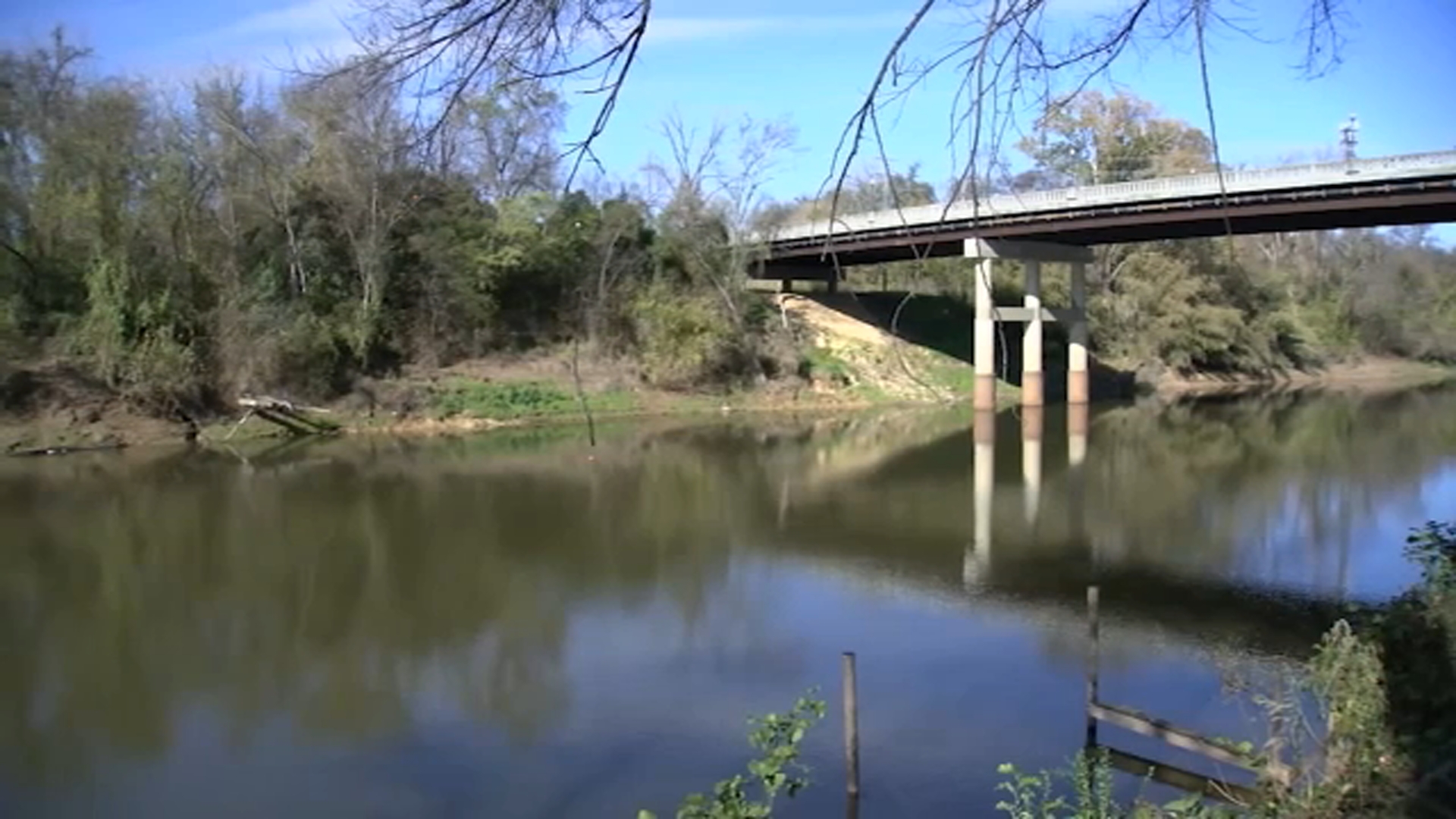
FAYETTEVILLE, N.C. (WTVD) -- Cumberland County officials are urging the state to reconsider a proposal that would allow the Town of Fuquay-Varina to withdraw up to 6 million gallons of water per day from the Cape Fear River and discharge it into the Neuse River without returning any water to the Cape Fear basin.
Local business owners and county leaders say the plan could have lasting consequences for the region's water supply, recreation, and economy.
In 2020, Town of Fuquay-Varina submitted to the North Carolina Environmental Management Commission (NCEMC) the town's notice of intent to request an Interbasin Transfer certificate.
At Deep Creek Outfitters, Store Manager Seth Maldonado said he worries about the future of the river and those who rely on it.
"It's going to kill the river," Maldonado said. "Not just including the people using the river for resources, for water, and everything else, but as far as your fishermen coming out here. That's going to be the end of it."
Maldonado said he knows many residents who depend on the river to feed their families. "They fish this river and they do nothing but fish for food for their family," he said.
County officials share similar concerns. Cumberland County Board of Commissioners Chairman Kirk DeViere said the transfer would reduce the amount of water available downstream.
"It limits the capacity of water that's going to be in the Cape Fear River, which ultimately limits capacity for us here in Cumberland County," DeViere said.
Interbasin transfers, moving water from one river basin to another, are becoming more common as communities struggle to meet growing water demands. But DeViere said such transfers must return water to the basin of origin.
"It's not just about taking it out, but you've got to put it back in the place where you took it out from, and it should be cleaner and safer when you put it back in," he said.
"The problem we see here is they're putting it back into a different location. So we're losing capacity."

Fuquay-Varina currently purchases water from Raleigh as well as Harnett and Johnston counties, but town officials say those supplies are no longer sufficient. They insist the proposal meets state requirements for water transfers.
Cumberland County officials, however, warn that the long-term environmental impacts could be significant.
"While it may not seem a big deal now, when you start talking about droughts and growth, industrial or residential across eastern North Carolina and down the Cape Fear River, that will be impactful," DeViere said.
In a statement sent to ABC 11, Fuquay-Varina Town Manager Adam Mitchell said:
"On September 1, 2020, the Town of Fuquay-Varina submitted to the North Carolina Environmental Management Commission (NCEMC) the Town's Notice of Intent to Request an Interbasin Transfer (IBT) Certificate. Since that time, the Town has been working closely with the North Carolina Department of Environmental Quality (NCDEQ) to address NCDEQ's comments on the Town's various drafts of an Environmental Impact Statement (EIS) that the Town submitted to NCDEQ in July of 2022, February of 2024, May of 2025 and June of 2025. NCDEQ had a series of public meetings on the Town's proposed IBT on October 14, 20 and 21, 2020. The NCEMC has scheduled three public hearings on the Town's draft EIS on December 4, 9 and 11, 2025. The Town looks forward to receiving additional stakeholder comments on the draft EIS and the Town's proposed IBT at these public hearings and encourages stakeholders to attend and provide public comments on the draft EIS and proposed IBT. For additional information regarding the Town's draft EIS and proposed IBT, please contact Michael Wagner, Public Utilities Director at the Town."
Maldonado hopes speaking out will help protect the river. "If we don't go, then they're just going to do whatever they want to," he said. "It affects us."
The Fayetteville Public Works Commission says a transfer of this size could affect nearly 1 million residents across five counties, including 250,000 people it serves in Fayetteville. The utility also warns the proposal could pose a national security risk, noting it supplies up to 8 million gallons of water per day to Fort Bragg.
A public meeting on the proposal is scheduled for Thursday, December 4 at Fayetteville Technical Community College at 6 p.m. Sign-in and speak registration begins at 5:30 p.m.