Durham program helps women build the future of construction: 'We're coming'


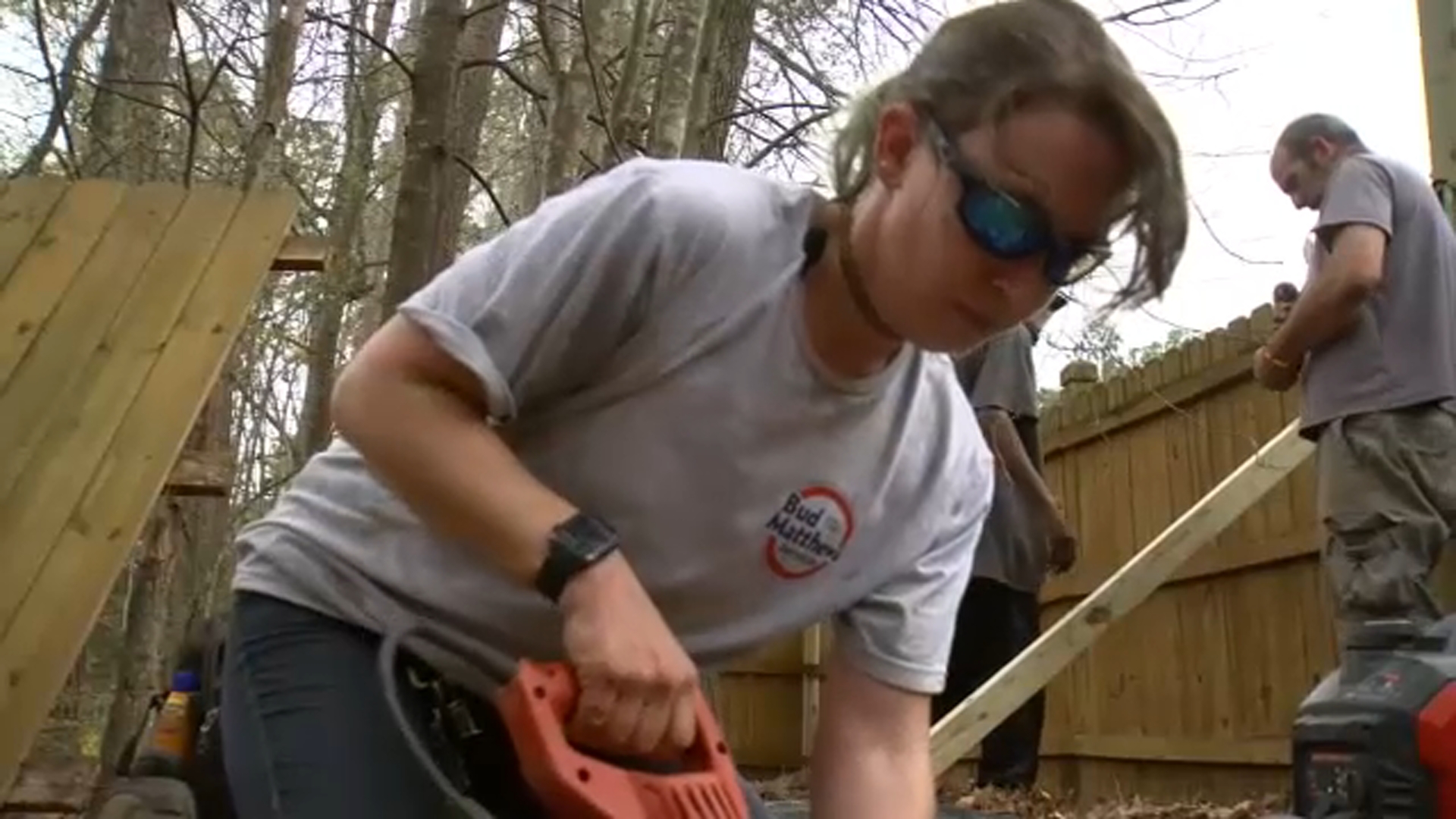
DURHAM, N.C. (WTVD) -- Faith John wipes sweat from her brow as she works alongside two teammates, replacing rotting fence posts in a Chapel Hill neighborhood. The crew tears out damaged wood, resets new posts, and pours fresh concrete.
John is the only woman on the three-person team.
"We are tearing down old posts that are rotten on the bottom and then replacing those and pouring new concrete," she said while working on the project.
For John, the job represents more than just a construction task. The single mother of two and domestic violence survivor says the work has given her a sense of independence and pride.
"There's a lot of smack talk, but I feel like I keep up," she said with a laugh.
John is also part of a growing trend.
We're coming to work with you. We're coming to be hired,- Martrisha Bradshaw, Durham Tech instructor
According to the National Association of Home Builders, women represented 11.2% of the construction workforce in 2024, and the number of female construction workers has steadily increased every year since 2012.
Programs across the Triangle are helping accelerate that shift.
At Durham Technical Community College, a seven-week training program led by the nonprofit Hope Renovations is preparing women for careers in the construction trades. The program combines classroom instruction with hands-on practice.
Instructor Martrisha Bradshaw, herself a graduate of the program, now teaches trainees the basics from tool safety to hammering nails.
"There was an old-school mentality that women didn't belong on construction sites," Bradshaw said. "That's part of why we didn't see ourselves as fitting into these roles."

Students in the program say they are drawn by the opportunity to gain practical skills and long-term stability.
Giovanni Perry hopes the training will one day allow her to give back to her community.
"To be able to build a place and a community center that represents the neighborhood it's in and can help others," Perry said.
The class includes women from a wide variety of backgrounds and life stages.
Meredith Pysnik, 43, is a former government worker who joined the program hoping to become more self-sufficient at home while also connecting with other women in the field.
"Diversity, equity, inclusion, and accessibility have become bad words in a lot of ways," Pysnik said. "But they are the important things that make our communities thrive and make businesses thrive."
When trainees graduate, they earn industry certifications that can open doors to construction jobs across the region.
Bradshaw says the goal is not just to train workers but to change the industry's culture.
"We're coming to work with you. We're coming to be hired," she said. "We hope you make space for us. If you don't, we'll make our own space."
For women like Faith John, the progress is already tangible.
"I've literally gained muscle since working here," she said, flexing her arm. "This was not here before."
And for many of the women entering the trades, that strength represents more than physical change; it signals a new future being built, one project at a time.