Nonprofits brace for impact as a result of government shutdown


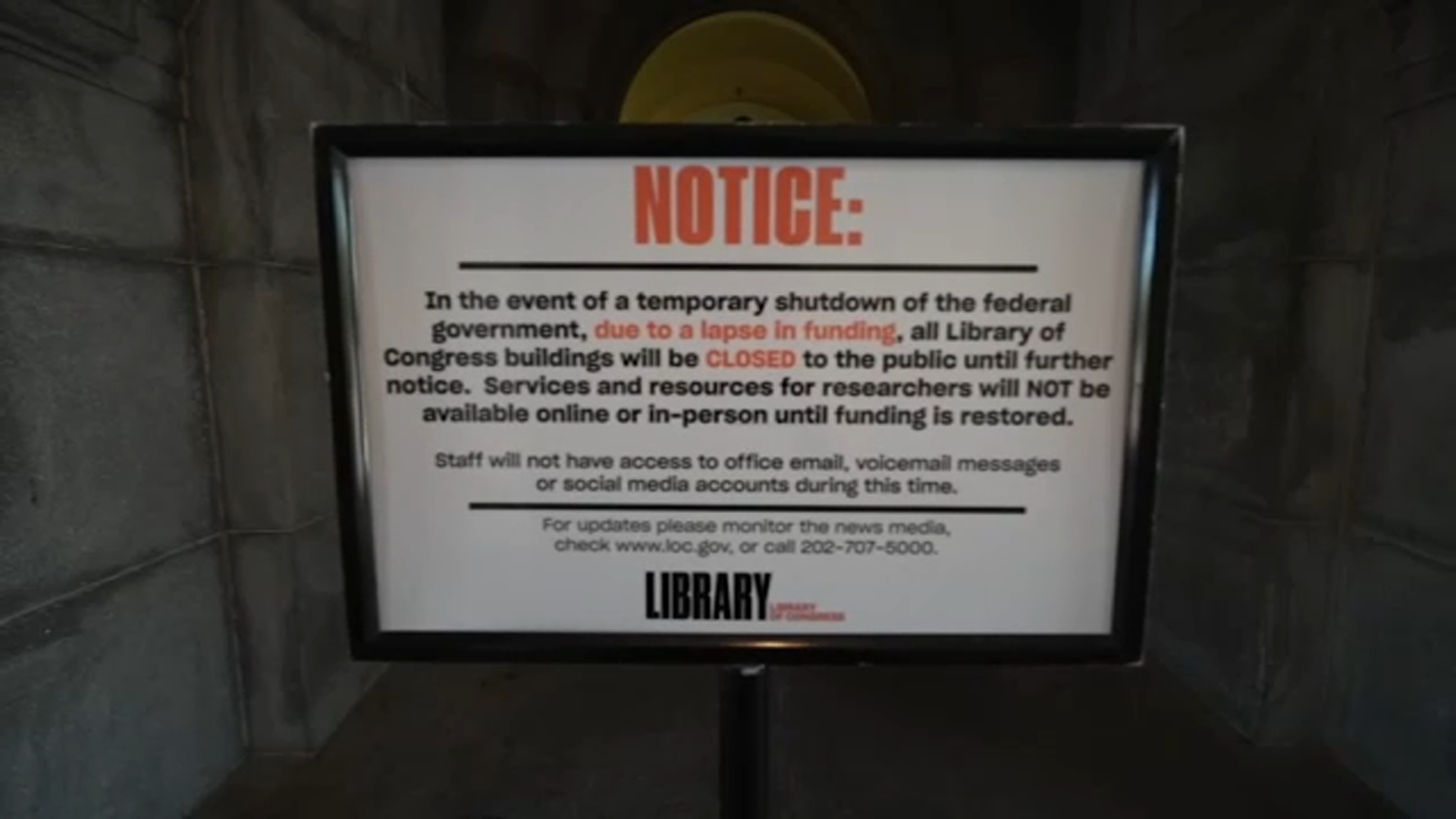
RALEIGH, N.C. (WTVD) -- As the government shutdown approaches one week, nonprofits reliant on federal partners are bracing for impacts.
"Because the government is shut down, it means that nonprofits can't access the grant administrators that they normally work with to renew their grants, to answer questions, to draw down funds," said Sarah Saadian, the Senior Vice President of Public Policy and Campaigns at the National Council of Nonprofits.
"When we've asked (nonprofits), anywhere from 20% to more than 50% of funding for many nonprofits comes from federal grants and contracts," added David Heinen, the Vice President for Public Policy and Advocacy at the North Carolina Center for Nonprofits.
Analysts believe the longer the government remains shut down, the more nonprofits will be affected.
"As other federal benefits start to go away, people who typically rely on those federal benefits are going to have to look to nonprofits to pick up the slack and provide more. But at the same time, a lot of the same nonprofits are about to lose their biggest source of funding, so it is a double challenge," Heinen explained.
"I think we're going to start to see some hardship after two weeks of a government shutdown. But certainly by the end of the month, when rent payments are due, when payroll is due, when other expenses are coming due, that's when the nonprofits are going to start to feel the pain the most. Our hope is that Congress can avoid that by reopening the government and allowing nonprofits to do their vital work," Saadian explained.
The most recent shutdown lasted 35 days.
"Nonprofits could be looking into taking out credit or loans or bridge loans or getting other resources from philanthropy. But it doesn't make up for the shortfall and the unexpected gap from the federal government," said Saadian.
"The challenge for the government shutdown is that there's not really any clarity of whether this is going to be resolved in the next three days or whether it's going to go on for for weeks and weeks and weeks or months," said Heinen.
Even prior to the shutdown, the Food Bank of Central and Eastern North Carolina reported they were serving more people than at the height of the pandemic, a figure they expect could increase.
"Over the next couple of weeks, we'll anticipate that we will begin to see more federal workers accessing pantries, and that's what we've seen in the past as they start missing their paychecks. As this goes on longer term, right now we've been assured from the state that we have funding for SNAP in the state and WIC through the end of the month. But after October, if the shutdown continues, then we have concerns about people receiving their SNAP, and with benefits increasing the need even further on the Food Bank and our partners, as well as the food that we get from the government, like the Emergency Food Assistance Program or the senior boxes that we deliver to 9,000 seniors each month. We don't know if we'll be able to see those shipments, if they become delayed or if they just become canceled outright depending on the length," said Food Bank of Central and Eastern North Carolina President and CEO Amy Beros.
Beros explained the shutdown comes during a time in which they're already dealing with reduced governmental funding.
"Last fiscal year, about 27% of our budget came from government support. This year, (it's) only 12%," said Beros.
For every one meal the Food Bank of Central and Eastern North Carolina provides, SNAP is responsible for nine meals. For context, the Food Bank of Central and Eastern North Carolina provides 100 million meals annually across its 34-county coverage area.
"Unfortunately, right now we are operating at a lower budget. We have had some private donors step up and we are asking the community to continue to walk alongside us as they always have," Beros noted.