Gov Stein expands LEAD program in Fayetteville and other parts of NC


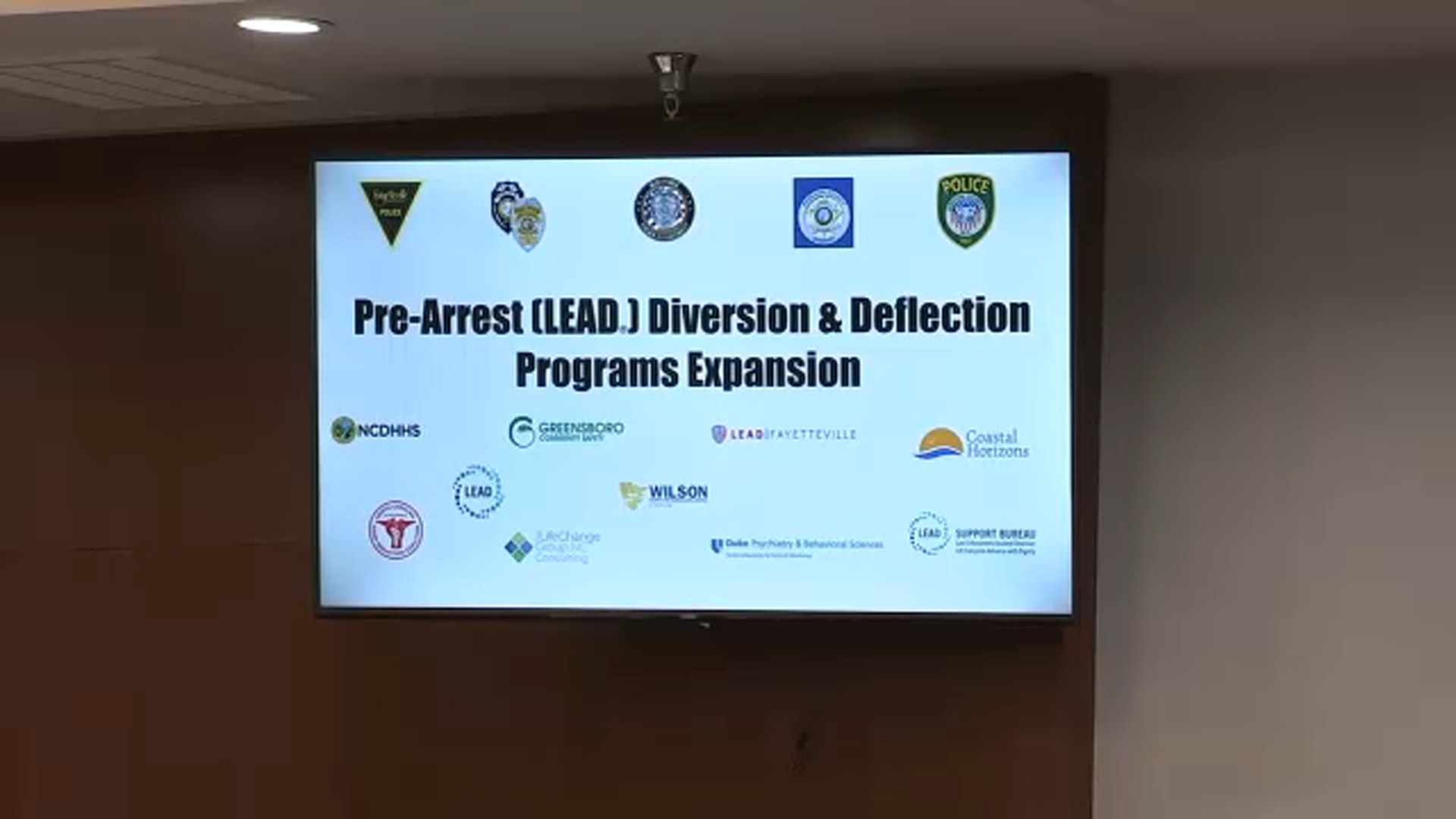
FAYETTEVILLE, N.C. (WTVD) -- Gov. Josh Stein visited Fayetteville on Tuesday to announce a $1.5 million state investment expanding the North Carolina Harm Reduction Coalition's Law Enforcement Assisted Diversion (LEAD) program, a move officials say will strengthen partnerships between healthcare providers and law enforcement across the state.
Stein, joined by North Carolina Health and Human Services Secretary Dev Sangvai and local leaders, unveiled the next chapter for the LEAD program, which aims to divert people with behavioral health needs away from jail and toward supportive services. The expansion brings the program to seven law enforcement agencies across six communities, including Fayetteville, Albemarle, Gaston County, Greensboro, New Hanover County, Robeson County, and Harnett County.
"Let's keep systems that work and keep giving law enforcement the tools that they need because that's how together we are going to build a North Carolina that's safer, stronger, and healthier," Stein said during the event.
Launched in 2016, Fayetteville's LEAD program was the South's first and the nation's fourth of its kind. The initiative has had a tangible effect. Last year alone, the Fayetteville Police Department served more than 140 people, providing more than 165 rides to ensure access to essential services and helping individuals secure housing and treatment, according to Elyse Powell, director of the North Carolina Harm Reduction Coalition.
For law enforcement, the program has become a critical tool for addressing issues beyond their traditional training.
"Our training is somewhat limited when it comes to dealing with people with mental health and substance abuse issues," said Lt. Jamaal Littlejohn, the LEAD coordinator for the Fayetteville Police Department. "Being able to tap into those other resources is definitely monumental, and it helps a whole lot."
Littlejohn said that referring people to community services allows officers to focus on more serious issues.
"A lot of our job now has turned into check-in service as a police officer. In your first call, you're a social worker, then the next, you may be someone's therapist, because law enforcement has been tasked to handle all of these calls," he said.
The expanded funding will help extend the program's reach, particularly in rural communities such as Robeson County.
"Making sure that a rural community like Robeson gets some of this support so their local sheriff and the Lumberton Police Department can then connect with health care providers and service providers in their community to treat people with addiction. It will make everyone's lives better," Stein said.