Louisiana court rules for the players: Now what?

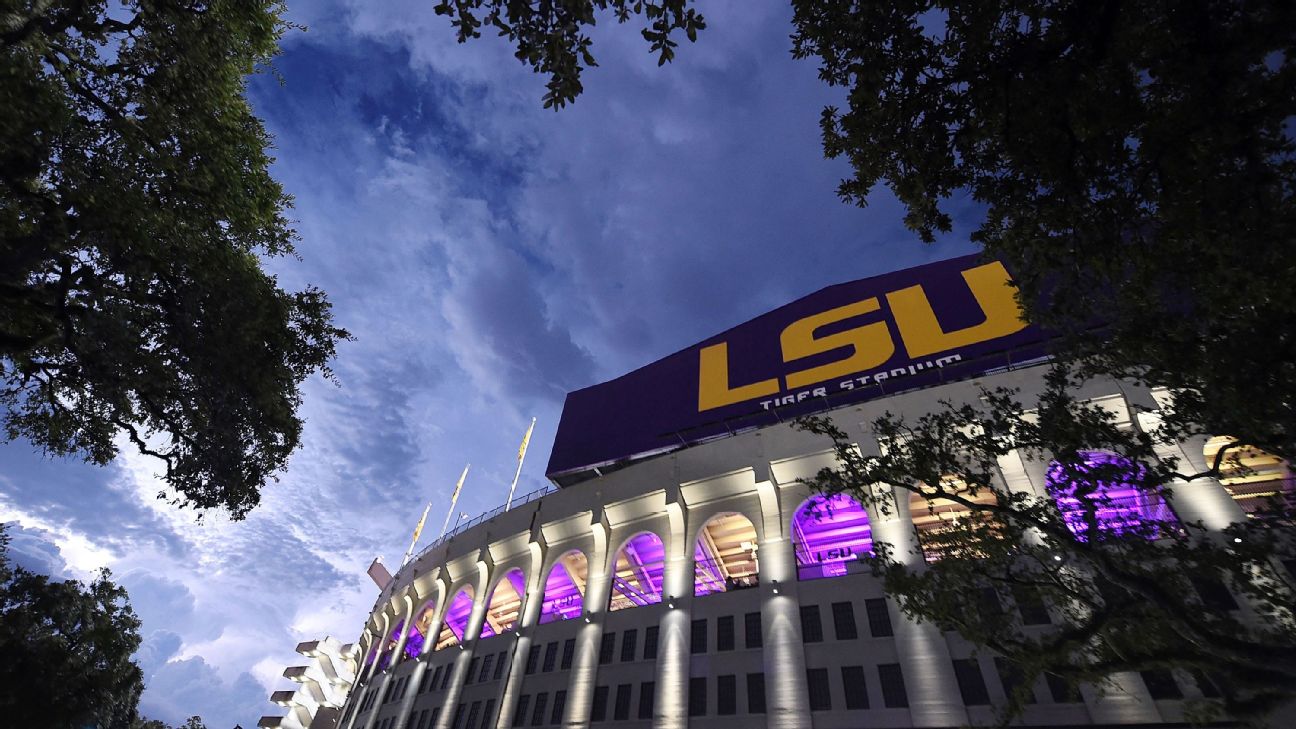
After a nearly two-week showdown with the SEC, LSU has decided to hold off on adding tight end Dae'Quan Wright and defensive tackle Zxavian Harris to its roster ahead of its season opener against Clemson.
A Louisiana judge granted the former NFL rookies an injunction on Thursday, but coach Lane Kiffin and the school decided against adding them to the 105-man roster they submitted Friday while they continue to sort through the potential ramifications of letting them play at LSU.
Judge William Jorden had approved a preliminary injunction that prohibits the NCAA and SEC from punishing any school that signs and plays the 42 athletes who sued the NCAA in Louisiana state court to play a fifth and final season of college sports.
The door isn't totally closed in this saga. Wright and Harris, two former starters for Kiffin at Ole Miss last season who had brief stints on NFL rosters, are now enrolled at LSU but will not be permitted to practice with the team until they're officially added to the 105-man roster.
Kiffin still has the opportunity to add them in the weeks ahead and saved room for them by submitting a 103-man roster, but for now he'll await resolution of an SEC appeal as well as a federal suit filed by the conference.
"I had to make a decision that is for the big picture of LSU and the LSU football program with the uncertainties of what potentially could've come by adding them to the roster," Kiffin said Saturday on "College GameDay."
Wright and Harris are two of the most high-profile examples of a growing number of former college football players attempting to return for a fifth year of college competition after going undrafted this spring.
The NCAA is currently fighting a litany of lawsuits from athletes who began their careers in the 2022-23 academic year and believe they're owed a fifth year due to the NCAA's recent age-based eligibility reform.
Here's what you need to know about the latest twists and turns in an unprecedented eligibility battle.
Who were the players impacted?
More than 40 former college athletes are plaintiffs in the suit against the NCAA in the Louisiana case, including 19 who played college football.
LSU has already landed a commitment from former Notre Dame defensive end Junior Tuihalamaka, but his eligibility was not at issue Thursday since he never signed a pro contract after going undrafted.
Several plaintiffs have already been scooped up by Power 4 programs ahead of Week 1: linebacker Trent Hendrick (UCLA), cornerback Ethan Johnson (South Carolina) safety DQ Smith (Virginia Tech), safety Brylan Green (Arkansas) and kicker Luke Drzewiecki (Minnesota).
Two original plaintiffs, outside linebacker Jack Pyburn (formerly of LSU) and safety Wydett Williams Jr. (Ole Miss), made NFL rosters and are not pursuing a return to college. Pyburn was signed off waivers by the Kansas City Chiefs, while Williams made the 53-man roster with the Arizona Cardinals as an undrafted free agent.
Running backs TJ Harden (SMU) and Anthony Hankerson (Oregon State) and cornerback Blake Cotton (Utah) did sign with NFL teams and were awaiting clarity on whether they can return to college with Jorden's ruling on Thursday. Cotton had been linked to LSU but was not added to the Tigers' 105-man roster.
The Louisiana group also included 11 men's basketball players, five softball players and four women's basketball players. Two LSU soccer players, Jazmin Ferguson and Jocelyn Ollivierre, have already competed in games this fall after being granted the temporary restraining order (TRO).
What are the SEC rules regarding these players?
In response to the news that LSU was preparing to bring Wright back to college after he was waived by the Cleveland Browns, the SEC and the rest of the Power 4 conferences moved quickly to establish new rules that ban former professional athletes from returning to college.
The SEC's policy, announced on Aug. 25, prohibits its member schools from adding athletes to their rosters who have previously declared for the NFL, NBA or WNBA draft and did not withdraw, or who signed a contract with teams in those leagues or have been listed on their rosters. Conference members voted 15-0 -- with LSU president Wade Rousse abstaining -- in support of the policy and authorized commissioner Greg Sankey to enforce penalties for schools that violate the policy.
If LSU does violate the policy, it could face penalties that include a half-season suspension for Kiffin and a fine that matches 50% of LSU's annual football budget. ESPN's Mark Schlabach reported LSU could also face a revocation of its league voting rights, and Sankey has the authority to impose additional sanctions as needed.
College football players who went undrafted and had NFL minicamp tryouts but never signed with an organization are not impacted by these conference policies.
While Jorden's ruling on Thursday protected LSU from being punished by the SEC and NCAA for rostering Wright and Harris, the threatened penalties still pose a significant risk for Kiffin and LSU as they work through this ongoing legal process.
Why would rookies want to go back?
If you ask folks in the NFL, there's still plenty of astonishment and amusement about what a mess this has become for college football over the past few weeks.
"That's the stupidest s--- I've ever heard," Indianapolis Colts general manager Chris Ballard said Tuesday. "Your entire life, you fight to get up to the NFL. But now we're gonna go back? OK, that makes a lot of freaking sense."
It was easy to see the appeal for Kiffin. LSU executed a major overhaul of its roster this offseason and had no opportunity to add more players in April and May due to the elimination of the spring transfer portal. Wright and Harris would give the Tigers more proven contributors and depth to help them get through a tough SEC schedule.
These players have an opportunity to easily make more money in a fifth college season than they would on an NFL practice squad or in the CFL or UFL. But there will be some interesting implications for their opportunity to get back into the league.
The NFL informed clubs last week that rookies who go back to college are prohibited from signing with an NFL team over the rest of this season and would become free agents next year rather than going back into the draft pool.
Which other players are going back to college?
The list of notable names who've gained TROs in other states to return for a fifth year of college football starts with former Florida State quarterback Tommy Castellanos transferring to Texas Tech.
Castellanos, a 32-game starter at Florida State and Boston College, was granted a fifth year by a TRO and joined the Red Raiders last week for an opportunity to become their No. 2 QB behind starter Will Hammond on a team determined to go back to the CFP.
Texas was able to get offensive lineman Cole Hutson back on its roster for fall camp, bolstering its depth at guard after he went undrafted and failed to land with an NFL team.
Several more schools in the state of Texas stand to benefit from fifth-year additions. SMU got its first-team All-ACC safety Ahmaad Moses back. Houston brought back wide receiver Stephon Johnson and added Arizona State transfer Myles Rowser at safety. Baylor was able to get Indiana transfer defensive lineman Hosea Wheeler cleared earlier this month.
Kentucky also got a win on Wednesday when linebacker Alex Afari Jr., a 31-game starter, was granted his TRO to rejoin the Wildcats, and South Carolina landed former Houston kicker Ethan Sanchez on Thursday.
Indiana defensive linemen Stephen Daley and Kellan Wyatt rejoined the program for fall practice and were granted their TROs on Friday. Daley ranked third in the FBS in tackles for loss last season with 19 despite missing the Hoosiers' playoff run after a season-ending knee injury.
What cases are still pending?
The major one that kicked this off in many ways was Wisne v. the NCAA in Colorado. On July 31, a federal judge granted all athletes from the class of 2022 a blanket order that would allow them to return to their previous school for a fifth year of eligibility.
The NCAA won an important battle on Aug. 21when the 10th Circuit Court of Appeals granted the NCAA a stay of the preliminary injunction granted by the federal judge. NCAA chief legal officer Scott Bearby wrote that the stay "permits Division I to return to the status quo before the district court intervened."
That injunction being vacated weeks later means it's unlikely the Wisne case will provide a decision on a time frame that matters for the class of 2022 athletes. It also helped lead to these suits in state courts for former college football players who want to return this fall and want access to the transfer portal to join a new school.
The NCAA has also succeeded on appeals in cases in Ohio and Tennessee, and preliminary injunctions were denied in cases in Colorado, Nevada, New York, South Carolina and West Virginia. In total, the number of former college football players who have become plaintiffs in eligibility cases is believed to be around 100.
In a memo sent to member schools on Aug. 28, Bearby wrote the NCAA was defending challenges brought by nearly 60 lawsuits involving 322 former student-athletes. One week later, the total number of plaintiffs is closer to 450.
What are coaches saying?
There has been predictable outrage among head coaches across the sport at the prospect of players who failed to make it in the NFL deserving a fifth year in college. And that includes LSU's season-opening opponent on Saturday.
"It's kind of embarrassing," Clemson coach Dabo Swinney said. "Honestly, it's embarrassing that's where we are. I don't blame the kids, but people trying to take advantage of the system. It's embarrassing, but we've been there for a while."
Texas coach Steve Sarkisian did bring Hutson back into his program but expressed strong support for the SEC's efforts to block players who have signed NFL contracts from coming back to college.
"The fact that somebody out there is gonna take a player off an NFL roster and tell somebody who's been doing it for nine months go kick rocks? That doesn't sit well with me," Sarkisian said. "I think that's wrong. That, morally, is wrong. So I think our presidents, ADs and chancellors got it right and we'll support it and we'll fall in line."
Many are exasperated by the fact they've been dealing with so much uncertainty around this topic while they're just mere days away from kicking off their season.
"It's a statement about where we are from a governance standpoint that we're having conversations about what the rules are going to be regarding roster management on Aug. 27," Texas A&M coach Mike Elko said last week, "and there's games tonight, there's games Saturday and we're not even really sure what the rules are around who can play on our teams this fall."br/]
Related Topics
- SPORTS
- ESPN
- TCU HORNED-FROGS
- CINCINNATI BEARCATS
- KANSAS JAYHAWKS
- VIRGINIA TECH-HOKIES
- ILLINOIS FIGHTING-ILLINI
- FLORIDA STATE-SEMINOLES
- PITTSBURGH PANTHERS
- PENN STATE-NITTANY-LIONS
- AUBURN TIGERS
- CLEMSON TIGERS
- TEXAS TECH-RED-RAIDERS
- WASHINGTON HUSKIES
- NEBRASKA CORNHUSKERS
- MIAMI HURRICANES
- BOSTON COLLEGE-EAGLES
- NORTHWESTERN WILDCATS
- USC TROJANS
- GEORGIA TECH-YELLOW-JACKETS
- BAYLOR BEARS
- HOUSTON COUGARS
- PURDUE BOILERMAKERS
- MARYLAND TERRAPINS
- MISSISSIPPI STATE-BULLDOGS
- NORTH CAROLINA-TAR-HEELS
- CALIFORNIA GOLDEN-BEARS
- MISSOURI TIGERS
- ARKANSAS RAZORBACKS
- SMU MUSTANGS
- NC STATE-WOLFPACK
- IOWA STATE-CYCLONES
- MICHIGAN WOLVERINES
- FLORIDA GATORS
- UTAH UTES
- OREGON DUCKS
- OKLAHOMA SOONERS
- DUKE BLUE-DEVILS
- MINNESOTA GOLDEN-GOPHERS
- STANFORD CARDINAL
- ARIZONA WILDCATS
- OLE MISS-REBELS
- TEXAS LONGHORNS
- WAKE FOREST-DEMON-DEACONS
- VIRGINIA CAVALIERS
- SYRACUSE ORANGE
- RUTGERS SCARLET-KNIGHTS
- KANSAS STATE-WILDCATS
- SOUTH CAROLINA-GAMECOCKS
- INDIANA HOOSIERS
- OHIO STATE-BUCKEYES
- IOWA HAWKEYES
- COLLEGE FOOTBALL
- GEORGIA BULLDOGS
- BYU COUGARS
- OKLAHOMA STATE-COWBOYS
- KENTUCKY WILDCATS
- VANDERBILT COMMODORES
- WEST VIRGINIA-MOUNTAINEERS
- NOTRE DAME-FIGHTING-IRISH
- TEXAS A-M-AGGIES
- COLORADO BUFFALOES
- LSU TIGERS
- LOUISVILLE CARDINALS
- MICHIGAN STATE-SPARTANS
- WISCONSIN BADGERS
- ALABAMA CRIMSON-TIDE
- ARIZONA STATE-SUN-DEVILS
- TENNESSEE VOLUNTEERS
- UCF KNIGHTS
- UCLA BRUINS