Lumbee Tribe of NC nears full federal recognition as Senate passes spending bill


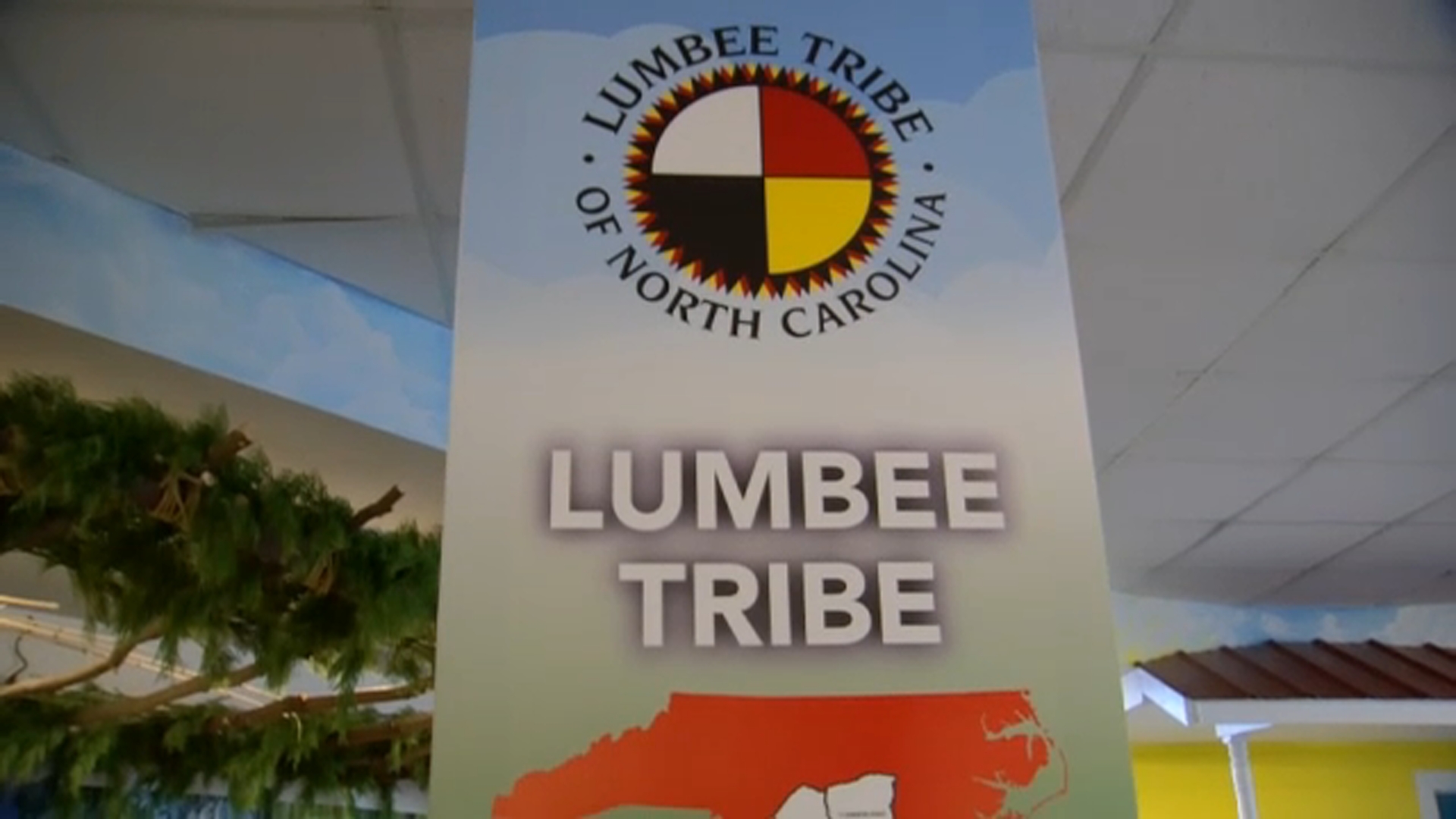
PEMBROKE, N.C. (WTVD) -- The Lumbee Tribe of North Carolina is on the brink of achieving full federal recognition. after Congress approved legislation advancing the tribe's long-standing effort for sovereignty and access to federal resources, including health care.
On Wednesday, the U.S. Senate passed the FY2026 National Defense Authorization Act, which includes language recognizing the tribe. This milestone comes after the House of Representatives passed the bill last Wednesday.
The bill, which passed with the required 51 votes, now heads to President Donald Trump's desk. If signed, it would grant the Lumbee Tribe full federal recognition, allowing the tribe to self-govern and qualify for federal benefits that have long been denied.
Trump is expected to sign it. The president has long supported the Lumbee Tribe's quest for recognition.
The Lumbee Tribe, the largest tribe in North Carolina, was first recognized by Congress in 1956, but that recognition did not include federal benefits. Tribal members say the latest vote represents a historic milestone after more than a century of advocacy and at least 29 failed attempts to secure full recognition.
"I'm 78 years old. I just hope to live to see it come to pass," said Charles Bell, a Lumbee tribal member.
Supporters gathered at the Pembroke Boys & Girls Club, where emotional reactions marked what many described as a long-awaited victory.
"It's bittersweet. There's a lot of people who have died and never got to see this moment," said John Oxendine, a Lumbee tribal member.
The bill has faced legal and political opposition, particularly from the Eastern Band of Cherokee Indians, who argue the Lumbee Tribe does not meet all requirements established by the U.S. Department of the Interior for federal recognition. One requirement includes providing evidence that a tribe's membership consists primarily of descendants of a single historical American Indian tribe.
Voices of opposition
Opponents contend the Lumbee Tribe is composed of members from multiple ethnic groups and lacks a clear ancestral distinction.
Despite the criticism, Lumbee leaders and members say the congressional vote affirms their history and identity.
"I think Congress finally got it right," Oxendine said.
Eastern Band of Cherokee Indians Principal Chief Mitchell Hicks voiced opposition on social media last week, writing:
"Lumbee group Chairman John Lowery has again attempted to shift attention away from the facts by recasting both Lumbee history and ours. This is not new. Shifting identities and narratives have been the only consistent feature of Lumbee identity from the beginning.
"Chairman Lowery's latest comments, which echo Sen. Markwayne Mullin's mischaracterization of Cherokee history, serve one purpose: to distract from the fact that Lumbee recognition language was inserted into the National Defense Authorization Act without ever entering the federal acknowledgment process. That is the issue. Not their characterizations of us. Not the stories they choose to tell. The problem is the continued avoidance of the standards required of every other tribal nation.
"The Eastern Band of Cherokee Indians has been clear for decades: If the Lumbee pursue recognition through the established federal process, we respect that process. We do not respect political shortcuts that bypass the standards meant to protect sovereignty across Indian Country. We are not moved by sophomoric attempts to redefine us or to redefine history. Our identity is documented. Our sovereignty is established. Neither depends on Lumbee approval nor Lumbee interpretation.
"We also cannot ignore the role of North Carolina Senator Thom Tillis, who has repeatedly pursued Lumbee recognition while refusing to engage with the Eastern Band of Cherokee Indians unless we agreed to support that outcome. As North Carolina constituents, we have been clear that our commitment to sovereignty is not conditional, negotiable, or for sale.
"Equally concerning are the back-room political deals that enabled this recognition language to be placed into a defense bill. President Trump has not been a friend to Indian Country, and prioritizing Lumbee recognition in exchange for an estimated 60,000 votes is not leadership but a dismissal of tribal sovereignty in favor of electoral strategy. A shortcut doesn't build Indian Country, it signals to Washington that our sovereignty is something they can bargain with.
"History does not change because someone retells it, and recognition achieved without an evidentiary process does not erase the questions that remain."
While controversy remains, younger members of the Lumbee community say the legislation represents hope for future generations.
"It's such an honor to be Little Miss Lumbee and support my Lumbee people and let everyone know that they are enough,' said 10-year-old Jadyn Herndom.
Several Lumbee tribal leaders are already in Washington and are expected to attend the signing if the bill is approved by the president.
NC lawmakers react to passage
Tillis released a statement on the passage of the Lumbee Fairness Act:
"For 137 years, the Lumbee Tribe have been fighting for federal recognition, and today the federal government has finally honored that promise. President Trump traveled to Robeson County and pledged to get federal recognition done. He kept that promise and showed extraordinary leadership. With the Senate passage of the NDAA, the Lumbee Tribe of North Carolina will now achieve full federal recognition and access to every federal benefit they have earned and deserve."
"This was a team effort on the part of North Carolina leaders. I am grateful to Chairman John Lowery, Senator Ted Budd, Michael Whatley, and Members of the North Carolina Congressional Delegation - including Representatives Rouzer, Hudson, Harris, McDowell, and Moore - for working together to achieve this historic success."
"I want to thank my staff, especially Cirilo Perez, whose tireless and dedicated work behind the scenes played an instrumental role in breaking a decades-old legislative stalemate and making this historic moment a reality."
Sen. Ted Budd, R-NC, and Tillis helped lead the reintroduction of the Lumbee Fairness Act.
"For nearly 50 years, the Lumbee Tribe has fought for the same rights and benefits that every other federally recognized tribe receives," said Budd. "Today, with the passage of this year's National Defense Authorization Act, this long fight is over, and the more than 60,000 members of the Lumbee Tribe will begin the process of receiving the benefits they deserve. I want to thank Senator Tillis for his strong leadership of the North Carolina delegation as we fought for this provision, and his unyielding dedication to the recognition of the Lumbee people throughout his time in the U.S. Senate. Under the leadership of Chairman John Lowery, the Lumbee Tribe has had strong advocates in President Trump and his administration and in Representatives Rouzer and Harris, who introduced the Lumbee Fairness Act in the House. I am grateful to have played a role in securing this major victory for such an important group of North Carolinians."
Other North Carolina lawmakers also hailed the historic development.
"Since 1885, the Lumbee Tribe was recognized in North Carolina and began its long quest to seek full federal recognition thereafter," said Republican Rep. Greg Murphy. "The community faced egregious oppression and violence, and while Congress acknowledged the Lumbee people in 1956, they did not receive the same benefits and recognition as other tribes. After many decades, justice has been achieved, and with great bipartisan backing. I'm very proud to have supported this effort from the beginning. Congratulations to the Lumbee Tribe!"
Tribal leaders and members, including Teen Miss Lumbee Keely Deal, emphasized that recognition would provide more than just financial resources-it would honor the tribe's sovereignty and the struggles of their ancestors. Deal noted that the impact would extend to future generations, symbolizing the fulfillment of long-sought justice.