Federal shift on cannabis classification draws mixed reaction


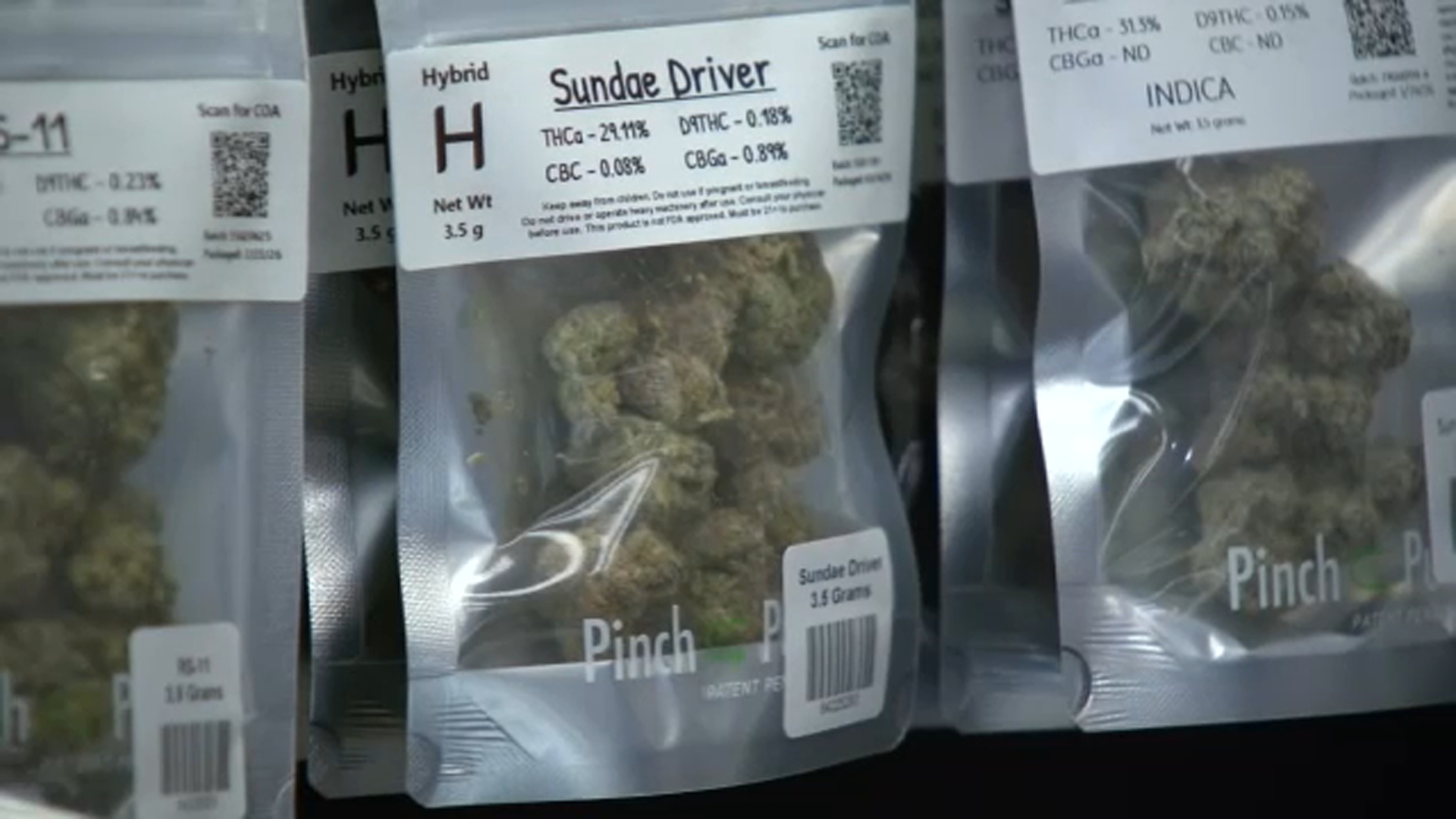
RALEIGH, N.C. (WTVD) -- The U.S. government is easing some rules on medical marijuana, reclassifying it from a Schedule 1 to a Schedule 3 drug, a move that aligns federal guidance with many state laws, even as marijuana remains illegal at the federal level.
"These actions will enable more targeted, rigorous research into marijuana's safety and efficacy, expanding patients' access to treatments and empowering doctors to make better-informed healthcare decisions," Acting Attorney General Todd Blanche wrote in a statement on X.
The order moves marijuana from Schedule I to Schedule III, putting state-licensed medical marijuana in the same category as some pain medications, ketamine and testosterone.
John Boccella, owner of The Hemp Company, has been closely tracking policy changes at both the state and federal levels. He said the new classification could ease concerns among health care professionals.
"Now that it's Schedule 3, they're not going to have to fear losing their license if they suggest to somebody that they should get one of these products to try," Boccella, a former chiropractor, said. "So that's definitely a step in the right direction."
Boccella owns two locations of The Hemp Company - one in Raleigh and one in Wake Forest.
"We want to have something for everyone," he said.
Boccella started studying CBD for a then-patient in 2017 and is hopeful the classification change will allow for further research.
"It's a great thing that the president of the United States is showing support for CBD, showing support for having cannabis in general, so that we can move this industry forward, not just in a retail setting, but also in research. There's so much more to learn and so much more benefit that these products and this plant can offer. We just need to study it. When the plant is Schedule 1, it's very difficult to do research, to learn about all the benefits that this plant has to offer. I think President Trump's moving this forward is such a great thing for all of us," said Boccella.
"This isn't about research. If it was about research, you would give research dollars and allow researchers to handle it in ways that would make it faster. This doesn't do that. This takes current medical marijuana products that have not been looked at by the FDA, and all of a sudden makes it a schedule that makes them a Schedule 3 drug. And this is just unprecedented. We've never had a drug that has not passed FDA approval as a Schedule 3. We've never had a drug that's not passed FDA approval as a schedule three drug. It really makes no sense," argued Kevin Sabet, the President and CEO of Smart Approaches to Marijuana.
Sabet, who worked in drug policy during the presidential administrations of Bill Clinton, George W. Bush, and Barack Obama, said he does not support jailing people for using marijuana, but criticized the reclassification.
Opponents of the move argue it gives an advantage to the cannabis industry and raises public safety concerns. Kevin Sabet, president and CEO of Smart Approaches to Marijuana, criticized the reclassification.
"It's going to grow the marijuana industry, but it's going to hurt our kids. It's really a giveaway to the president's friends who are fundraisers for him as well as podcasters who he needs on his side for votes," Sabet asserted.
The change in scheduling will also ease regulatory and tax burdens.
"It's a big giveaway to the pot industry," Sabet said.


A poll released this month by YouGov found 84% of respondents either "strongly support" or "somewhat support" legalizing marijuana for medical purposes, while 9% "strongly oppose" or "somewhat oppose" the move. While figures were notably lower for recreational legalization, it still garnered 50% of respondents who said they "strongly support" or "somewhat support" the move, while 33% "strongly oppose" or "somewhat oppose."
In North Carolina, a medical marijuana bill has previously passed the state Senate with bipartisan support but stalled in the House.
"(State) Senator (Bill) Rabon and some other members have been more involved in (medical marijuana legislation), and I would defer to where they are, and we'll have a conversation within our caucus as to whether or not we do something if they are interested," said Senate President Phil Berger earlier this week.
The federal move comes as the hemp industry faces potential changes later this year, including a possible ban on many products.
"We do have a bill now that the president did sign, which will outlaw those in November, the Delta-8 THC products that are derived from hemp. They're not really hemp; they're called hemp. That's (for) marketing purposes. These are very intoxicating substances," Sabet explained.
Boccella said such a shift would dramatically reduce his inventory.
"We have over 600 products. We will be reduced to about six products, which obviously is not going to be economically viable for us as a business," said Boccella.
Boccella said he hopes lawmakers will step in with clear regulations.
"There's so much more that this industry has to offer. But it does need some guidelines and some rails to make sure that we have safe products for people and that we're keeping it out of the hands of children," said Boccella.