

NC law named for woman killed on train goes into effect; NC sheriffs talk resources, impact


NORTH CAROLINA (WTVD) -- Several new laws went into effect in North Carolina on Monday, including Iryna's Law. The legislation was proposed following the death of a woman aboard a Charlotte light rail.
In August, 23-year-old Iryna Zarutska, a Ukrainian refugee, was stabbed to death aboard a Charlotte light rail in a case that sparked national attention. Weeks following the attack, legislators on Jones Street proposed a comprehensive bill, which was ultimately signed into law by Governor Josh Stein.

"There are instances all across the state where very dangerous people have committed heinous crimes and then been released on little or no bond to then commit more crimes. Sheriffs have been concerned about it. Most of those situations don't get on video and don't get worldwide news coverage, and I think certainly the situation in Charlotte brought this to not only the legislature's attention, it sort of hit us all in the face with something that is clear, the problem cannot be ignored," said Eddie Caldwell, Executive Vice President and General Counsel of the North Carolina Sheriffs' Association.
The North Carolina Sheriffs' Association supported the bill.
"In terms of safety on the street, there'll be some of the folks in the past who have committed heinous crimes and then be released on bond to commit further heinous crimes, they'll probably be in jail and won't be out on the street to re-offend," said Caldwell.
"We're seeing a lot of times in cases right here in Alamance County where an individual is given a low bond and has a record a mile long. I think now the magistrates and the judges are held to a higher standard," added Alamance County Sheriff Terry Johnson.

Iryna's Law, legislation which was proposed following the death of a woman aboard a Charlotte light rail, went into effect Monday.
Iryna's Law eliminates cashless bail for certain offenses and creates a new category of "violent offenses" in which a judge or magistrate must impose certain conditions for pretrial release, including GPS monitoring.
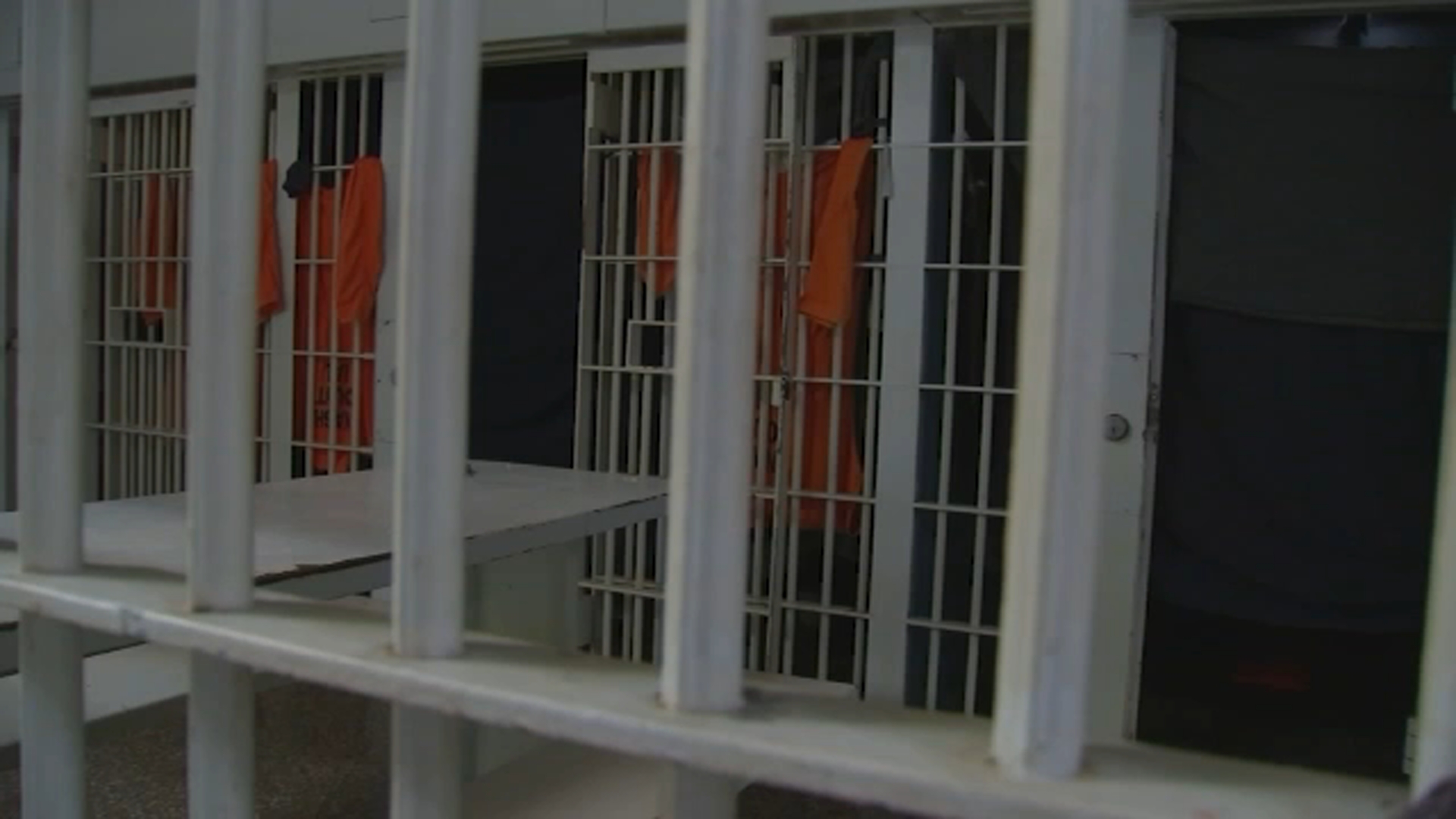
This will lead to more people being held in prisons, stressing available space. Last month, Johnson announced the agency was ending an agreement with ICE, citing the law and available resources.
"If I didn't hold one single ICE detainee, we're still overcrowded right now," said Johnson.
"We simply are just warehousing people. The solution is always to give the Sheriff the burden and let him figure out or let her figure it out. That's what we're doing," said Mecklenburg County Sheriff Garry McFadden.
McFadden projects between Iryna's Law and the effects of House Bill 318 - a bill that requires local law enforcement hold people with ICE detainers in jail for 48 hours after they would have been released - the Mecklenburg County Jail will be overcrowded in 60 days.
"It's going to be very difficult for the burden of the costs on our citizens to keep these people inside our detention center and then service them with the mental health aspect," said McFadden.
He says implementing these changes stresses spacing and will require additional support.
"We are simply saying that it's going to take resources. When we say resources, that's called funding. The other resources is going to be people staffing. You know, we're going to have to deal with people with mental illness, behavioral health issues. And if they believe that this makes their city or county safer, then let's come to the table and let's see if that's really going to happen," McFadden explained.
"It'll hit some jurisdictions worse than others. In many counties, the county commissioners have planned ahead for growth in their jails, and they've built additional capacity.
They've provided good pay and benefits for the detention officers and so they'll be better able to absorb additional inmates in the jail. Some counties have done a very poor job of planning for the future, are overcrowded and have old jails that need to be refurbished or replaced and in some cases aren't paying their detention officers a sufficient salary to get a full complement of detention officers," said Caldwell.
In a statement, Wake County Sheriff Willie Rowe wrote:
"Population counts and capacity limits at our detention facilities are always a priority for our office. Our mission is to manage those numbers while keeping both our community and the inmates in our care safe, while ensuring we meet and exceed state standards. Those priorities highlight the necessity of the planned expansion of the detention annex building. The project is expected to add hundreds of additional beds, along with updated infrastructure and enhanced security measures."

In a statement, the Moore County Sheriff's Office wrote:
"Sheriff Ronnie Fields is aware of the implementation of Iryna's Law today and fully supports its intent to strengthen protections for victims in our communities. Our office has made the necessary preparations to follow these new requirements and will ensure the law is applied properly and professionally."
McFadden wants to engage directly with lawmakers on how to address public safety.
"Where are we going to take these people for evaluations? Who's going to evaluate them? All of that should be considered. We're talking about legislation happening in less than 90 days. And if we had to say, let's table it to next year and what are the good and the bad and what do we need to do to make this successful," McFadden shared.
Separately, the bill creates a protocol for which court officials would be required to order mental health evaluations. 34-year-old Decarlos Brown Jr., the man charged in Iryna Zarutska's death, had an extensive criminal history and reported mental health issues.
"What we need is more robust mental health services, more robust community violence interruption services that are working in different parts of our state, and more services for folks who return to the community after incarceration. And this bill does none of that," said Noel Nickle, Executive Director of the North Carolina Coalition for Alternatives to the Death Penalty.
Both Caldwell and Johnson support greater efforts to provide mental health support.
"There is a significant portion of their population in jail that is there because they have a mental illness or substance abuse. And we've got to do something as a state, and we'll be looking to the legislature to lead the way on that, to address those concerns so that folks who need mental health care can get it and need mental health treatment can get it," said Caldwell.
"I certainly agree that we need to look at funding mental health initiatives, not just funding them, but funding the ones that are working," Johnson added.
Further, the legislation expedites death penalty appeals and adds committing a capital felony while the victim was using public transportation as an aggravating factor for seeking the death penalty.
"It seeks the harshest punishment in an expedited manner that will result inevitably in innocent people being executed. In terms of shrinking that appellate process to two years, that's unheard of. We've never had such time limits on a capital appeal process in our state," said Nickle.
Nickle highlighted decreasing public support for the death penalty, as well as reforms that would impact cases involving North Carolina death row inmates.
"For example, eyewitness identification, open discovery, more rigorous standards for someone to actually be a capital defense attorney. The vast majority of people who would be eligible for execution would not be sentenced today to death. They were sentenced under these previous laws," said Nickle.
An inmate has not been executed in North Carolina since 2006.
"We don't need this. We don't want it. And it's time for our lawmakers to catch up to that reality. I think they're holding on to this (idea that) we can't be considered soft on crime and this is the harshest punishment. That's a disconnect," Nickle said.


