NCCU graduates weigh AI's growing role in the workforce


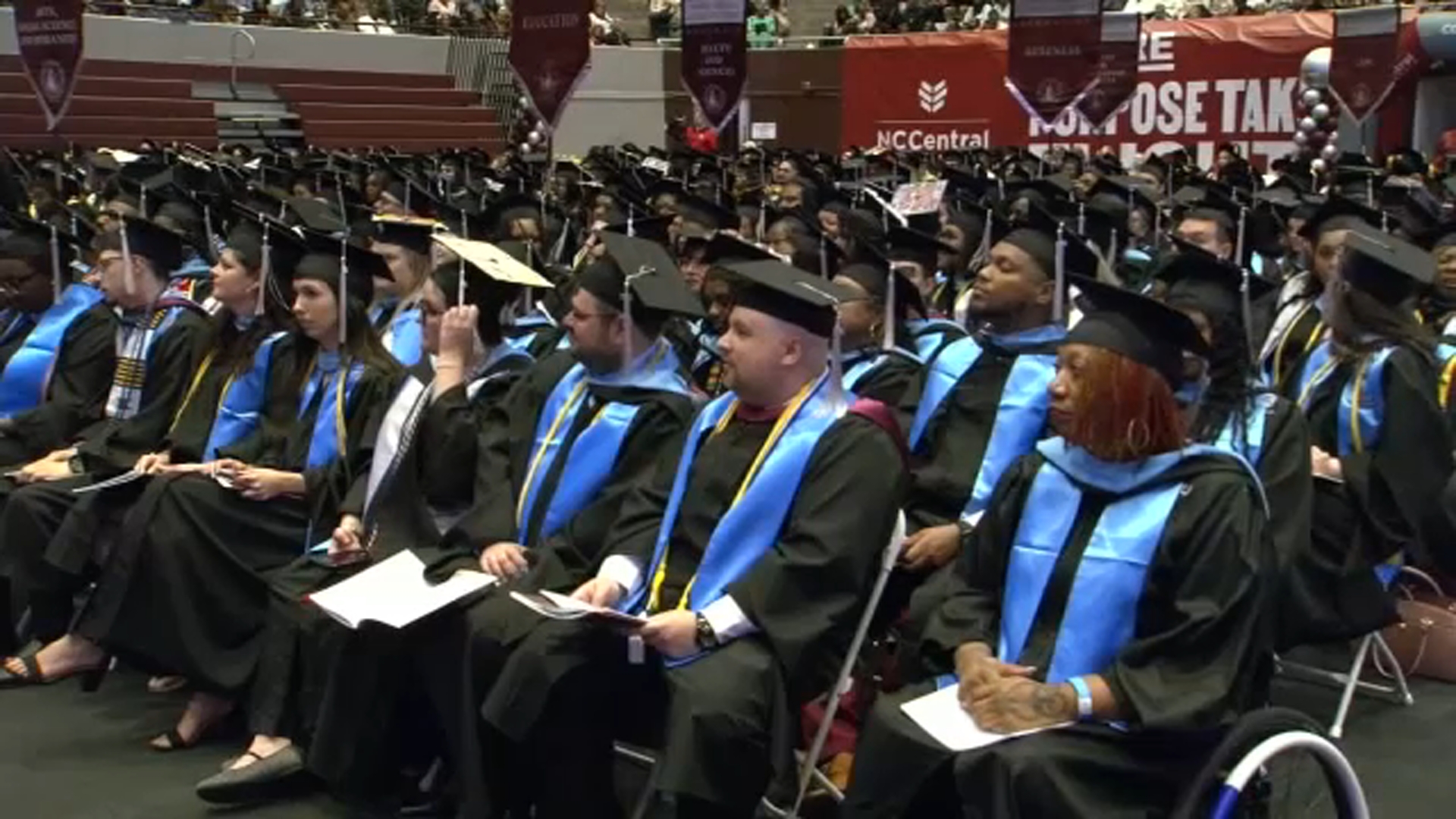
DURHAM, N.C. (WTVD) -- Graduates at North Carolina Central University say they understand how artificial intelligence is changing the world around them. However, many believe there are still limits to what the technology can replace as they prepare to enter the workforce.
"AI doesn't have emotion. We have emotion. We have experiences. We can relate. We can connect. We can't connect to a robot," said graduate Jynai Rainey.
Rainey spoke with ABC11 just minutes after walking across the stage at McDougald-McLendon Arena, where she received her master's degree in clinical psychology.
She said professionals in her field are already incorporating artificial intelligence into their work.
"Most people use it to find different ways to make approaches to therapy or find new ideas," Rainey said.
Another graduate, Tiana Lennon, said she recently completed a class on artificial intelligence and learned how to use it as a tool for research while earning her degree in pharmaceutical sciences.
She also expressed concern about how far AI could go in replacing human roles.
"How AI would take over, and you wouldn't need a physical body to do the job. You could generate prompts, and AI would spit it out to you," Lennon said.
As AI use continues to grow, experts say it is becoming an increasingly common part of education and job preparation.
A new report from executive outplacement firm Challenger, Gray & Christmas found that artificial intelligence led all reasons for layoffs last month, for the second month in a row. More than 21,000 job cuts were linked to AI.
Bill Rand, Executive Director of Business Analytics and AI Initiative, said students need to prepare for AI's expanding role in the workplace.
"I think students need to take into account that AI is going to increasingly be part of the workplace," Rand said.
He added that some workforce changes are being driven by efficiency gains.
"Some of the reason why we're seeing AI resulting in layoffs is where people who don't know how to use AI are being replaced by one person who knows how to use AI to do what used to be a team of three or four people doing the same job," Rand said.
Not all graduates see AI as a threat to their careers.
Aaron Allen, who is working toward becoming a real estate agent, said he believes human interaction will remain essential in his field.
"If you're selling houses, that's more of an in-person touch. You could use AI for the numbers," Allen said.
Others, however, remain cautious about long-term reliance on the technology.
"It's a great tool to use in certain aspects, but I think when we become reliant, it takes away from our mental capacity and those muscles we use every day in our brain," said graduate Taylor Zande.
Though AI is contributing to some job cuts, experts say it is also creating new opportunities and reshaping career paths, making adaptability and AI literacy increasingly important for today's graduates.