NCSBE takes no action on request from Berger campaign to address overvotes and undervotes


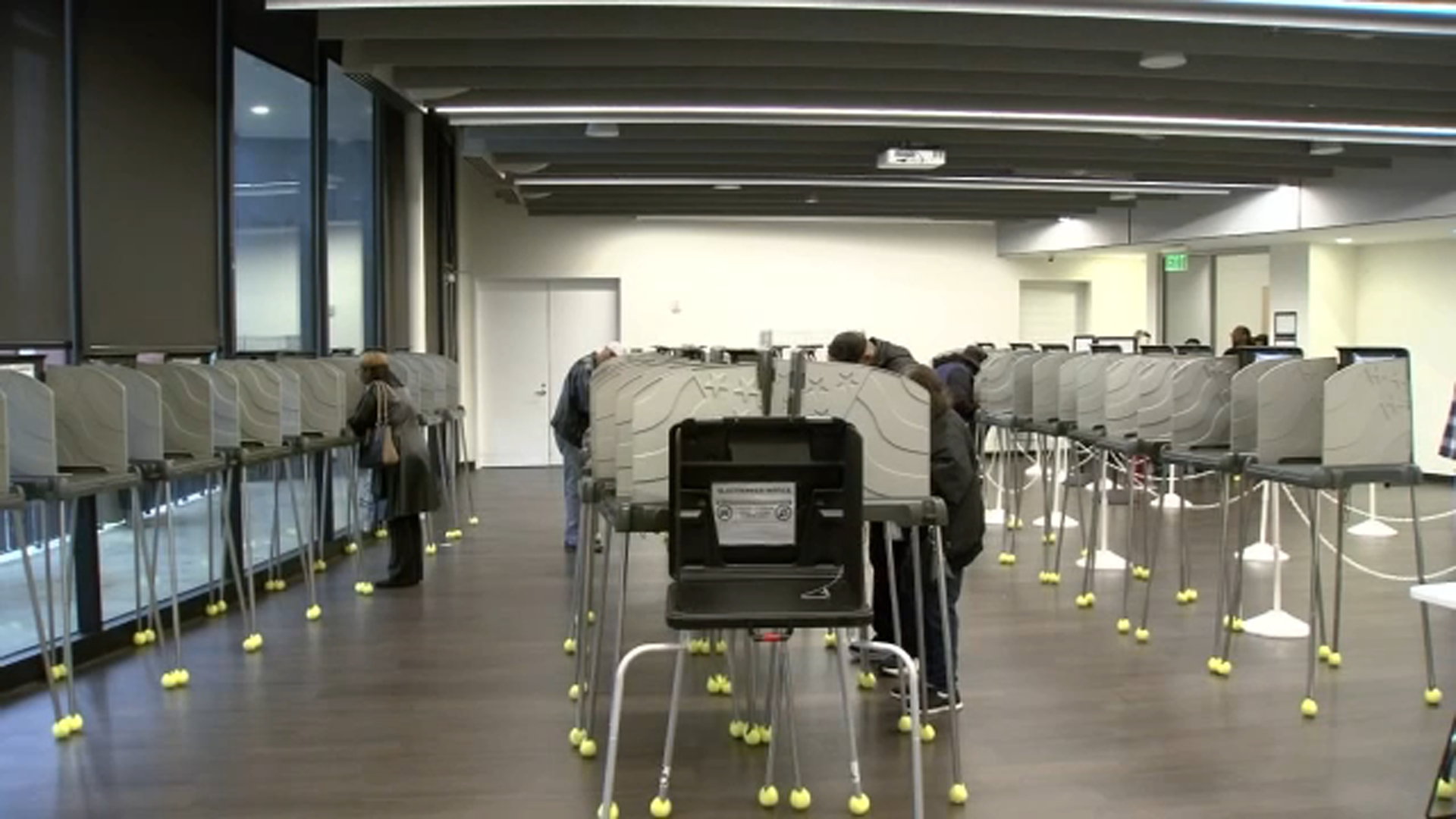
RALEIGH, N.C. (WTVD) -- The North Carolina State Board of Elections took no action during its meeting Wednesday morning regarding a request from Senate President Phil Berger's campaign to address undervotes and overvotes in the Senate District 26 Republican primary.
"I think the most important thing to understand here is the Board took no action because they want to see the process play out, which is laid out in statute. I think it's premature to consider any of these other things that are coming from the campaign at this time. Again, we have a process in place that calls for a full machine recount, followed by a sampling," said NCSBE Executive Director Sam Hayes.
Rockingham County Sheriff Sam Page currently leads Berger by 23 votes.
An overvote is when a voter fills out more than one bubble (or greater than the maximum amount allowed) in a particular race, while an undervote is when a voter does not fill out a section, or only does so partially. Examples of an undervote could range from a checkmark or 'X' in a box instead of filling out a bubble, or simply circling the candidate's name.
"When there's an undervote, it just means that a voter did not select anyone in that particular race. There was no way to define voter intent there, and certainly a machine can't account for something that was not there," said Hayes.
In a statement, Berger Recount Spokesman Jonathan Felts wrote:
"As noted yesterday, 220 overvotes and undervotes could obviously change the election results. To be very clear, these votes have never been counted. Close election results like this are why the review and recount process allows and insists for a careful inspection. The point of a recount is to make sure every legal vote cast is counted.
"If unchallenged, an overvote and an undervote yield the same result: a ballot being kicked out and a voter being disenfranchised. But, while an overvote is automatically flagged in real time, an undervote is not. These citizens obviously made the effort to vote, and one can safely assume they want their vote to be counted. Their ballot deserves to be examined for voter intent.
"Our request was very simple: save everyone the time and go ahead and determine voter intent where possible. Today's ruling leaves little recourse for every legal vote being counted other than to seek a hand recount. But no decision has yet been made on that front."
Following Wednesday's meeting, Patrick Sebastian, who is serving as Page's Post-Election Supervisor, wrote:
"Senator Berger resorted to asking the Board to ignore state law in his attempt to cling to power after losing more than two weeks ago. That's not how elections work in North Carolina -- and the Board made that clear today. Phil Berger should concede the race he lost so the Republican Party can unite behind Sam Page for the general election."
Wednesday's meeting coincided with an ongoing machine recount in Guilford County, which was requested by the Berger campaign late Tuesday morning. A machine recount in Rockingham County is set to begin Thursday morning.
Following the conclusion of a machine recount, the trailing candidate will have 24 hours to request a hand recount of 3% of precincts. If the results of the sample show a difference that, once extrapolated to the entirety of the race, would lead to a change in outcome, then a full hand recount would be ordered.
"It is extraordinarily rare for a recount to change the outcome of an election from what people have said after the first canvass. But it has happened, and it's happened in big, high-stakes races before. In 2008 in Minnesota, we saw a recount changing the outcome of the U.S. Senate race at a statewide level," said Jason Husser, the Director of the Elon University Poll.
The Berger campaign has also lodged four separate protests with the North Carolina State Board of Elections, including a series of claims from voters, including an allegation of one voter's registration not being processed correctly, eight voters who allege they were given an incorrect ballot, one voter who claims their party affiliation was not updated properly, and three unaffiliated voters who claim they requested a Democratic ballot -- began voting -- and then went back to request a Republican ballot.
"I think it's premature to consider any of these other things that are coming from the campaign at this time. Again, we have a process in place that calls for a full machine recount, followed by a sampling. And I we need to we need to see that thoroughly," said Hayes.
Husser, noting the big money already spent in the election, remarked how challenges can drag out when the race will ultimately be settled.
"We have a precedent in North Carolina with very close, very high-stakes races, that the races don't get determined until much longer than what people initially expect. It's too early to know. It's going to depend in part on will there be lawsuits filed on Team Berger's behalf? If so, this might not be answered for a while," said Husser.