Aimed at housing affordability, Durham to build Accessible Dwelling Units as part of pilot program


DURHAM, N.C. (WTVD) -- As home prices in Durham continue to climb, city leaders are launching a new pilot program aimed at easing housing affordability by adding small rental units to existing residential lots.
According to Redfin, the median sales price for a home in Durham has increased by about $100,000 over the past five years, a period which has coincided with massive population growth across the Bull City.
"One of the things that is true about the cohort that is moving here, the cohort that has moved here, is they generally are bringing higher incomes, which puts a lot of cost pressure on folks who are already here," explained Samuel Gunter, Executive Director of the North Carolina Housing Coalition.
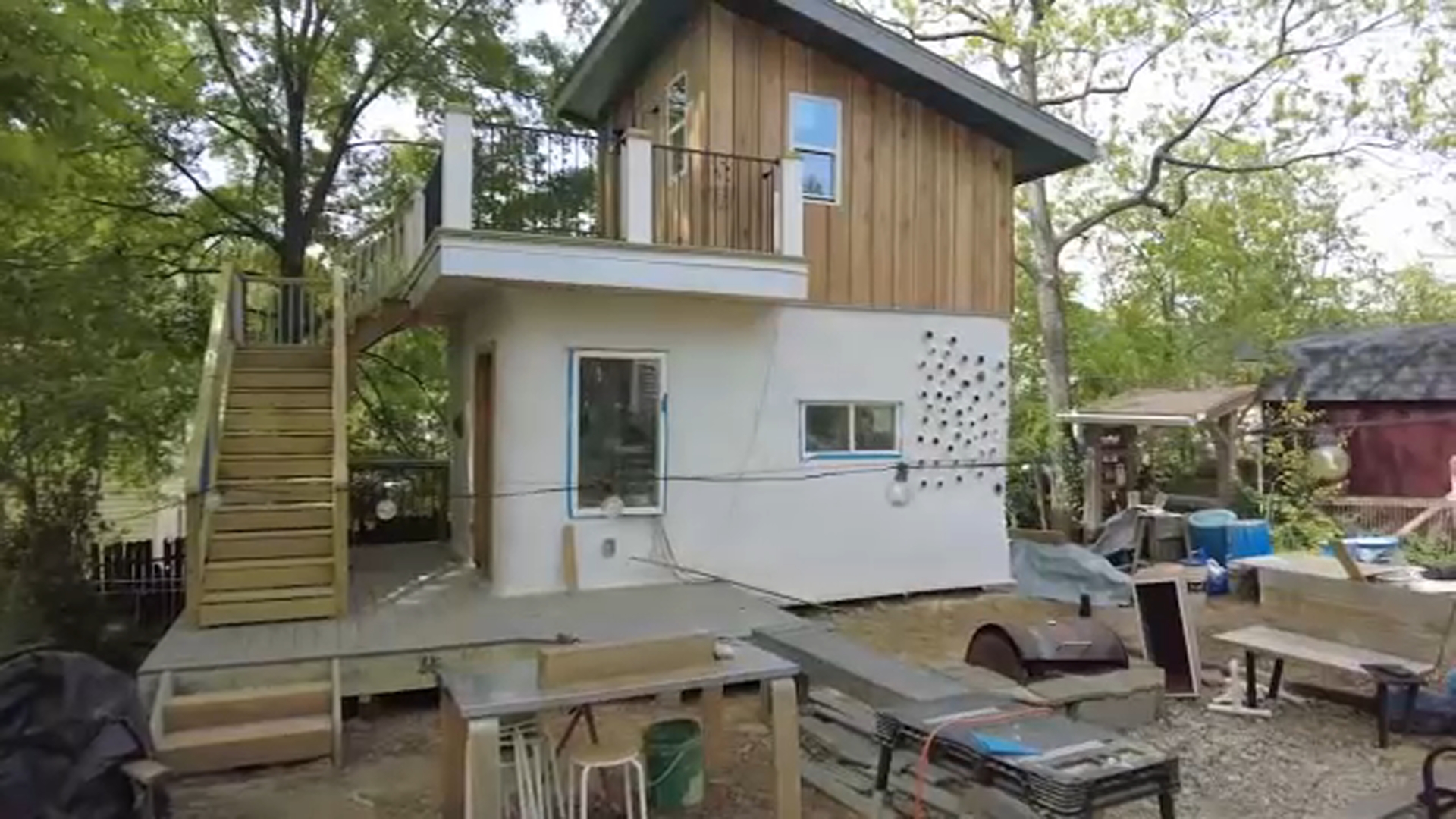
City officials are working to enhance housing stock, including through a new pilot program which will see the addition of accessory dwelling units, or ADUs, sometimes referred to as tiny homes.
"It doesn't solve gentrification. It doesn't solve affordable housing," said Topher Thomas, founder of Coram Houses. "It's just like one small piece of the puzzle."
Coram Houses is partnering with the city on the pilot program, which will allow homeowners to build ADUs on their single-family properties.
Under the program, homeowners are eligible for loans of up to $80,000 at a 2% fixed interest rate for 30 years.
"$80,000 is typically not enough to build a house, so we have designed a model that we hope we can build for $80,000 that's 300 square feet," said Thomas.
In exchange, they agree to lease the unit to tenants earning no more than 80% of the area median income for the duration of the loan. The loan must be at an affordable rate for income-qualified tenants.
"We know rent has gone up. We know it's hard to find a place where your income is sufficient to pay your housing. I think that's step one. The city offering money at 2% interest (is) going to lead to just naturally occurring affordable rents. I think that's one side of it. The other side of it is access to capital for folks who have been locked out of that. Getting an $80,000 loan at 2% is life changing. If you're a homeowner who doesn't make great income, that cash flow from making just a little bit extra money every month is really meaningful. I think you have this twofold win-win for a homeowner who now not only gets to have a backyard neighbor and shared community and shared life, they also get a little bit extra income. And then for the resident living in the backyard, you get housing that's affordable for you," said Thomas.
Tenants will be chosen through a lottery system, with applications now open.
"It's a tiered lottery. If you make under a certain income level, you're in a higher tier. If you live in a formerly red line neighborhood, you're in a higher tier. If you've been in Durham for ten years, you're in a higher tier. And then there's kind of just everybody else. We want this these funds to go towards folks who need the funds the most," Thomas explained. He cited prior significant interest from homeowners while expressing confidence in finding people willing to utilize their existing space.

The city is committing $1.75 million toward the construction of approximately 20 ADUs, with completion expected within the next two years. Thomas said while building timelines range, five to six months is typically an average length.
"It's a creative solution to deliver small scale affordable housing and bring a mix into neighborhoods that may be include housing that is at a higher price point," said Sarah Viñas, the Housing and Neighborhood Services Director with the City of Durham.
"Everyone is expecting a silver bullet to come along. If we do this one thing, that thing is going to fix all of our problems. What I would say on the ADU front is that absolutely is going to be a piece of this," Gunter said.
The initiative is part of Forever, Home Durham, a broader affordable housing effort backed by a $95 million bond referendum and an additional $65 million in existing city and federal funds.
"Some of the other strategies that we pursued are supporting partner projects in the community, including redevelopment of public housing with our partners at the Durham Housing Authority. We also have pursued development on city owned land and we also have created other programs and policies that align with our affordable housing goals, such as the Down Payment Assistance Program that we have in place to support first time homebuyers," said Sarah Viñas, director of Durham's Housing and Neighborhood Services Department.
Housing advocates say the need for affordable housing has become more urgent as Durham's population and housing costs rise.
"The majority of folks who work in this county have to commute from outside. That's a problem," said Gunter. "That's a problem for a region. It's going to tax our infrastructure. It's going to tax water resources. And at some point, folks aren't going to be able to make that the math isn't going to work for them. It impacts all of us."
Gunter says strategies to wholly address housing affordability are wide-ranging.
"Looking at our broader land use policy around density because again, if you're not building up, you're building out. While it is a lot easier to rezone an open plot of land and build a single-family development, that's easy because you're not tearing anything down. Remaking a city that currently exists is a hard thing to do, but it's very necessary. Thinking about bigger land use policy because that supply is a critical piece of this puzzle," said Gunter.
SEE ALSO | Raleigh City Council considers bond to address affordable housing