

Yellow-legged hornets confirmed in North Carolina; Concerns grow for honeybees and crops


RALEIGH, N.C. (WTVD) -- State agriculture officials are warning North Carolinians about an invasive species that poses a growing threat to honeybees, honey production and crop pollination.
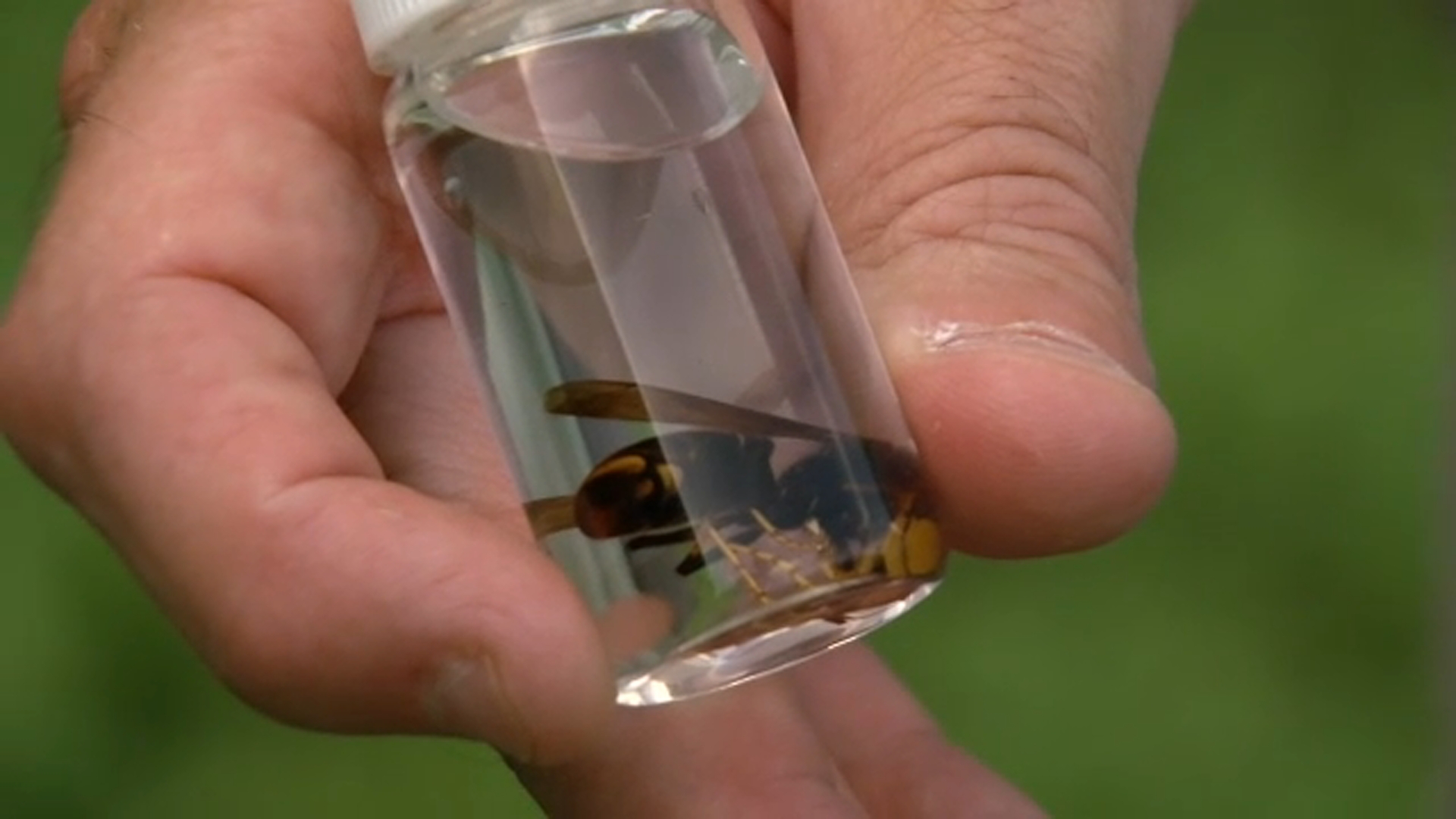
The yellow-legged hornet, a bee-killing predator native to Asia, has now been confirmed in North Carolina after an established population was discovered at a home in Matthews. The detection follows earlier sightings in Georgia and neighboring South Carolina, where officials say the insect has been steadily expanding its range.
"It was first detected in the U.S. in Savannah, Georgia, in 2023 and then just a few months later in Jasper County, South Carolina, across the border," said Greg Wiggins, biological control administrator with the N.C. Department of Agriculture and Consumer Services. "Since that time, it's been expanding its range in the Lowcountry of South Carolina."
For local beekeepers, the arrival of the hornet raises serious concerns.
Keith Saban, owner of Buddha Bee Apiary, manages beehives across the Triangle region.
"We are a company that installs and manages beehives in people's backyards, businesses, and schools all across the Triangle," Saban said.
Now, he is keeping a close eye on the invasive predator.
"It is a ferocious predator of insects, and that includes honeybees," Saban said.
According to state officials and beekeepers, yellow-legged hornets target honeybee colonies by hovering outside hive entrances and capturing bees as they enter and leave.
"Honeybees are super convenient because they're a giant colony," Saban said. "There can be up to 50,000 bees in a colony, so it's like a huge buffet. This hornet can do this hawking behavior where they hover outside the entrance and pluck bees as they're coming and going."
As honeybee populations decline, colonies can weaken, affecting both honey production and the pollination services farmers rely on for crops.
"It's called foraging paralysis," Saban said. "Not only is there a decrease in bees because the yellow-legged hornet is eating them, but also the amount of honey and the overall health of the colony."
State officials say the threat comes at a time when honeybees are already facing numerous challenges.


"Honeybees already have a lot of pressure on them," Wiggins said. "They have droughts, different pests and diseases that impact their health and overall colony health. So, adding one more heavy pressure, like a predator that prefers to feed on honeybees, could impact the health of honeybee colonies."
The potential consequences could be significant for North Carolina agriculture, particularly for farms that depend on honeybees for pollination.
In response, the N.C. Department of Agriculture and Consumer Services has deployed more than 200 survey traps in Union County to monitor the spread of the hornet. Officials are also urging homeowners and beekeepers to report sightings.
"The number one thing you can do is take pictures, take video, and if you can collect a sample, alive or dead, have that specimen available to share with your state apiarist," Saban said.
Officials say residents should watch for hornets exhibiting "hawking" behavior around bee hives, as well as unusually large nests. Yellow-legged hornet nests have a distinctive reddish, muddy appearance and can grow substantially larger than those of most native hornet species.
At this point in the season, officials say nests are likely to be about the size of a volleyball. By late season, however, they can expand dramatically, potentially reaching the size of a pickup truck bed.
Agriculture officials are asking anyone who spots a suspected yellow-legged hornet or nest to document it and report it to state authorities as efforts continue to prevent the invasive species from becoming established across North Carolina.
Download the ABC11 App for breaking news and weather alerts

