Durham Launches 'Keep It Durham-Owned' initiative to preserve businesses in the Bull City


DURHAM, N.C. (WTVD) -- City leaders have launched a new initiative aimed at helping locally owned businesses remain rooted in Durham while creating pathways for employees to take ownership as business owners retire.
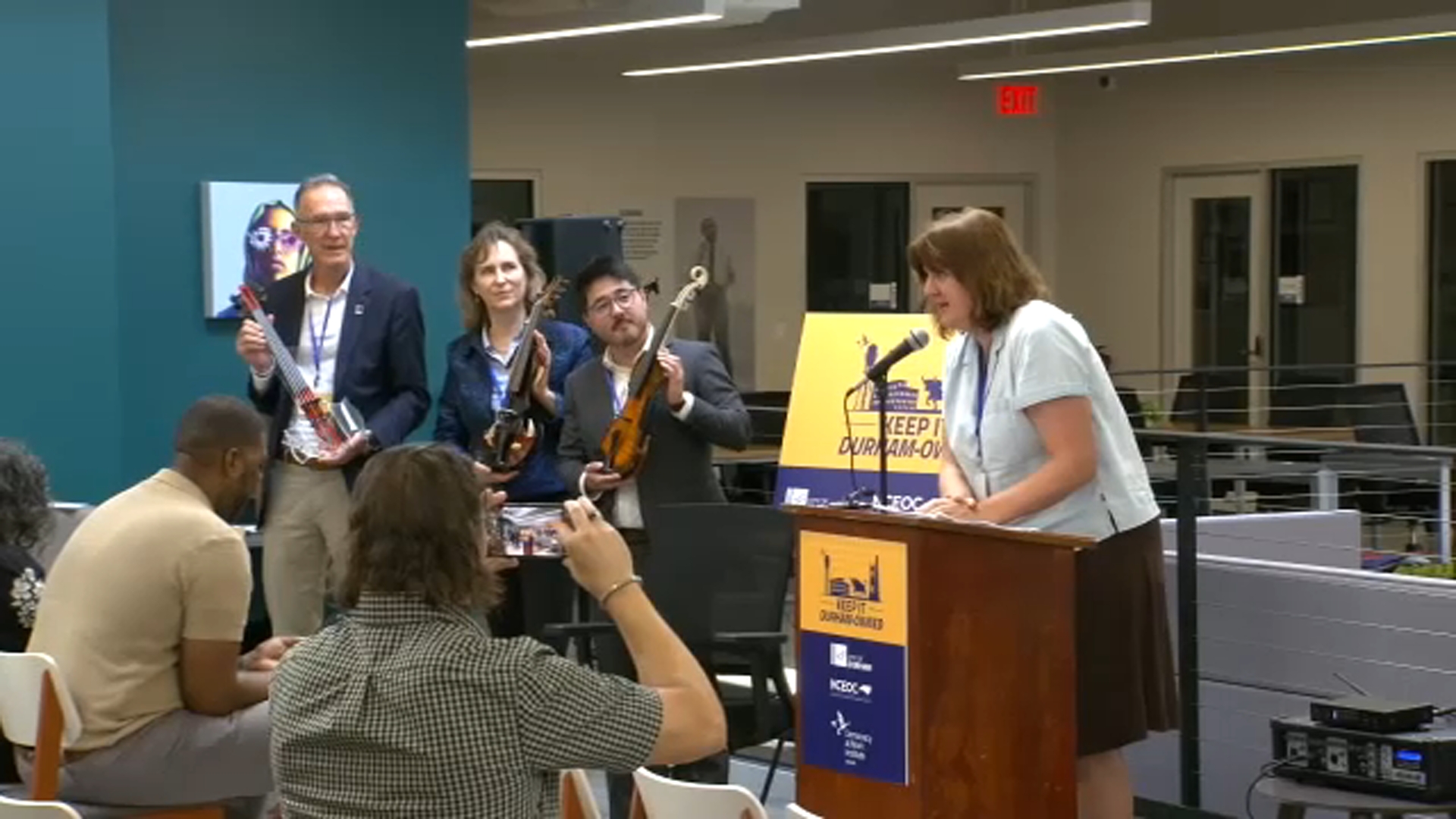
The City of Durham, in partnership with the North Carolina Employee Ownership Center (NCEOC) and the Democracy at Work Institute (DAWI), officially unveiled the "Keep It Durham-Owned" initiative during a press conference at Provident1898.
The yearlong program is designed to help small business owners develop succession plans and explore employee ownership models that can preserve jobs, maintain local ownership and keep wealth circulating within the community.
The initiative marks Durham's entry into DAWI's nationwide Employee Ownership Cities program, a growing network of municipalities promoting employee ownership as a strategy for business continuity and wealth creation.
According to city officials, Durham County is home to 6,531 employer firms, and approximately 34% of those businesses are owned by individuals age 55 or older. Nationally, only about 30% of business owners have a formal succession plan in place, leaving many businesses vulnerable to closure when owners retire. Officials say the program will provide a "No Wrong Door" approach, offering business owners free and confidential guidance on transition planning through NCEOC.
The initiative focuses on three employee ownership models: Employee Stock Ownership Plans (ESOPs): Benefit plans that allow employees to own company stock. Employee Ownership Trusts (EOTs): Trust structures that hold ownership on behalf of employees for long-term benefit. Worker Cooperatives: Businesses owned and democratically governed by their employees.
For some local businesses, employee ownership has already proven successful. Susie Sneeringer of Electric Violin Shop said she and her colleagues initially struggled to find financing to purchase their business individually.
"We were all looking for financing, and individually we couldn't get that to buy the business," Sneeringer said. "We ended up talking to some folks that knew about cooperative lenders, and one of the founders of NCEOC told us this was an option. Instantly, we knew this was what we had to do."
"I think it's critical because this offers an opportunity for all employees to participate in ownership. In the traditional capitalist model, owners benefit while employees work for pay. In this model, everyone is an owner, so everyone shares in the growth of the company. "There is also a retirement benefit associated with employee ownership. Beyond that, employees develop an owner's mindset that helps the company thrive, helps individuals thrive and helps the community thrive," said Jim Pulling of The Link Group, a market research firm based on Durham.
City officials say recent closures of well-known Durham businesses highlight the need for succession planning and alternative ownership strategies.
Joshua Gunn, director of the City of Durham Office of Economic and Workforce Development, said too many beloved businesses disappear because owners are unaware of options available to them. "
I was born and raised in Durham, and it's heartbreaking to hear stories of businesses that are so beloved in our community continue to close," Gunn said.
"Business owners might not even understand or acknowledge that worker ownership is an option for them to keep their doors open and pass that wealth and that business on to people who know it best."
Those people, Gunn added, are often the employees who have helped build the business over many years. "Durham's local businesses aren't logos. They are people, memory and the story of our neighborhoods," Gunn said. "When our business founders move on or step back, employee ownership turns this transition into a handoff, keeping the wealth built here in the hands of the folks who helped build it."
The initiative's core programming will continue through the end of 2027, though officials said technical assistance and educational resources will remain available beyond that timeframe.
Business owners interested in learning more about employee ownership or succession planning can receive free, confidential counseling through NCEOC to determine which ownership model best aligns with their goals and timeline.
City leaders hope the effort will help ensure that Durham's longtime businesses remain locally owned for generations to come.