

NC Senate candidates Cooper, Whatley campaign as race spending grows
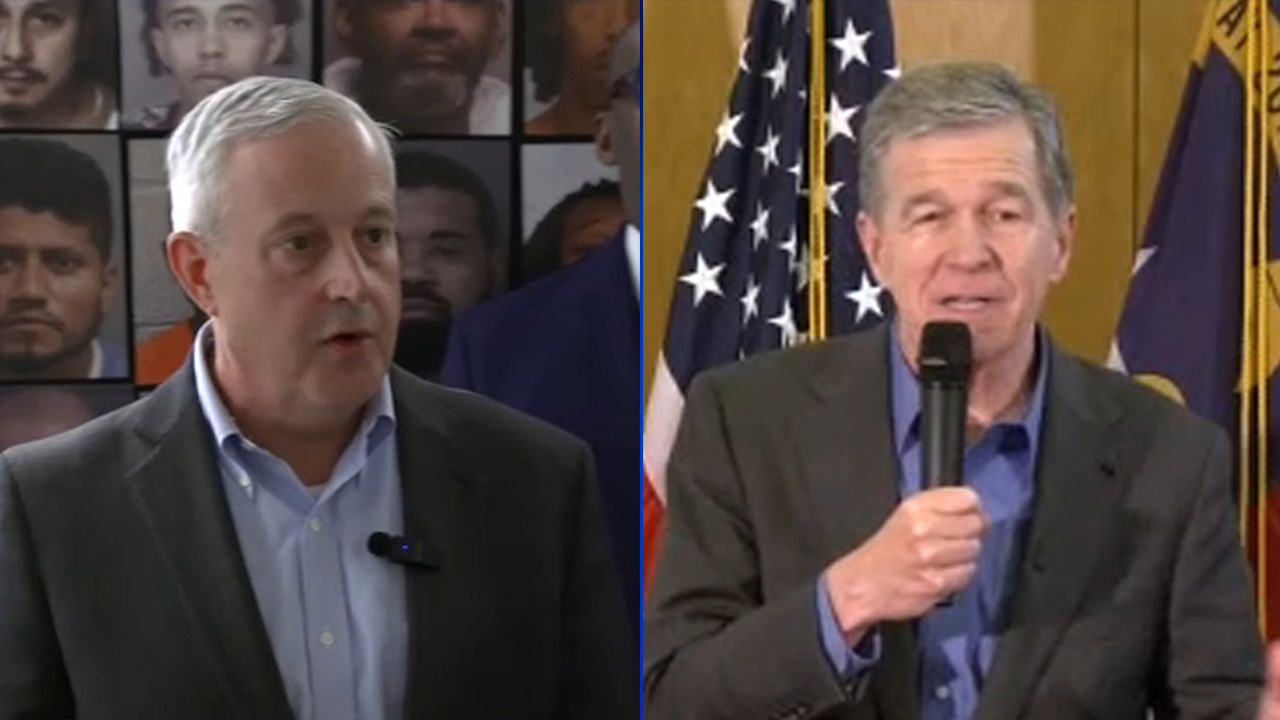


GRAHAM, N.C. (WTVD) -- North Carolina's U.S. Senate candidates are continuing to campaign across the state as what is expected to be one of the nation's most expensive races begins to take shape.
Republican candidate Michael Whatley completed his 100-county tour over the weekend, while Democratic candidate Roy Cooper held a campaign event Monday at the Graham Civic Center in Alamance County as part of his "Make Stuff Cost Less" tour.
With both candidates working to define the race around different issues, attention is also turning to the amount of money expected to flow into North Carolina ahead of the election.
Cooper focused his remarks on economic concerns and the cost of living.
"For so many North Carolina families, there's just too much month at the end of the money," Cooper said.
Speaking to supporters, Cooper called for policies aimed at lowering costs for working families.
"Those people fighting for childcare need to have a childcare tax credit. Those people at the grocery store, we need to remove these chaotic tariffs. That's adding more and more cost on them. We need to reduce what's happening with these mergers across the state that's driving cost."
In a statement in response to Cooper's event Monday, DJ Griffin, a spokesperson for Michael Whatley, wrote in part:
"Candidate Cooper is once again bashing Governor Cooper's failed record of higher costs for North Carolina families."
Meanwhile, Whatley has centered much of his campaign messaging on public safety.
"As your senator, my No. 1 priority will be to keep our communities safe," Whatley said during a campaign event last week.
He also highlighted his endorsement from the North Carolina Police Benevolent Association, which he received during an event in Raleigh last week.
"As your United States Senator, I will work every day to protect our kids and our communities," Whatley said. "I will fight to ensure that criminals are behind bars, and our streets are safe, and I will always back the blue."
A spokesperson for Cooper released a statement following the endorsement, writing in part:
"Roy spent his career standing up for North Carolina's law enforcement, increasing pay and protections for officers and putting rapists and violent criminals behind bars."
Griffin blasted Cooper on Monday, saying "Roy Cooper's pro-crime policies led to chaos in North Carolina, endangered the safety of our law enforcement officers, and let dangerous criminals walk our streets. Cooper will always stand with the radical left, siding with illegal immigrants over North Carolinians. In the Senate, his dangerous open border policies would cause our border to cease to exist and millions more dangerous illegal aliens to flood into our communities."
Political science professor Jon Green of Duke University said both candidates are emphasizing issues they believe will resonate most with voters.
"Each campaign's going to have its own sort of preferred frame of what they want voters to be thinking about when they think about who will vote for," Green said.
Campaign spending about to soar
Both campaigns acknowledge that fundraising will play a critical role in the race. Whatley said overall spending from campaigns and outside groups could reach extraordinary levels.

"What we're anticipating seeing is somewhere on the magnitude of $600 million, which would be spent in North Carolina on this race," Whatley said. "It's unconscionable how much these campaigns cost."
The topic has taken on added significance following a U.S. Supreme Court ruling last month that struck down limits on the amount of money political parties can spend in coordination with federal candidates.
"What's happening now is that more and more power goes to the very wealthy, to the billionaires, to the corporations who can write these big checks and now can funnel that directly into candidates. I feel positive about our campaign because we have a lot of small donors, and small donors can show strength. At the end of the day, we're focused on North Carolina's race and not on these other races across the country," Cooper said.
Last week, Whatley commented, "As we look at the map right now around the country, obviously you're going to have very significant races in places like Ohio and Michigan and Maine and Georgia and Iowa. As they sort all of that out, the one thing that we're going to make sure that we do is raise the money into the campaign that we need to raise to be able to get our message out and communicate with everybody across the state.
Another potential wrinkle is the death of South Carolina Senator Lindsey Graham, who died Sunday. Graham was heavily favored to win the Senate seat during the general election. It is not known who will replace him on the ballot.
"The Republicans now are going to need to run a non-incumbent in South Carolina means they may have to spend a couple million dollars that they would not have otherwise spent there," said Jason Husser, Director of the Elon University Poll.
Political observers say the competitiveness of Senate races in other states could influence how much outside money ultimately reaches North Carolina.
"The money's not totally going away, but right now, I don't know that we're seeing the same level of sort of demand to spend the dollars in North Carolina over Georgia or Maine or Alaska or Texas and some other places," said Husser.
A new poll released by Public Policy Polling, a Democratic-affiliated polling firm, found Cooper leading Whatley by four percentage points, with 8% of voters still undecided.
The poll featured responses from 759 North Carolina voters and was taken on July 10 and 11.
It found that 47% of voters had a favorable opinion of Roy Cooper, compared to 45% who had an unfavorable opinion and 8% who were not sure. As for Whatley, 31% of voters had a favorable opinion and 38% of voters had an unfavorable opinion, with 31% saying they were not sure.
As for President Trump, 42% of respondents said they had a favorable opinion, while 52% said they had an unfavorable opinion, and 6% were not sure.
"Midterms are generally good for the party that doesn't control the presidency. (If you're a Democrat) You'd want a midterm election with a Republican in the White House, and you'd want a strong candidate with a track record of winning statewide races," said Green.

