Wake County schools consider expanding stop-arm cameras on buses


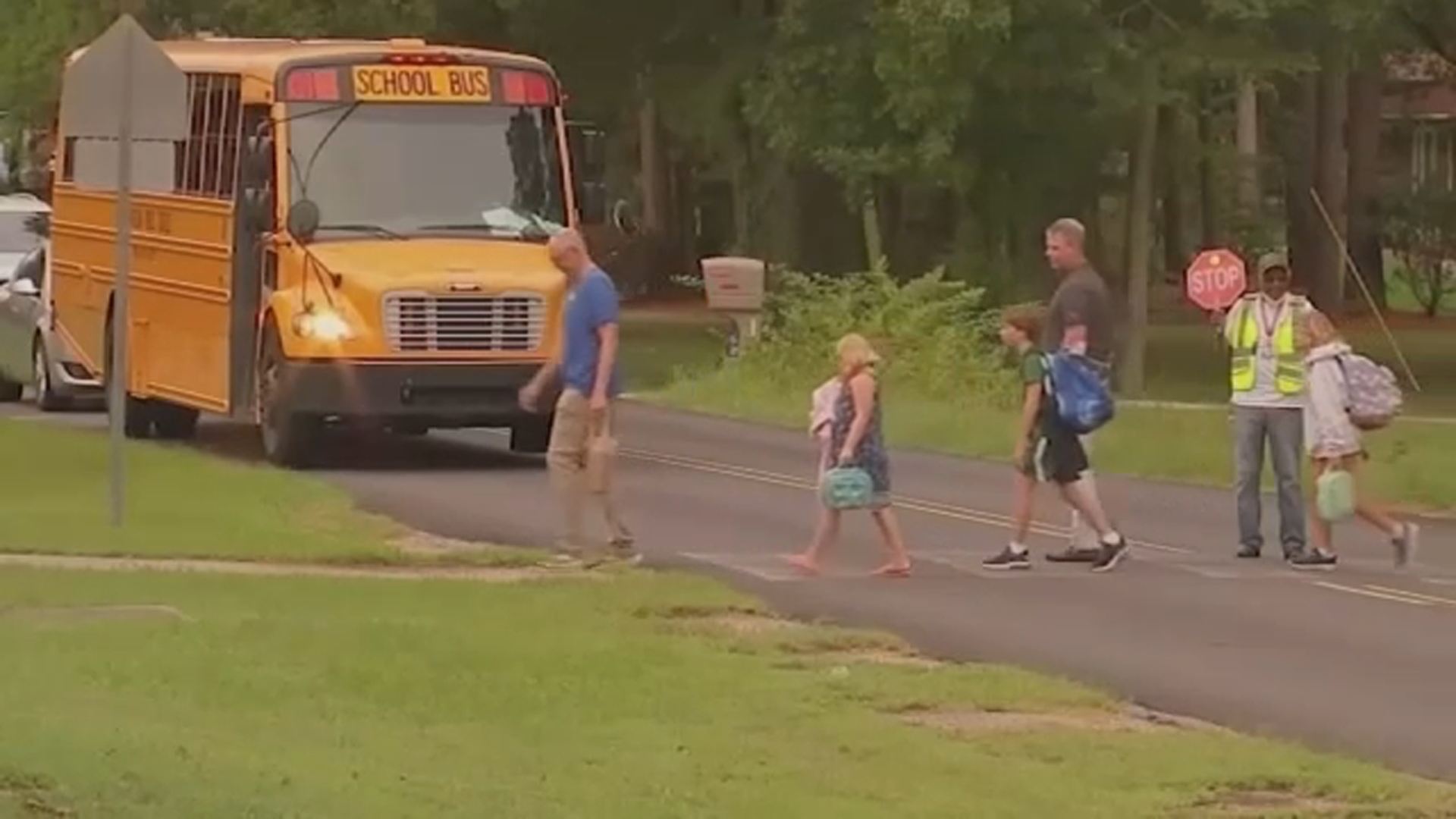
CARY, N.C. (WTVD) -- Wake County school officials are exploring an expansion of stop-arm cameras on school buses as they seek to improve student safety and reduce illegal passing violations.
The Wake County Public School System transports more than 88,000 students, and officials reported at least seven stop-arm-related crashes during the first week of school this year.
"It's a teachable moment for our community members to know the importance of the stop-arm regulations and how we should approach those," said Jason Tonkins, the district's senior director of transportation.
A stop arm extends from a school bus when students are boarding or exiting, warning drivers to stop. While all district buses are equipped with stop arms, Tonkins said not all of them have cameras to document violations.
ALSO SEE | Wake County Public School System proposes enrollment changes across the district
Under the current system, bus drivers often report violations. The proposed camera program would automate that process, with law enforcement reviewing video footage and issuing civil penalties.
"When a student enters the bus and exits the bus, that's their most vulnerable part," Tonkins said. "Motorists have to be cognizant of that."
According to district officials, stop-arm cameras can capture evidence including a vehicle, license plate, location, and time of a violation.
During a facilities committee meeting Tuesday, Tonkins presented data showing northern Wake County as a hotspot for stop-arm violations, with one of the highest volumes recorded over a five-year period.
In 2026, officials reported 360 violations in a single day. Tonkins said that represents more than 10% of the illegal school bus passes reported statewide.
School leaders said the actual number of violations may be higher because not every incident is captured.
In North Carolina, motorists who pass a stopped school bus displaying flashing red lights and an extended stop arm can face a Class 1 misdemeanor, a fine of at least $500, and five points on their driving record.
District leaders expect to have more details by December about how the proposed system would operate. They said it could be implemented within the next year.