Advocates react to several Supreme Court rulings that could impact NC


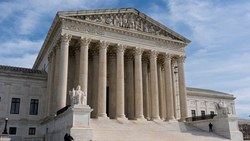
RALEIGH, N.C. (WTVD) -- The Supreme Court issued a series of rulings Friday morning, drawing a range of reactions from advocates in North Carolina.
In perhaps the most anticipated decision, the Court granted a partial stay of nationwide injunctions issued by district judges against President Donald Trump's executive order to effectively end birthright citizenship.
"Instead of merely ruling on the immediate cases before them, these judges have attempted to dictate the law for the entire nation," said President Donald Trump during a press conference following the ruling.
Trump continued to make the case for his Day 1 executive order that would deny citizenship to children born on U.S. soil to unlawful immigrants or those on a temporary immigrant status. District court judges, so far, have said such a move would appear plainly contrary to the text of the 14th Amendment and legal precedent.
"This is a victory for the Trump administration in the sense that it makes it harder for judges to issue rulings that will just prevent a Trump order from going into effect anywhere in the country. It is not a victory for the Trump administration on the question of whether or not Trump can limit the citizenship of those who were born in this country," said Stuart Benjamin, who serves as the William Van Alstyne Distinguished Professor of Law and co-director of the Center of Innovation Policy at Duke Law School.
The administration claimed in court proceedings that birthright citizenship creates a strong incentive for illegal immigration. However, whether the President's Executive Order to effectively end birthright citizenship is constitutional was not the focus of this ruling.
"What's interesting is the majority avoids any discussion of whether Trump's birthright citizenship order is constitutional or not. They don't discuss the merits at all. And in fact, there's no reason from the opinion to think that the majority of the court would uphold the Trump order," said Benjamin.
Further, the ruling does allow legal challenges to the merits of the Executive Order to move forward.
"It's possible that this ruling will actually not have a huge impact, depending on this question of class actions. There's also a question about whether states can say the state has an interest in protecting birthright citizenship for everybody within the state," said Benjamin.
"The 14th Amendment is there. Regardless of what this decision is, it's an undecided question. And we should be working to defend our constitutional rights and looking to leadership to use their power to enforce that," said Emanuel Gomez Gonzalez with Siembra NC.
In a statement, North Carolina Attorney General Jeff Jackson wrote:
"Because we took action to defend the Constitution, North Carolinians still have their Fourteenth Amendment right to full citizenship. While this case has been sent back to a lower court for review, our position remains unchanged. The language of the Fourteenth Amendment is clear, and we are going to defend it."
In February, the Attorney General's Office announced it had won a preliminary injunction from a federal judge to block the attempt to end birthright citizenship in the United States. Gonzalez praised Jackson's involvement in the case, noting it highlights the value of elections.
"The only thing we can do is to continue staying strong, knowing that the Constitution is on our side, knowing that we all have constitutional rights and continue working to organize and defend each other's constitutional rights wherever we find ourselves, whether it be in the workplace, at schools, in our neighborhoods," said Gonzalez.
There is a 30-day grace period from the order to go into effect, meaning there is no immediate impact on birthright citizenship.
The Trump administration has interpreted the ruling to allow them to move forward with other parts of its agenda, which has been the subject of district court rulings.
"In recent months, we've seen a handful of radical left judges effectively try to overrule the rightful powers of the president to stop the American people from getting the policies they voted for in record numbers," said Trump.
"I think with any case that goes up to the Supreme Court, there's a concern about the degree of its impact and how far-reaching it might be. That is sort of the nature of cases that make it up to that court. With that said, this opinion was, I think, limited to this particular case," countered Ivy Johnson, a staff attorney with the ACLU of North Carolina.
SCOTUS rules on opt-out rights in school

In a separate 6-3 decision, the Court ruled in favor of a group of parents in Maryland who sought to opt their children of reading LGBTQ-themed books.
"I think it's a great ruling for parents. It's really a ruling for parents. They lost control at the schools, they lost control of their child, and this is a tremendous victory for parents," said Trump.
The case, brought by a group of Christian, Muslim and Jewish parents from Montgomery County, Maryland, sought a guaranteed exemption from the classroom reading of storybooks with LGBTQ themes, including same-sex marriage and exploration of gender identity.
In 2022, after introducing several LGBTQ-themed books into its language arts curriculum, the Montgomery County school board allowed parents to opt out if the content was deemed objectionable as a matter of faith. One year later, officials reversed course and said the opt-out program had become unwieldy and ran counter to the values of inclusion.
The parents alleged that use of the books in an elementary school curriculum -- without an opportunity to be excused -- amounts to government-led indoctrination regarding sensitive matters of sexuality. The school board insisted the books merely expose kids to diverse viewpoints and ideas.
"Parents have a fundamental right to oversee the upbringing of their own children, and that includes the right to opt out of curriculum that violates their religious beliefs," said Tami Fitzgerald, Executive Director of NC Values Coalition, which submitted an amicus brief in the case.
Johnson called the decision "deeply disappointing."
"I think ultimately what it comes down to is the court sort of conflated the parents rights with regards to the religious instruction of their children and the role of the public school, which is to educate our children and our students, not based on a particular faith, to be functioning contributory, members of a democratic society," said Johnson.
LGBTQ Center of Durham sent ABC11 this statement about the ruling:
"This most recent Supreme Court decision is yet another step in an effort to erase queer and trans people from public life. There is clear evidence that it benefits young people to see the full spectrum of gender and sexual orientation diversity reflected in their environments. This decision will only serve to harm those it purports to protect. LGBTQ identity is a normal, beautiful, important part of human experience - not something to shield children from. The LGBTQ Center of Durham has always and will always celebrate those among us who are most marginalized. We will not be erased."