Thousands gather in Raleigh for 37th annual Walk for Hope to support mental health research

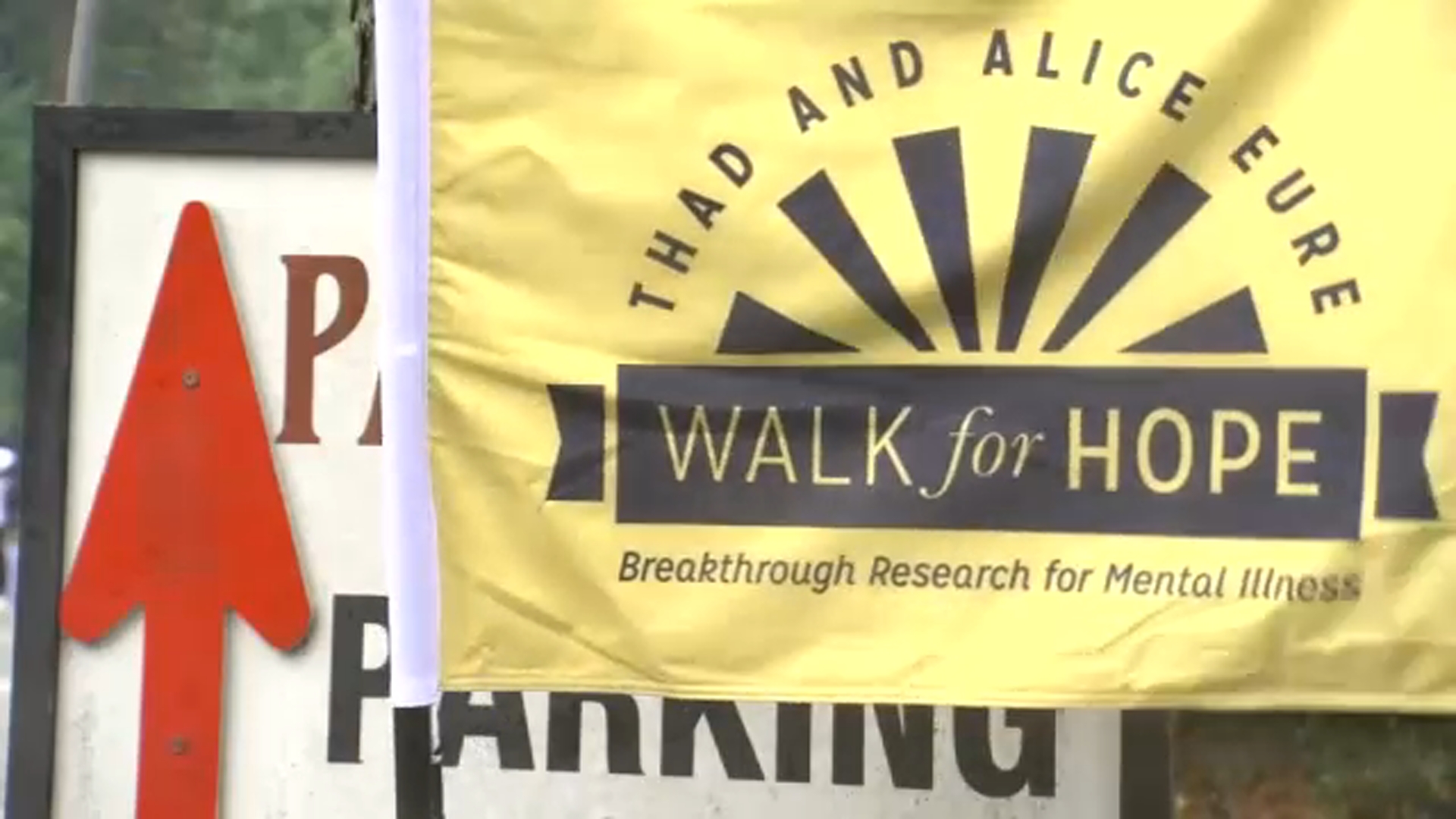
RALEIGH, N.C. (WTVD) -- Wet weather didn't stop thousands from heading to Raleigh this weekend to walk in solidarity for mental health.
The annual Walk for Hope, now in its 37th year, raised money for mental health research at UNC-Chapel Hill's Department of Psychiatry. Since its founding, the event has helped generate millions of dollars toward better understanding and treatment of conditions, such as depression, bipolar disorder, PTSD, postpartum depression, schizophrenia, and anorexia.
This year was no exception.
Shelley Belk, Executive Director of the Foundation of Hope, which organizes the event, shared, "I have been involved since the very beginning -- for 41 years. My mom and dad started this because my brother struggles with a severe bipolar schizoaffective disorder...It's just something we're incredibly passionate about, and we're determined to make a difference.
Walkers gathered at Angus Barn for a 5K route and later attended a family-friendly celebration afterward, including food, games, music, and prizes.
According to Belk, all proceeds from the Walk for Hope directly support local research, making a significant difference.
"Our small foundation has funded over $11 million in research to UNC Chapel Hill, and those dollars have leveraged an additional $272 million in additional funding," she said.
Mental health awareness also brought out community partners like Terry Morris, executive director of Vets to Vets United, a nonprofit that pairs rescued dogs with military veterans struggling with emotional or physical disabilities.
Morris attended the walk to not only raise awareness for research and resources but to honor those lost to mental illness.
Belk is grateful for the turnout and the continued support.
"It's really just amazing," she said. "Everybody has a story, and I'm so grateful that now we're reaching a place in this day and age where people are willing to talk about it."
With mental health needs on the rise, affecting as many as one in three American adults, the Foundation says it's more important than ever to support research and reduce stigma.
Were you unable to make the event? You can still donate here.
SEE ALSO: Annual walk helps provide hope to those living with dementia