Lindsay Clancy juror says holdout didn't show 'single piece of evidence' explaining vote
The jury in Clancy's trial failed to reach a unanimous verdict.

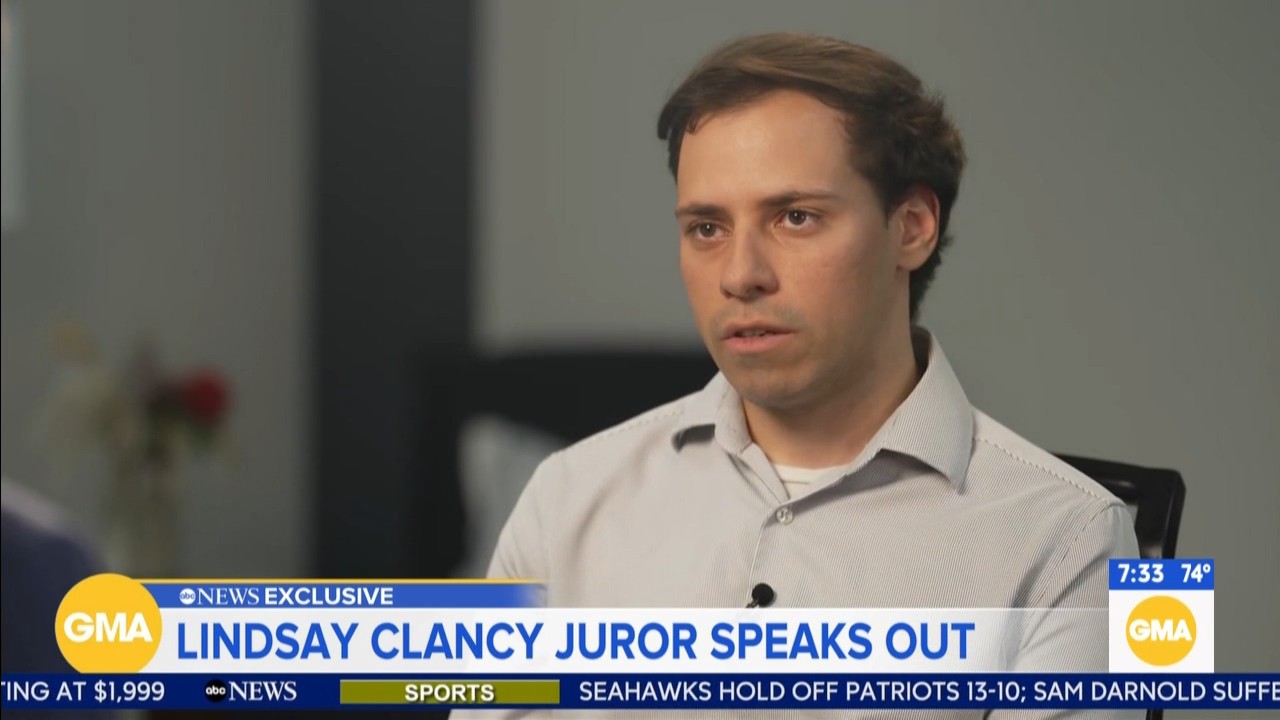
A juror in the trial of Lindsay Clancy is sharing new details about what he said happened inside the jury room that led to a mistrial in the case of the Massachusetts woman facing first-degree murder charges for the 2023 deaths of her three young children.
Nick Dargie, one of the three men on the 12-person jury, told ABC News' Aaron Katersky that the lone holdout juror who prevented a unanimous verdict did not show any evidence explaining his vote.
"There was several times I would ask him to show us evidence or, you know, describe a witness testimony that helped to prove what he was saying, and ... he couldn't," Dargie, 25, said in an interview Wednesday.

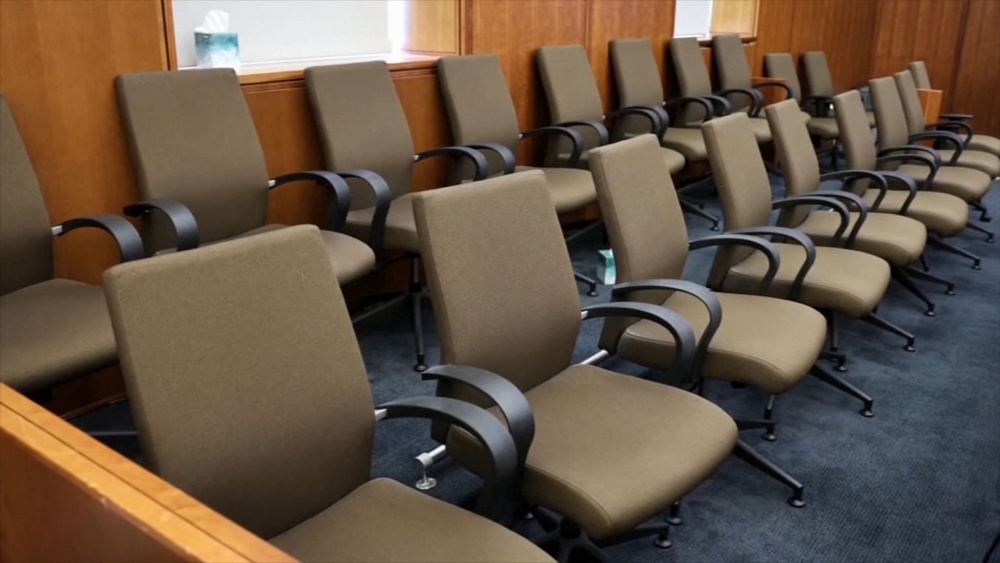
Jury deliberations eventually yielded an 11-1 split in favor of not guilty by reason of insanity, but the final juror would not change his position favoring conviction, according to other jurors who spoke out publicly.
"There wasn't a single piece of evidence or witness testimony that he used to prove why he was thinking the way he was, which is why we ultimately sent in that note," Dargie said, referring to a note the jury foreperson gave to Judge William Sullivan, leading to the mistrial. "Otherwise, like there's nothing wrong with somebody having a completely opposite opinion ... that would be a hung jury. That, like that, is our justice system.
Clancy pleaded not guilty to three murder charges for the deaths of her 5-year-old daughter Cora, 3-year-old son Dawson and infant son Callan at the family's home in Duxbury, a Boston suburb, on Jan. 24, 2023.
Her five-week trial ended in a mistrial on Sept. 4, after a week of deliberations.
Throughout Clancy's trial, much of the testimony centered on whether or not she was suffering from postpartum psychosis -- considered a psychiatric emergency, according to the American College of Obstetricians and Gynecologists -- when she strangled her children and attempted to take her own life, and whether she should be held criminally liable for the killings.
Jurors in Massachusetts are instructed that in order to prove a defendant is criminally responsible for their conduct, prosecutors must "prove beyond a reasonable doubt that the defendant did not suffer from a mental disease or defect at the time of the alleged offense," according to the Massachusetts Court System.
Plymouth County District Attorney Timothy Cruz has not yet announced a decision on whether to retry Clancy.
"I appreciate the fact that there are strong feelings and opinions tied to this case," Cruz said outside the courthouse on Sept. 4, when the mistrial was declared. "However, our job is to set aside our feelings and focus solely on the facts. The facts are Lindsay Clancy killed her three children and the evidence suggested to us that she was in control of her actions when she committed those homicides."
The two sides are scheduled to be in court on Sept. 29 to determine next steps following the mistrial.