Remembering the hero search-and-rescue dogs of 9/11, 25 years later
More than 300 dogs took part in the search-and-rescue efforts at ground zero.


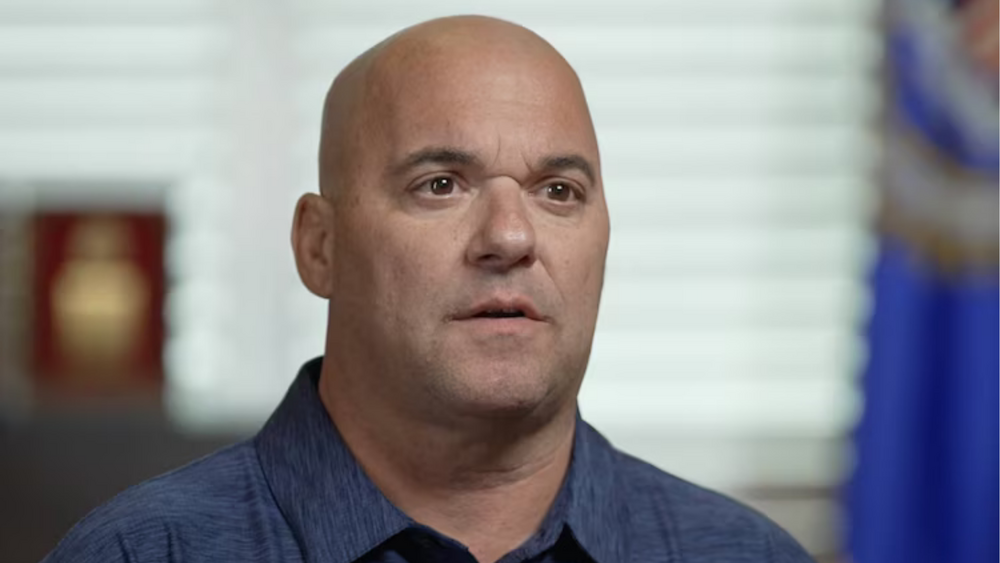
Robert Schnelle remembers being the first member of the New York Police Department's K-9 Unit on the scene when the first plane struck the North Tower of the World Trade Center on Sept. 11, 2001.
Seventeen minutes later, Schnelle watched as a second plane struck the WTC's South Tower. Less than an hour later, Schnelle and his rescue dog, Atlas, hid for cover when the South Tower collapsed around them.
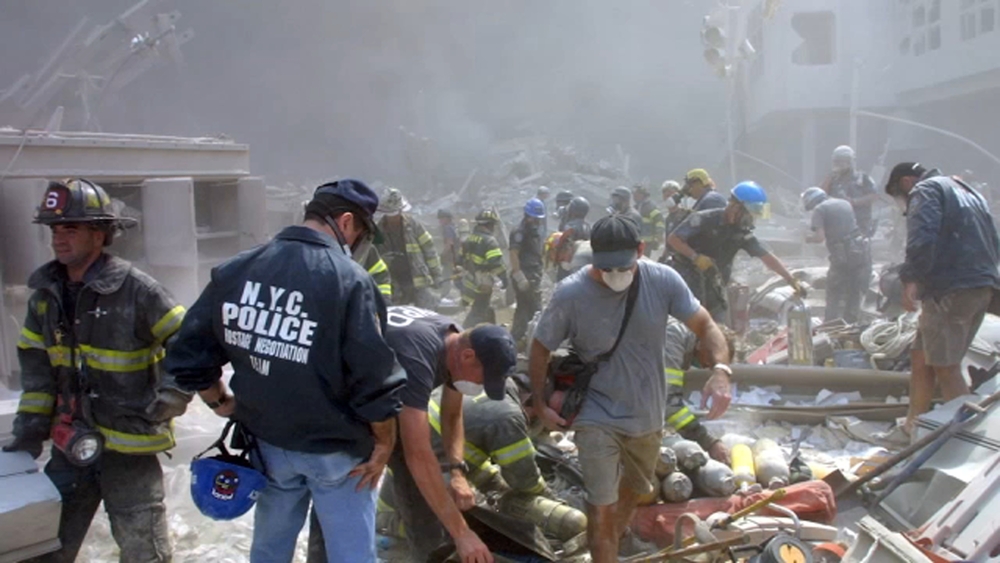
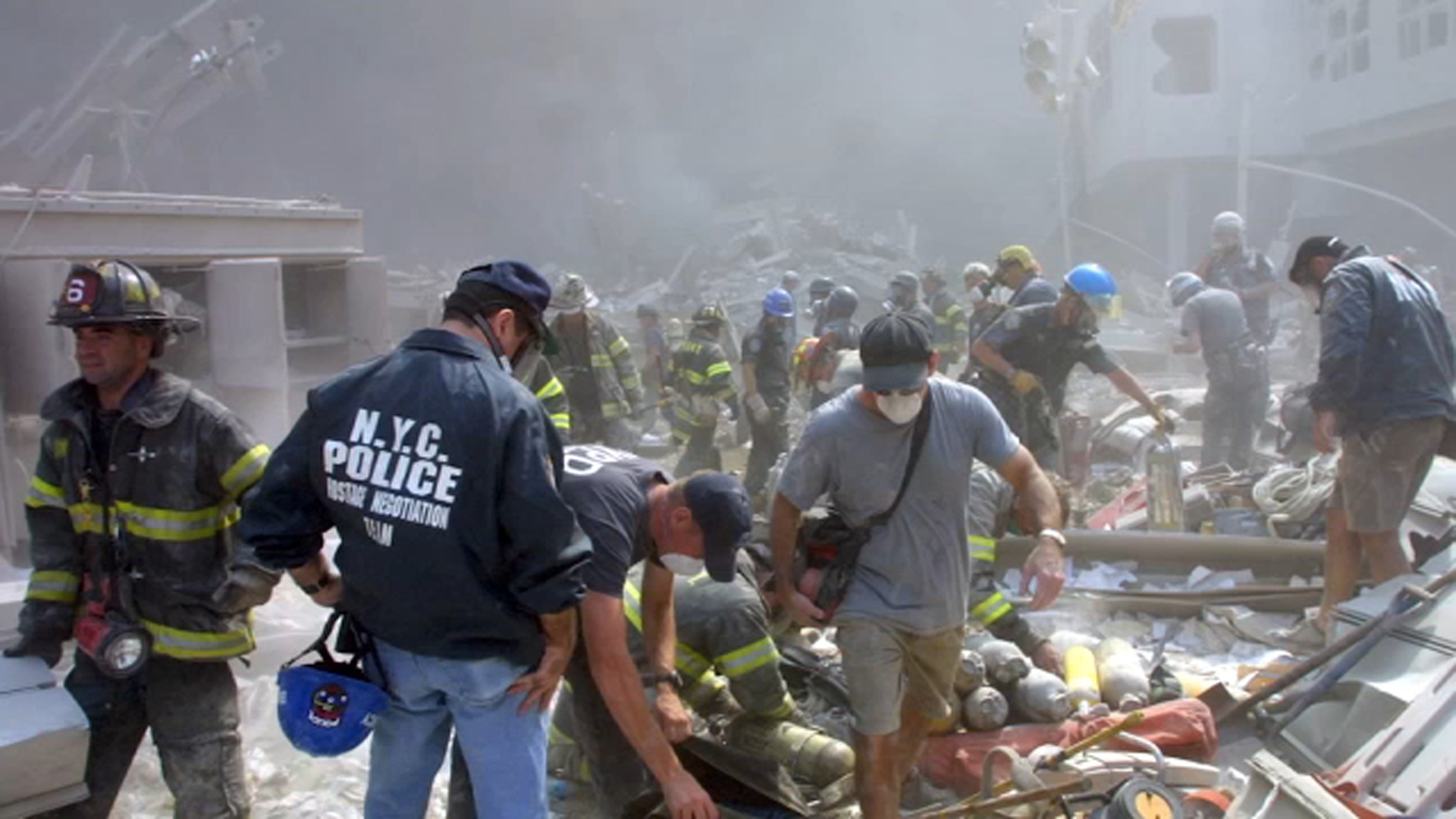
For the next eight months, Schnelle and Atlas remained there at what became ground zero, working 12-hour search-and-rescue shifts at the site of the deadliest terror attack in U.S. history.
"We did that straight through till May 30, [2002], until they shut it down and said that the recovery is now over, the site's now closed, ground zero," Schnelle told ABC News. "That was a very traumatic day for a lot of us, because we had been there so long, and, you know, you never want to just give up."
In the days, weeks, and months after the 9/11 attacks, more than 300 dogs took part in the search, rescue, and recovery efforts at ground zero, according to the 9/11 Memorial & Museum, which refers to the dogs as the "four-legged 9/11 heroes."
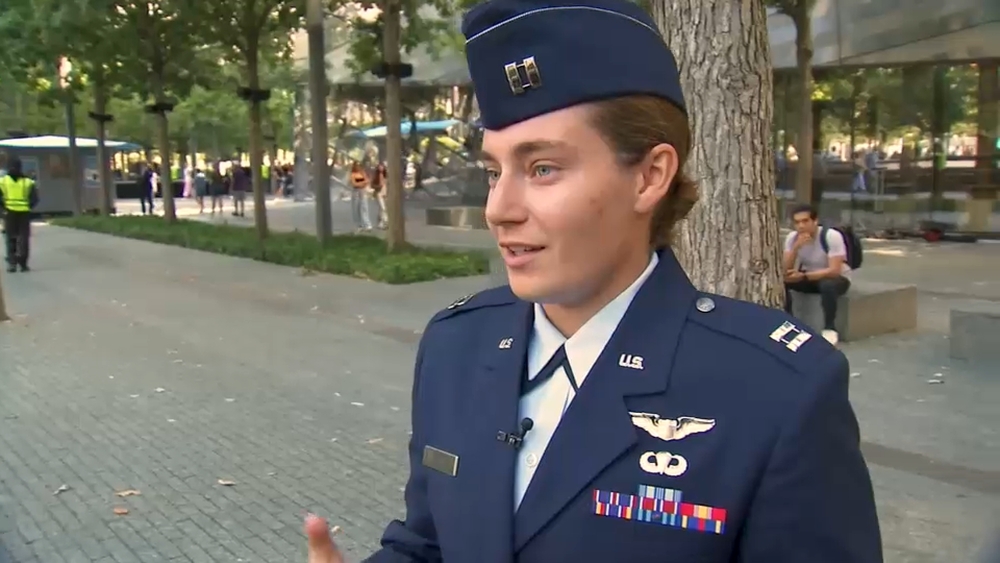
For the dogs and their handlers, it became evident all too fast that their efforts at ground zero would be largely a recovery mission, according to Dr. Cynthia Otto, a veterinarian who traveled from Pennsylvania to New York on 9/11 to help with the effort.
"That was just the most devastating part of the whole process," Otto told ABC News. "All of these dogs were trained to find live humans, but it became clear that they started to recognize human remains, and they didn't do their normal response."
Over the next several months, the dogs became critical in the effort to find human remains, using their scent and their ability to go into spaces where humans could not in order to help identify many of the nearly 3,000 people killed at the site.
Otto, the executive director of the Penn Vet Working Dog Center and a University of Pennsylvania professor, said that although search and rescue dogs are not trained as therapy dogs, that unintentionally became part of their role at ground zero.
"One of the things that has really stuck with me is that the dogs provided so much more than just the scent detection," Otto said. "They provided some sort of source of comfort for all of us that were working there, and it really made a difference."
Otto spent around one week at the site of ground zero helping to care for rescue dogs on their 12-hour shifts. One of her lasting memories, she said, is of a dog named Logan that walked by three firefighters as they took a break amid the recovery effort.

"They were sitting on a beam on the pile, and they reached out and petted [Logan], and you could just see the light go from blank to [having] light in their eyes," Otto said of the firefighters, adding, "She allowed them to just feel that moment, like, 'OK, it's gonna be all right. There is some hope here. We're gonna make it through this.'"
Ott has spent much of the past two decades since 9/11 leading research on Logan and the hundreds of other search-and-rescue dogs who served at ground zero.
The research, according to Otto, found the dogs involved in search and rescue had minimal health risks and also outlived the average lifespan of their breed.
The last known surviving search dog of 9/11 died in 2016, 15 years after the attacks.
"We feel like the dogs that are doing this kind of work, they're physically active, they're mentally engaged, they have this wonderful relationship with their handler," Otto said. "We think that's really actually good for them and good for their health and welfare."
The dogs' work also helps their handlers with their own mental health, according to Otto. She said research shows first-responders who responded to ground zero with a search-and-rescue dog were less likely to develop post-traumatic stress disorder than those who did not.
For Schnelle, whose dog Atlas died in 2008, the legacy of the search-and-rescue dogs who responded on 9/11 is that they did a "fantastic job" in unimaginable conditions.
"[He] was like me, he just did it," Schnelle said of Atlas. "He never shut down ... he just did his job."
"9/11 Tribute in Light: Live from Lower Manhattan,” a one-hour ABC News multiplatform live special, premieres Friday, Sept. 11, at 8 p.m. EDT across ABC, Disney+, Hulu, National Geographic, ABC Owned Television Stations livestreams and ABC News Live.
Disney is the parent company of ABC, ABC News, Hulu and National Geographic.