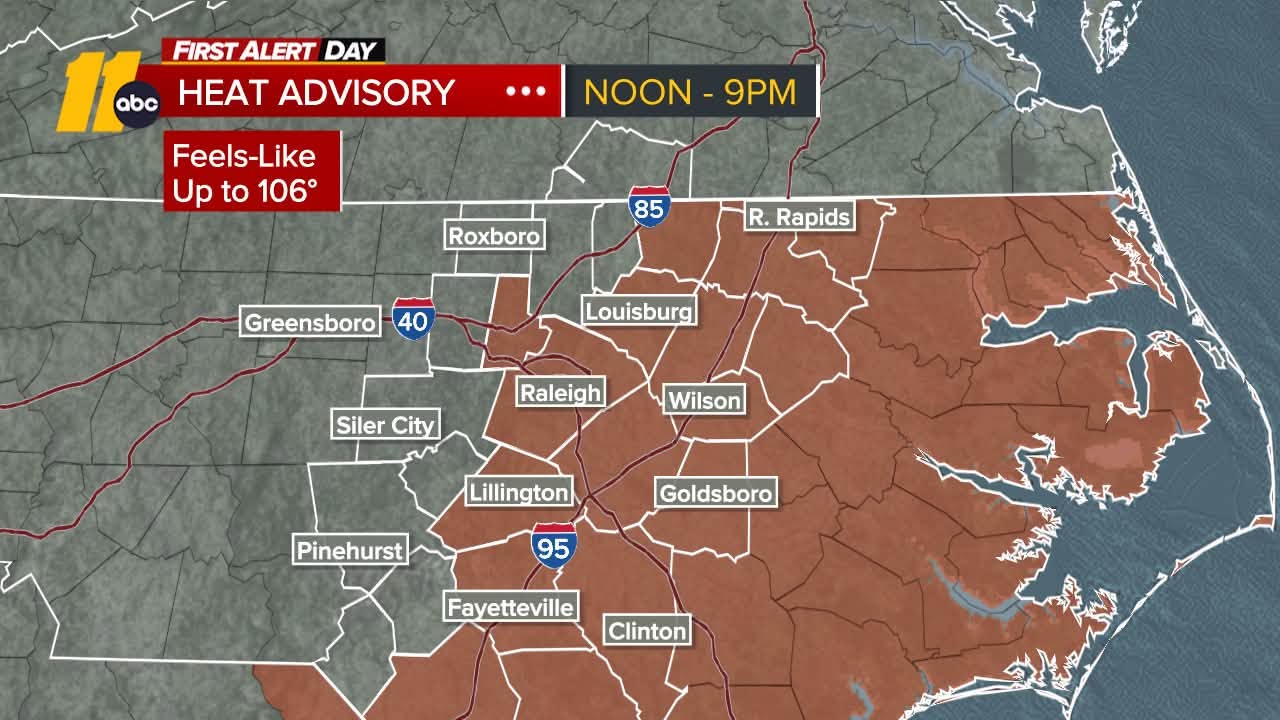
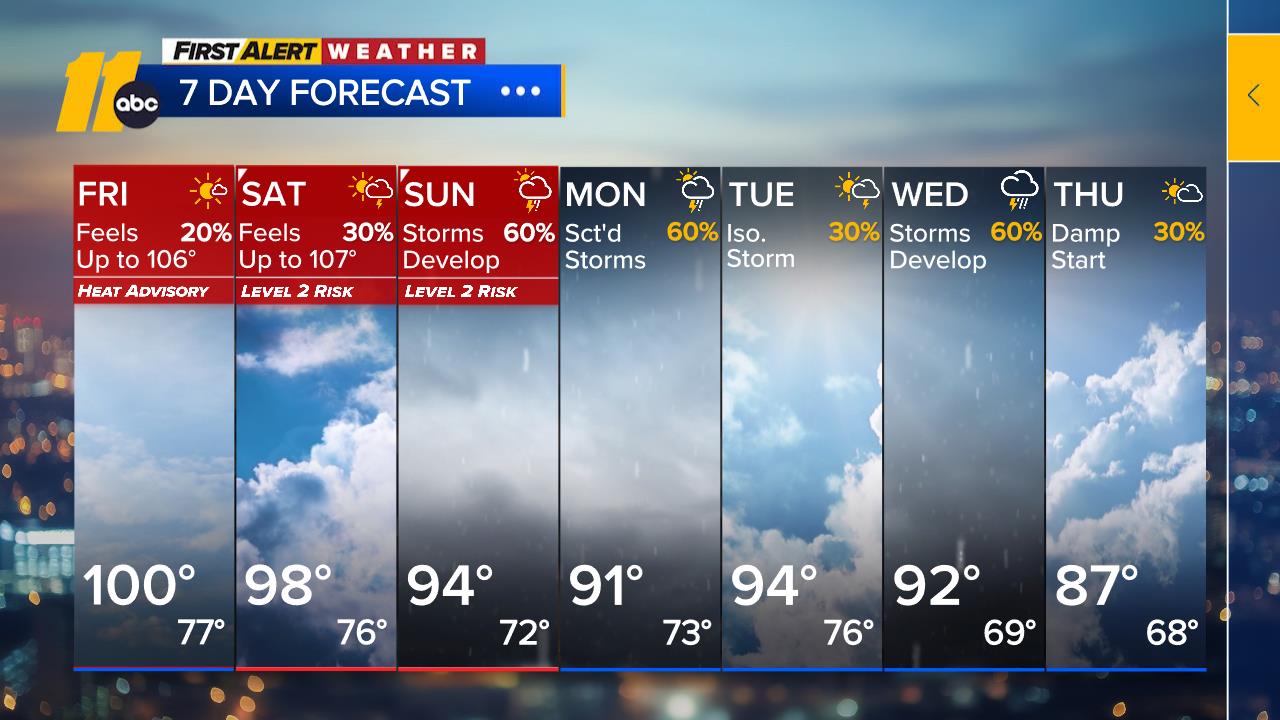
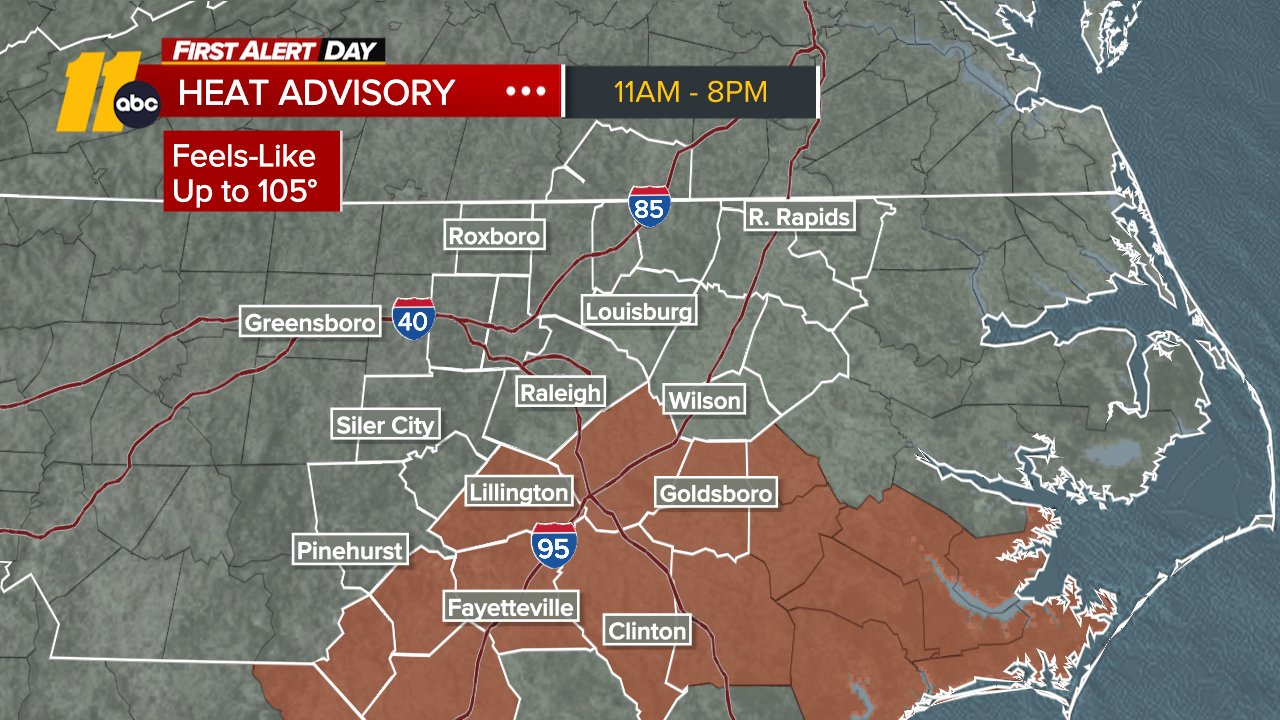
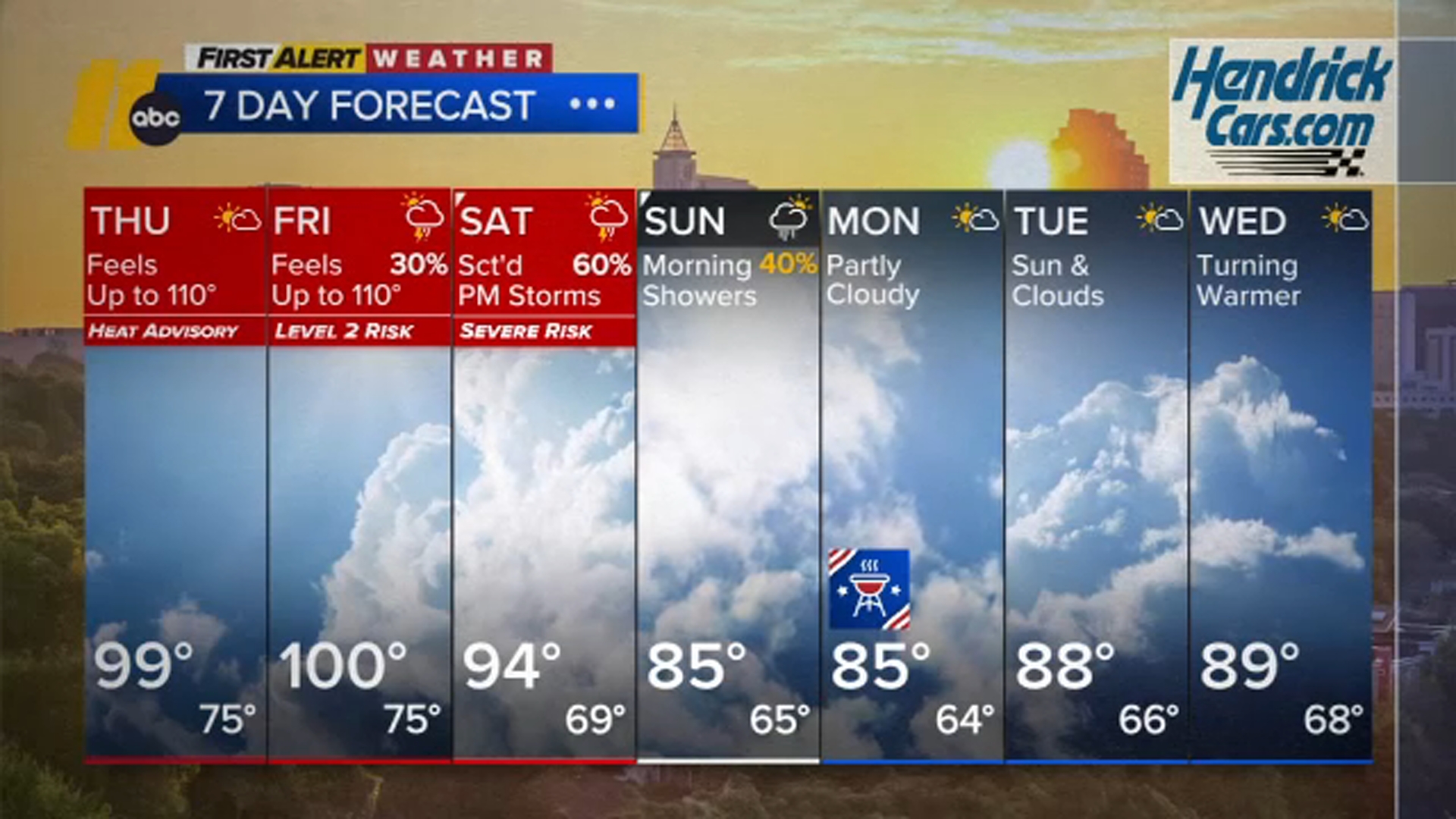
Central North Carolina remains under a First Alert Day as dangerous heat continues to grip the region.
While hot summer temperatures are common, meteorologists say this stretch of heat has been especially intense because of high humidity and the lack of overnight relief. Even after sunset, temperatures have remained elevated, making it harder for the body to recover from prolonged exposure to the heat.
Dr. Ashley Ward with the Nicholas Institute for Energy, Environment and Sustainability, talked with ABC11 about the effects of extreme heat and the risk of heat-related illnesses. Symptoms may not appear immediately and can develop days after a heat wave has ended.
Watch our interview below:
Health experts recommend staying hydrated, limiting strenuous outdoor activity during the hottest parts of the day and taking frequent breaks in air-conditioned spaces.
Residents are also encouraged to check on older adults, young children and others who may be more vulnerable to heat-related illnesses.