Sep 30, 2025, 3:10 PM GMT
Imelda now a hurricane, still no landfall
As of Tuesday 8 a.m., Imelda has strengthened into a Category 1 hurricane. It is on track to move away from the Bahamas and approach Bermuda late Wednesday and early Thursday.
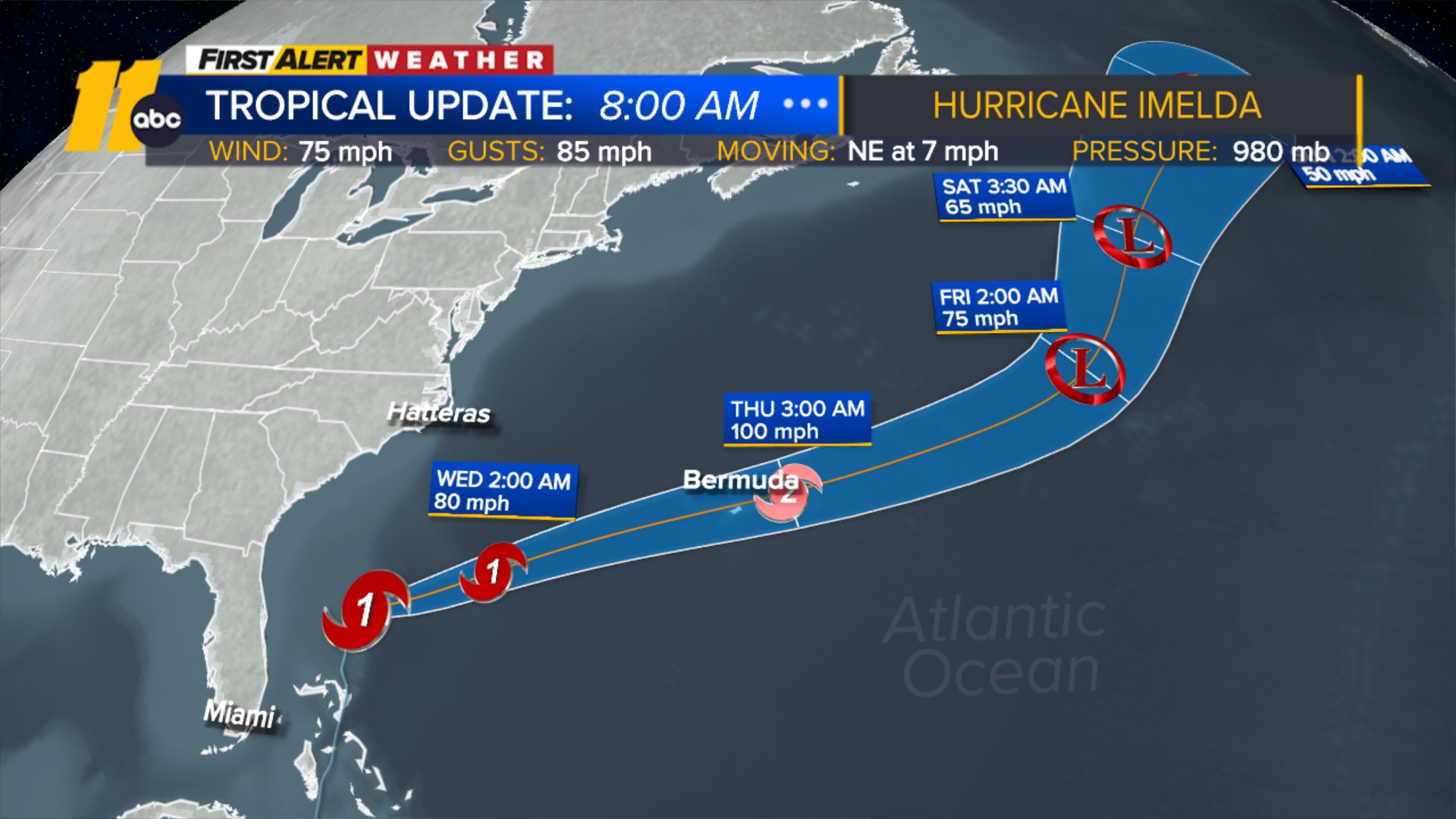



Imelda strengthened into a hurricane Tuesday morning.
The storm is on track to move away from the Bahamas and approach Bermuda late Wednesday and early Thursday.
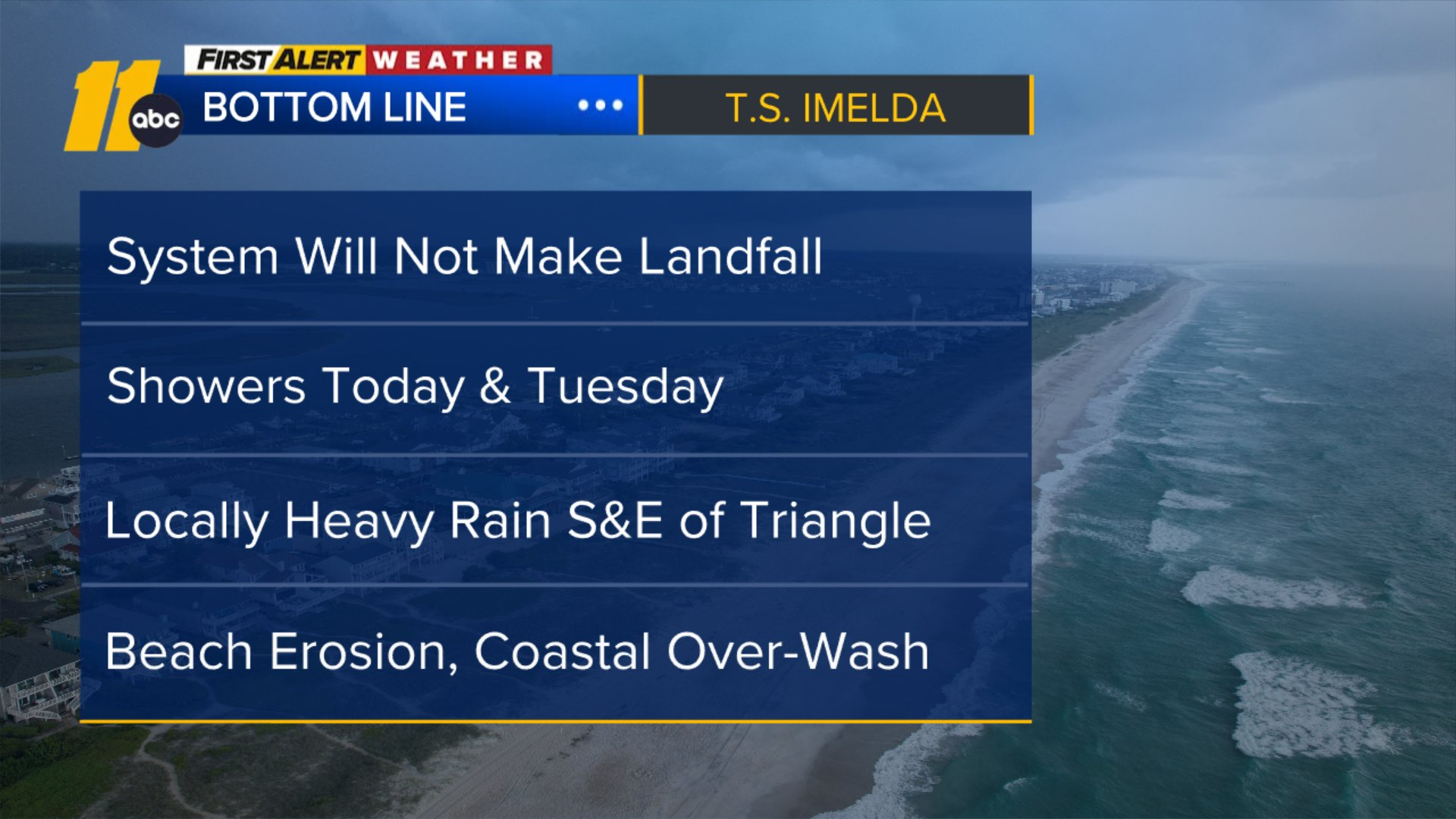
Imelda is expected to approach the U.S. Southeast coast on Tuesday. Due to no landfall expected, the flooding threat is now lower.
On Saturday, North Carolina Gov. Josh Stein declared a state of emergency ahead of the possible heavy rain and flooding.
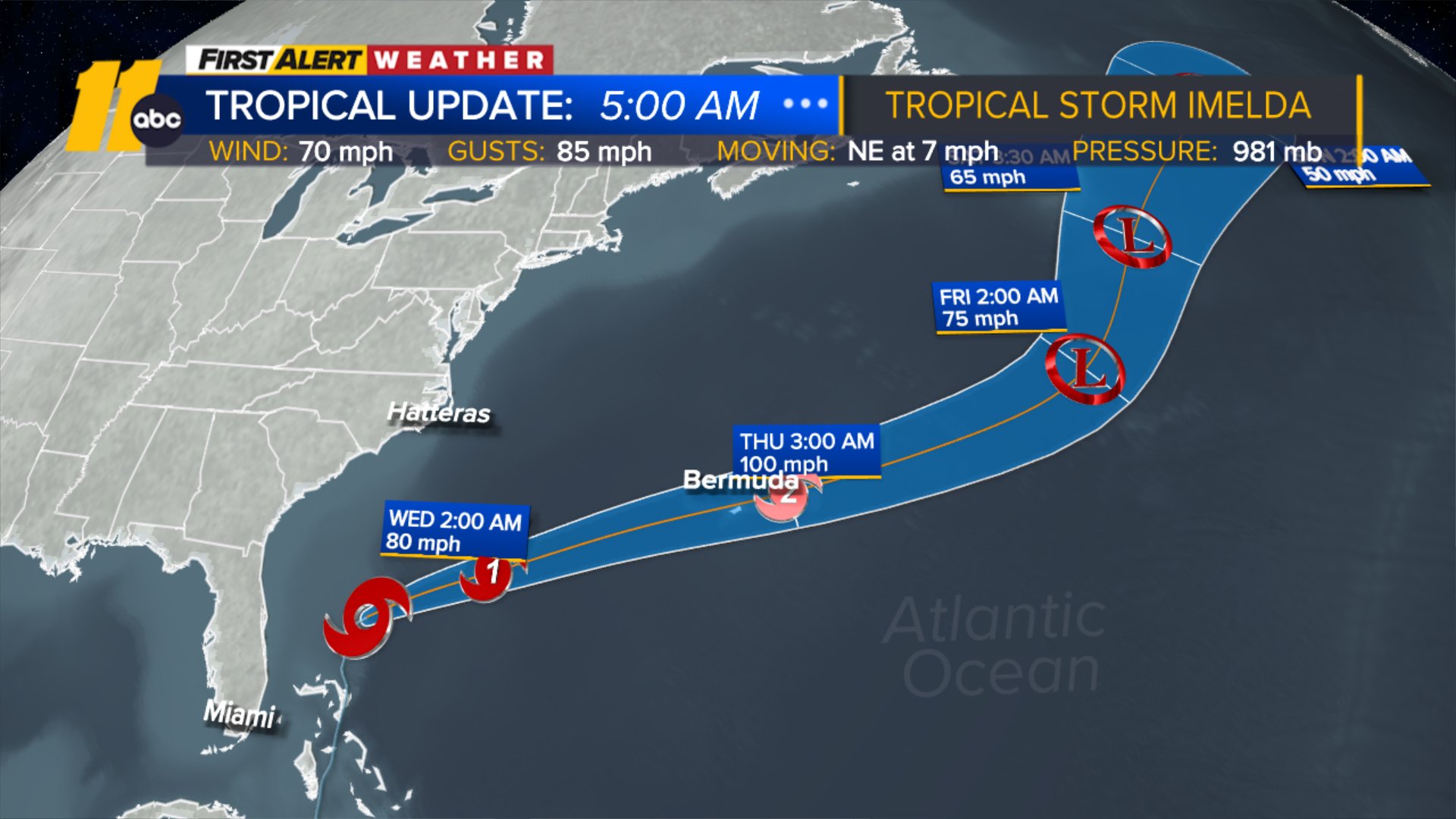
As of Tuesday 8 a.m., Imelda has strengthened into a Category 1 hurricane. It is on track to move away from the Bahamas and approach Bermuda late Wednesday and early Thursday.

Imelda had maximum sustained winds of 70 mph (110 kph) and was moving northeast at 7 mph (11 kph). It was forecast to become a hurricane on Tuesday morning and spin out to open ocean, according to the National Hurricane Center in Miami.
Meanwhile, Hurricane Humberto, which weakened further to a Category 2 storm on Tuesday, churned in open waters, which forecasters had said would cause Imelda to abruptly turn to the east-northeast, away from the southeastern United States coast.
"This is really what's going to be saving the United States from really seeing catastrophic rainfall," said Alex DaSilva, lead hurricane expert for AccuWeather, a private U.S. weather forecasting company.
We're keeping an eye on Tropical Storm Imelda.
At the National Hurricane Center's 11 p.m. update, the storm was still off the coast of Florida with 65 mph sustained winds, the same measure as in the 8 p.m. update. The storm slowed slightly from three hours earlier and was moving north at 8 mph, down from 9 mph. It's wind gusts maxed out at 70 mph.
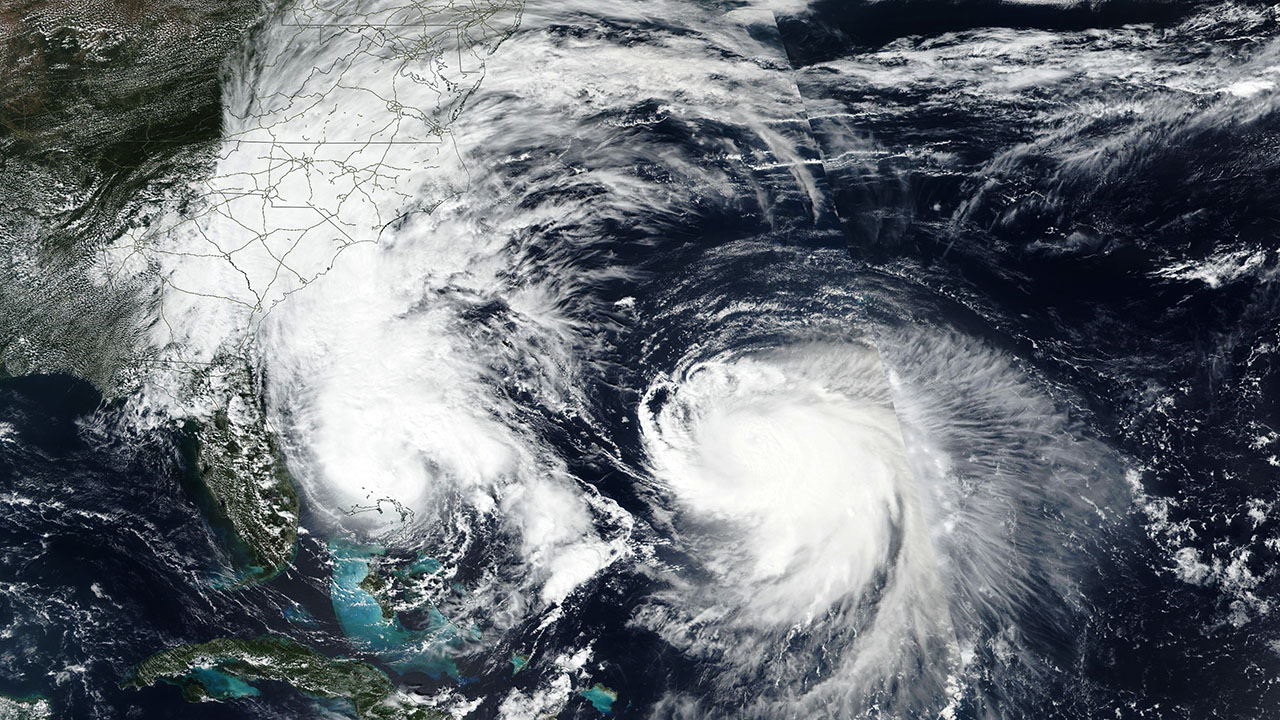
Imelda is still expected to intensify into a hurricane on Tuesday, and its track continues to suggest that it will move further away from the continental United States.
However, it is expected to approach Bermuda on Wednesday as a hurricane, and a Hurricane Watch is in effect for that island.
Swells and rough surf are expected to affect the US coast from both Hurricane Humberto and Imelda in the next several days.
Humberto had weakened to a Category 3 hurricane at 11 p.m., with top winds of 115 mph, down from 1440 mph earlier in the day. Though it's still tracking away from land, Humberto, coupled with Imelda, is capable of producing high surf and dangerous rip currents along the East Coast.
The main impacts from Imelda will likely be strong, persistent NE wind along the Outer Banks, which could lead to some coastal flooding and erosion.
Farther to the southeast, we are now forecasting 2-4 inches of rain around Wilmington and Myrtle Beach, which may even end up on the lower end of that range due to the southward shift in Imelda's track.
And as Imelda churns in the Atlantic -- officials are warning of dangerous rip currents, surfing, beach erosion and coastal flooding.