Lumbee Tribe members meet with lawmakers to discuss full federal recognition: 'Correcting a wrong'


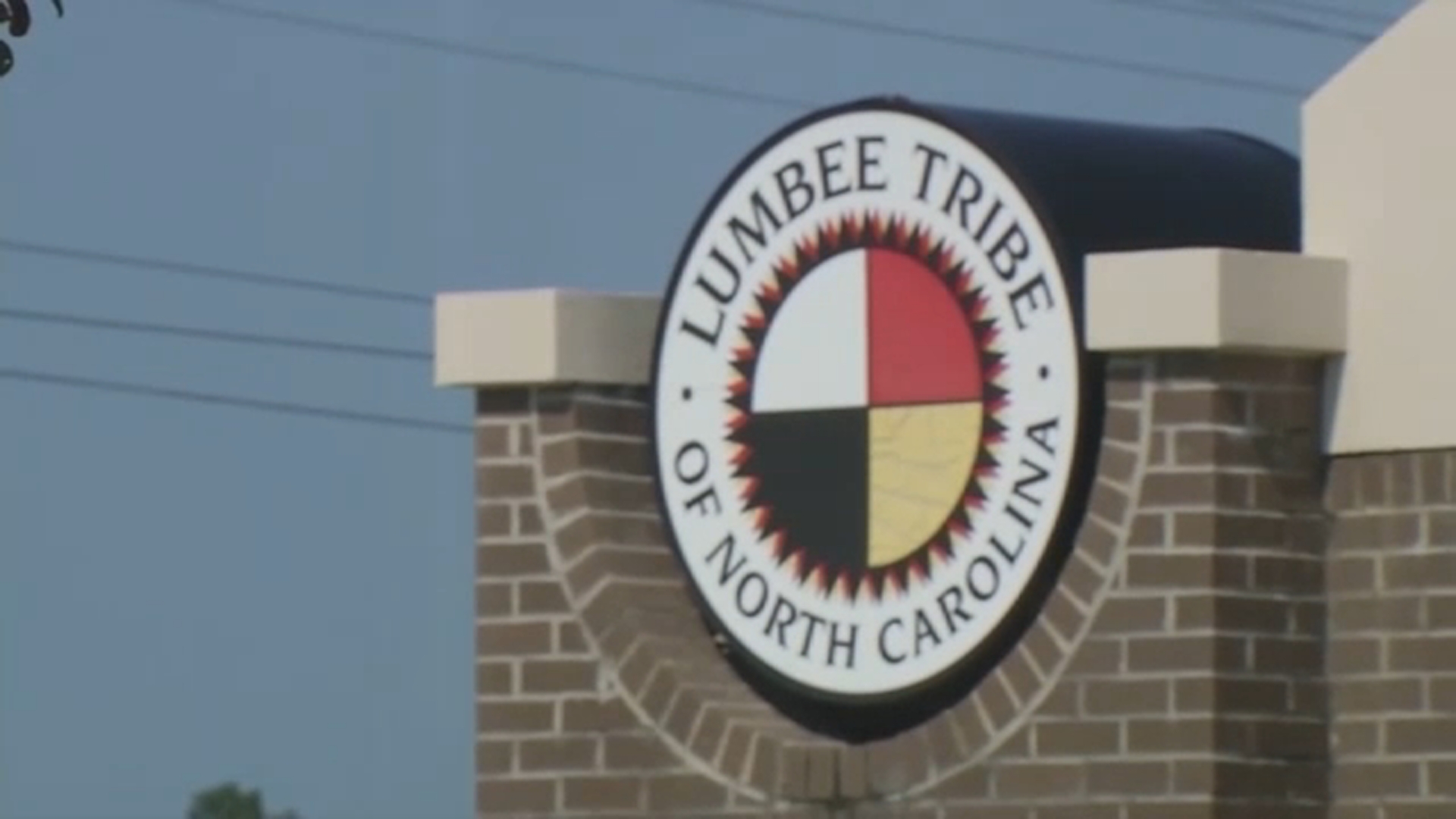
PEMBROKE, N.C. (WTVD) -- Members of the Lumbee Tribe traveled to Washington, D.C. and met with lawmakers on Capitol Hill on Wednesday to discuss full federal recognition.
"This is really correcting a wrong that was done all the way back to 1956, and it's bringing it to pass where we can take care of it today," said Congressman Mark Harris, a Republican who represents the 8th District.
"For nearly 70 years, the Lumbee people have been recognized in name but denied the same protections, services, and dignity afforded to every other federally recognized tribe. This is a wrong that we have a moral obligation to right. This bill, the Lumbee Fairness Act, does exactly that," said Rep. Richard Hudson, a Republican who represents the state's 9th District.
North Carolina recognized the Lumbee Tribe in 1885, and while Congress did the same in 1956, it did not provide the full federal benefits of other tribes.
"This problematic language of the termination era continues to hinder us today, placing the Lumbee in a legal limbo that only Congress can resolve," said John Lowery, Chairman of the Lumbee Tribe of North Carolina, during testimony provided to the US Senate Committee on Indian Affairs.
"During the 20th century, the Lumbee were among the dozens of victims of the termination era, one of the darkest periods in federal Indian policy. In 1956, Congress passed the Lumbee Act. It acknowledged the Tribe, but cruelly denied them the benefits and the recognition that every other tribe receives. The federal government has since worked to correct the grave injustices of the termination era for nearly every single tribe, except for the Lumbee. Time and again, the Lumbee have proven their case," said Sen. Thom Tillis, who has led efforts on the Lumbee Fairness Act, a bill co-sponsored by Senator Ted Budd and 18 other Senators.
Tillis, Hudson and Harris pointed to bipartisan support, including from North Carolina's Congressional delegation.
"These days, it's rare to see Republicans and Democrats come together on anything. But when it comes to Lumbee recognition, the support is overwhelming, and it's bipartisan," Tillis explained.
In January, President Donald Trump signed a memo to encourage the Department of Interior to promote and pursue federal recognition of the Lumbee Tribe. However, over the summer, a White House official told the Associated Press that recognition would need to come through legislation.
"A tribe's legal status should be clear, concise, and unambiguous, and the Lumbee Fairness Act ensures this for our tribe," said Lowery.
There are an estimated 60,000 members of the Lumbee Tribe in North Carolina, with a large population in Robeson County.
Lowery touted broad support from some other tribes, but the effort has also faced pushback, including from the Eastern Band of Cherokee Indians and Shawnee Tribe.
"Their claims rest on theories, speculation and invented narratives. Federal records show this clearly," said Mitchell Hicks, the Principal Chief of the Eastern Band of Cherokee Indians.
"The United Indian Nations of Oklahoma turned to a respected historian and genealogist to examine the record. That research did not attempt to define who the Lumbee are. It simply asked a single question: Can the Lumbees' tribal claims be verified by historical and genealogical evidence? The resounding answer was no," said Ben Barnes, the Chief of the Shawnee Tribe.
Arlinda Locklear, a Lumbee Tribal Attorney, cited their prior efforts and submitted documentation.
"We have had multiple hearings and multiple opportunities to act and to give justice to the Lumbee since 1899, when the first federal legislation was introduced. All of those bills have failed, and let me tell you that it has been a heartbreaking process for the Lumbee people. But we owe a vote of thanks to this committee in particular because as a result of that process, you have developed the richest record that exists for any non-federally recognized tribe in this country. We have a record that allows you to proceed with S. 107 with full confidence that by doing so, you would extend full federal recognition that truly exists as such," added Locklear.
Stay on top of breaking news stories with the ABC11 News App