
Live Updates: 4th heat wave of the year grips Central NC; cooling centers open

WTVD logo
Last updated: Monday, July 20, 2026 9:41PM GMT
Surviving the extreme heatwave in Central NC
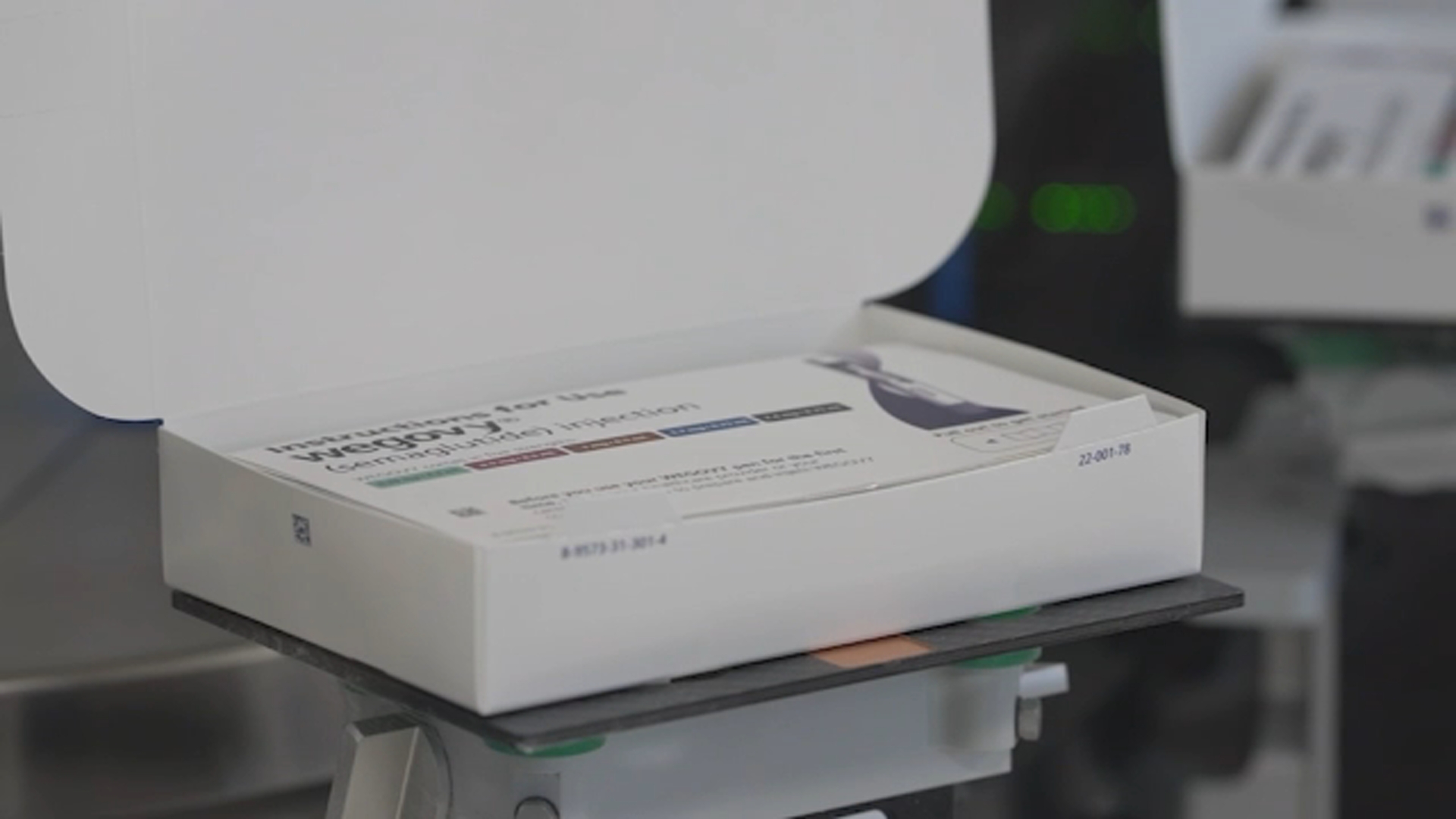
GLP-1 medications work on receptors in both the brain and the digestive system, a medical expert says, which can affect a perception of thirst.
WTVD

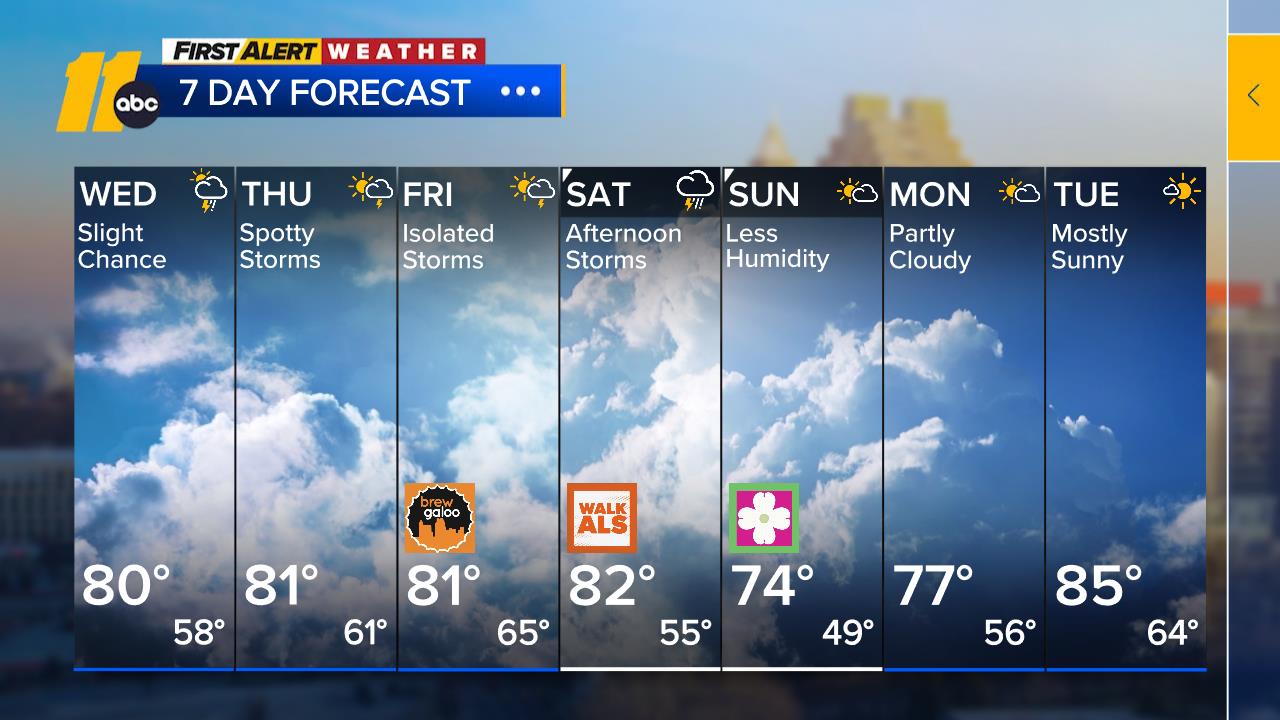
RALEIGH, N.C. (WTVD) -- An intense heat wave will continue through the Fourth of July weekend and into this week. Highs will be around 100 degrees, with feels-like temperatures as high as 110 degrees or higher. Daily record high temperatures may also be challenged or even broken.

The combination of intense sunshine and prolonged heat will create dangerous conditions for anyone spending extended periods outdoors. And as the temperatures soar outside, people across Central North Carolina do what they can to stay cool, especially when they have to head out.

A Durham homeowner said it feels like the heat has intensified in the state, "I grew up in North Carolina, but I don't remember waves being quite this intense."

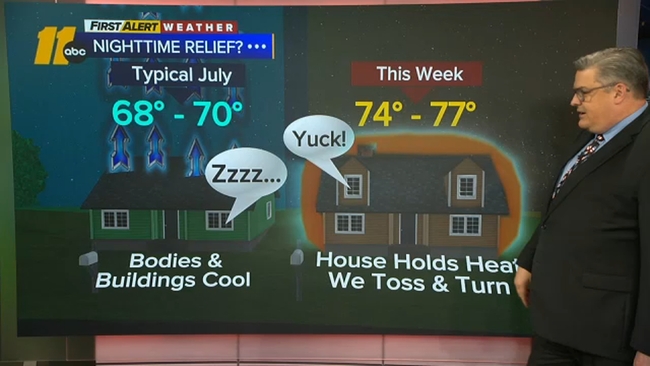
To compound the misery, ABC11's Forecast Team says there will be little overnight relief, with temperatures only falling into the mid-70s throughout the heat wave, and the air quality is deteriorating.

Download the ABC11 App for breaking news and weather alerts

Cruz Medina  Image
Jul 03, 2026, 11:36 PM GMT

How the hot weather affects people taking SSRIs

Here's a look at how the hot weather can affect people who take medication, including Selective Serotonin Reuptake Inhibitors, mostly referred to as SSRIs. SSRIs are antidepressants or anti-anxiety medications.

Because SSRIs affect serotonin levels, they can interfere with the hypothalamus, which is the part of the brain that acts as your internal thermostat.

This can cause two main problems: Impaired sweating and impaired cooling.

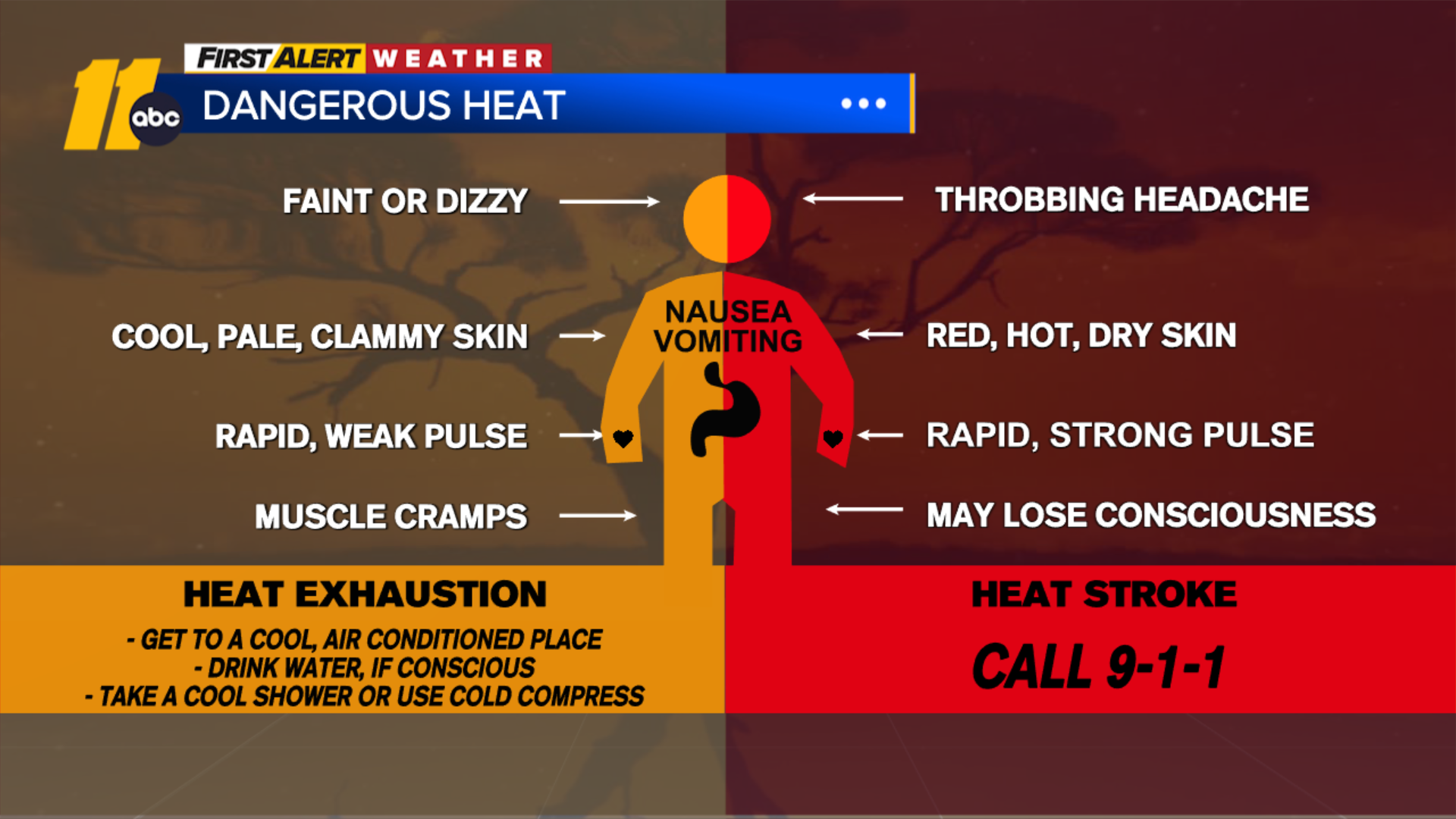
Symptoms of heat stroke and heat exhaustion include nausea, headaches, muscle cramps, increased pulse, confusion, dry skin and high body temperature.

Read more here.

It is especially important to know the symptoms when taking SSRIs.
Sean Coffey Image
Jul 03, 2026, 11:40 PM GMT

NC farmers, outdoor workers prepare for extreme heat

Working in the heat is routine for many agricultural workers, but persistent triple-digit temperatures are creating growing concerns for both crops and the people tending them.

But this year's conditions have proven especially difficult, with both record heat and ongoing dryness affecting crop growth. Fields planted just two months ago are showing signs of stress.

Download the ABC11 App for breaking news and weather alerts

Working in the heat is routine for many agricultural workers, but persistent triple-digit temperatures are creating growing concerns for both crops and the people tending them.

Construction Workers

Construction workers in Wake County are preparing for rising temperatures as crews across the Triangle face potentially dangerous heat conditions at job sites.

Brian Sampson, a site superintendent, said experience working in hot conditions does not eliminate the risk of heat-related illness.

Construction companies are also adjusting schedules by starting crews earlier in the morning to avoid the hottest part of the day.

Our Sean Coffey has more.
WTVD logo
Jul 03, 2026, 1:04 PM GMT

GLP-1 users warned about dehydration risk during severe heat

Dr. Tiffany Lowe Clayton, a bariatric physician and obesity specialist at WakeMed, said GLP-1 medications work on receptors in both the brain and the digestive system, which can affect a person's perception of thirst.

"When we are talking about the GLP-1 receptor agonist, the receptors that the medication works on is in the brain as much as it is in the gut. And so often what we may find is that patients may not feel as thirsty," Lowe Clayton said.

"They won't necessarily always get that thirst cue. So set a timer, set a clock, and be able to know that you need to drink throughout the course of a day," she said.

She also noted that some GLP-1 medications can cause gastrointestinal side effects, including vomiting, nausea, and diarrhea, which can contribute to fluid loss.

To help prevent dehydration, Lowe Clayton recommends drinking plenty of water, avoiding sugary drinks, and adding electrolytes when appropriate.

WTVD logo
Jul 03, 2026, 1:04 PM GMT

Don't expect relief at night from heat wave

As the extremely heat grips North Carolina, don't expect relief when the sunsets.

There will be little overnight relief, with temperatures only falling into the mid-70s throughout the heat wave.

There will be little overnight relief, with temperatures only falling into the mid-70s throughout the heat wave.